

The date palm trees in the middle of sand dunes at our family farm in Al Ain provided stunning scenery. This is what I faintly remember as I grew up watching my father nurturing them with limited water and even more limited sweet soil. It was not until 2000, when I joined Environment Agency – Abu Dhabi as an aspiring scientist, that I began appreciating nature and, more importantly, understanding those little connections and interactions between plants and animals and their ability to survive on the most meagre resources.
World Environment Day is celebrated on June 5 every year to raise awareness about the environment, pollution and sustainable living. The very reasons for its creation remain just as relevant 46 years after its launch. This year's theme – Biodiversity, Time for Nature – could not have been more appropriate, if recent environmental events are indicators to go by.
For instance, the Covid-19 pandemic, an unprecedented health crisis, has an origin linked to biodiversity. And, despite plenty of positive stories from around the world about the impact of the pandemic on the environment, it is unlikely that these benefits can be sustained once lockdowns and restrictions are lifted.
In fact, the pandemic highlights the inadequacy of our actions to address biodiversity issues. It also reveals our inability to recognise linkages between species, habitats, ecosystems and human health. For me that remains a fundamental issue in not making enough progress despite a series of initiatives, campaigns, international conventions and treaties, many of them championed by the United Nations.
As the demand for resources to provide goods and services to more than seven billion people continues to grow, it puts an additional burden on our planet. According to an estimate by Global Footprint Network, we need 1.5 times the Earth to sustain current demands. The good news is that the population is likely to stop growing by the end of century; however by then we will have added another two to three billion people to the planet, further straining our ecosystems and their ability to provide ecosystem services.
We recognise the importance of environment and biodiversity in our lives and their role in the provision of goods and services to sustain life. Despite this, we continue to act and ignore warnings from nature. We have speeded up the extinction process and, according to a recent report by the Intergovernmental Science-Policy Platform on Biodiversity and Ecosystem Services, we risk losing an estimated one million species in the next few years, which could have a significant impact on human health and well-being.
Many of the challenges we face today can be overcome, if there is a strong political will and commitment. This is amply evident in actions to protect environment and biodiversity in Abu Dhabi, where we have continued to make good progress, despite the challenges of the arid environment.
Contrary to the notion of deserts being impoverished, Abu Dhabi is biologically rich. In fact, there is life in the remotest and harshest of our landscapes. The vast expanse of sand dunes in the Empty Quarter is home to the iconic Arabian oryx. Once on the verge of extinction, the species has been brought back from the brink, thanks to a pioneering breeding programme led by Sheikh Zayed, the Founding Father. Today we boast a growing population of more than 850 within the Arabian Oryx Protected Area.

Our scientifically robust monitoring programmes – backed by a network of 19 protected areas covering nearly 31 per cent of Abu Dhabi’s land and seas – have ensured conservation of vital habitats, ecosystems and the biodiversity they support. We continue to maintain a stable population of nearly 3,000 dugongs, the second largest population in the world; and we host the only breeding population of greater flamingos in the Arabian Gulf and the largest population of Indian Ocean humpback dolphins in the world.
Our use of drones, remote cameras and satellite tracking – incorporating them with remote sensing and geographic information system technologies – is helping us to understand our environment better and take action when needed. We continue to document the presence of elusive and rare species such as sand cats and caracals. The discovery of 13 insect species, new to science in the past few years, is further proof of our ability to protect our biodiversity locally but also to add to global scientific knowledge and understanding.
-
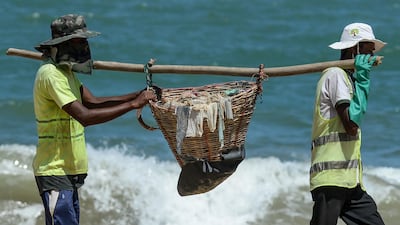
Municipal workers take part in a beach clean-up on the United Nations' World Environment Day at Mount Lavinia on the outskirts of Colombo. AFP -
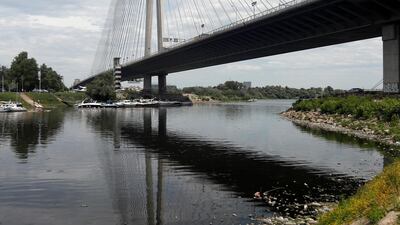
Dumped plastic bottles and barrels on the bank of the river Sava on World Environment Day, in Belgrade, Serbia. AP -

This handout photograph taken and released by the released shows workers pumping out pollutions of a large diesel spill in the Ambarnaya River outside Norilsk, Russia. AFP -
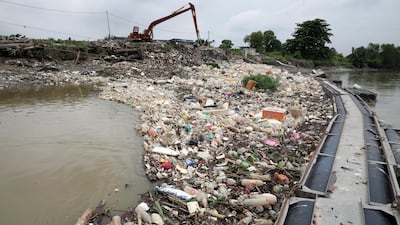
Waste collected by a log boom is seen on a river during World Environment Day, in Klang, Malaysia. REUTERS -

Gary Stokes, founder of the environmental group Oceans Asia, poses with discarded face masks he found on a beach in the residential area of Discovery Bay on the outlying Lantau island in Hong Kong. AFP -
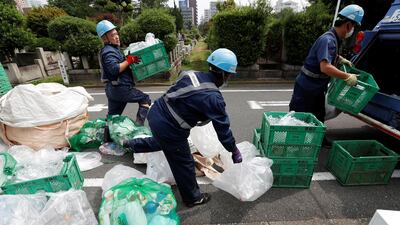
Workers collect recyclable garbage including cans, plastic trays and plastic or glass bottles on the street in Tokyo, Japan. REUTERS -

A volunteer collects garbage on the beach during an event to mark the World Environment Day in Colombo, Sri Lanka. REUTERS -
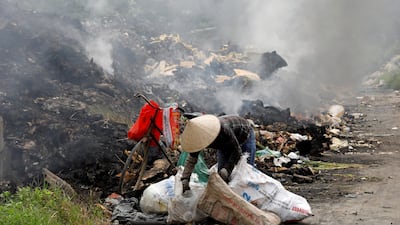
A woman collects recyclable items from electronic equipment at a garbage dump near a rice field in Vinh Phuc province, Vietnam. REUTERS -
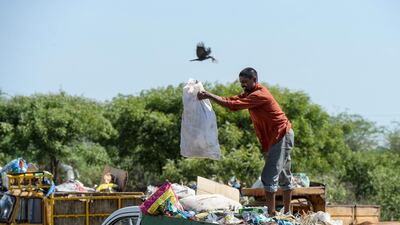
A man unloads waste materials at a garbage dump site on the outskirts of Hyderabad on the United Nations' World Environment Day. AFP


We continue to build our capabilities to address other environmental issues, from air to ground water, marine water quality, waste management and climate change. This mandate puts us in a unique position to have a 360-degree view of our environment and make necessary policy and regulatory interventions. Our air quality has been within the national air quality limits 75 per cent of the time. Our third greenhouse gas inventory, published in 2019, estimates current and future emissions up to 2030. Our ground water, soils atlases and habitat maps help us in taking actions and complement our efforts to protect biodiversity.
Environmental challenges in Abu Dhabi, such as threats from developmental projects, pollution, invasive species and climate change, are no different from the rest of the world. We are fully aware that population growth and economic development will continue to happen; however we are also aware of our role in finding a unique balance between the growth of the emirate and environmental conservation.
Building on the strong foundation from the 25 years of our existence, we will continue to strengthen our capabilities. The process to integrate artificial intelligence, unmanned aerial vehicles and robotics in our monitoring and inspection programmes are well under way.

We will augment our existing data and analysis infrastructures to accommodate big data analytics, to understand environmental patterns but also to predict environmental outcomes.
We recognise that we not only need to protect existing habitats and ecosystems, but also restore and rebuild degraded ecosystems, proactively. The initiatives to rebuild our fish stocks, rehabilitate our coral reefs, undertake functional genomics work at yet-to-be-ready gene bank and restore degraded habitats are clear indications of our intention to address environmental challenges going forward.
Our conservation efforts continue to cross national boundaries and reaffirm our belief in the power of partnerships. The 280 individuals of the previously extinct scimitar-horned oryx that roam in the wild in Chad are not only a global conservation success story but also a shining example of what can be achieved if we come together and collaborate, something that seems to be missing in these challenging times.
Action to stop current imbalances between environment, development and society is urgent. As Abu Dhabi aspires to build a modern, educated society with a good governance model, we will continue to provide critical inputs to that model, so that we can continue to protect the environment without curtailing economic growth.
I was lucky to have accompanied my father on some of those farm trips during my formative years, because the connections I made with nature continue to serve me well, especially now – as I along with my colleagues and partners continue to provide stewardship towards a better environment for our citizens and residents. Today, on the World Environment Day, let us take the pledge to make those connections with nature that will not just serve us well but benefit humanity in times to come.
Dr Shaikha Salem Al Dhaheri is secretary-general of Environment Agency – Abu Dhabi

