


Back in the normal, pre-coronavirus days – which seem further and further in the past – I’d pass a fire station near my home in Manhattan, New York City every day. When there were firemen outside, I would stop.
“Thank you for your service,” I’d say. It was my code for their heroism on September 11, 2001, when more than 500 of the city's first responders died. Some of them looked surprised, but most were grateful to be acknowledged for their life-saving work – to know that they mattered.
Around the world, healthcare workers, who take care of the sick and dying while knowing full well that they can catch the virus, are being lauded. In New York, Paris, Milan, Barcelona and Abu Dhabi, people are leaning out their windows and banging pots and pans, singing or cheering to boost their morale. In London, 20,000 retired National Health Service workers have come out of retirement to fight the virus.
We need to give these people concrete thanks. We need to compensate them in some way when the virus is finally contained. Every single front-line worker – every ambulance driver, every aide in a nursing home, everyone working in a triage tent, emergency room and ICU unit – is a superhero.
In the US, there is talk in President Trump’s White House about rewarding American healthcare workers with the 'GI Bill'. The term was originally a shorthand for the now-expired Servicemen's Readjustment Act of 1944, but has since become a catch-all to refer to government-funded programmes to assist US military veterans.
In 1944, when that first GI Bill was introduced, the world was in a dark place. The Second World War had ravaged Europe and the Pacific, and new theatres of conflict had opened across the Middle East and North Africa. There was uncertainly and despair, a deep depression, hunger, poverty and overriding fear.
Fast forward to the spring of 2020. Covid-19 has now thrust the planet into a downward spiral of economic uncertainty, depression, calamity and fear. Businesses are closed. Schools are shut. Unemployment is at its highest rate in the US since the 1930s – the decade of the Great Depression. Economists are predicting the worst.

The original GI Bill allowed returning soldiers compensation for their service and their duty. It established hospitals, made low-income mortgages available, covered tuition for soldiers who wanted to return and finish their education, gave stipends.
The GI Bill, for Second World War veterans, existed until 1956. A decade later, the Readjustment Benefits Act of 1966 expanded the benefits to include all service personnel, including those who had served during peacetime. It was a way of integrating them back into society, but also a deep form of gratitude for their public service. My father bought his first house and finished his post-graduate education, all with help from the GI Bill.
The United States and other countries could very well afford the same benefits to these Covid-19 heroes. It is something that would get broad public support.
-

London ambulances in the car park at the ExCel London exhibition centre, which is being turned into a field hospital called NHS Nightingale. AFP -

The ExCel is undergoing a dramatic change into an NHS hospital called Nightingale with 4,000 beds, and ventilators and oxygen for Covid-19 patients. Getty -

Soldiers and private contractors work on ExCel London. Reuters -

The NHS Nightingale will have two wards, each with a capacity for 2,000 people. Getty -

NHS England's chief executive Simon Stevens is shown around the Nightingale hospital. AP -

Soldiers and private contractors helped to make the Nightingale a reality. Reuters -

NHS staff and contractors working at the ExCel centre receive the applause of NHS England chief executive Simon Stevens. Getty -

A hospital bed and respirator at the NHS Nightingale hospital. Getty -

NHS England's chief executive Simon Stevens at the new hospital. Getty -

Paramedics and ambulances outside the new NHS Nightingale Hospital. Reuters


I was interested to see some of my former colleagues from my war correspondent days – John F. Burns of The New York Times and Dexter Filkins of The New Yorker – commenting that our jobs as war reporters were far easier than these front-line responders. I agree, largely because I think the latter's exposure to Post-Traumatic Stress Disorder must be far greater.
Many of our journalist colleagues suffered the brutal effects of PTSD from front-line reporting. Back in 1999, I was one of the first reporters to take part in a survey, later published in the American Journal of Psychiatry, on PTSD's effect on our lives.
I was relieved to find I did not have PTSD; but most of my colleagues in the study did. If reporters suffered that much – what about these healthcare workers, who are going without sleep and witnessing so much death on a daily basis? Holding the hands of the dying, struggling to save lives against odds and the powerlessness of mounting such an insurmountable task.
Last week, I got a call from my local pharmacy in New York City. Victor, the kind man on the other end of the line, is now on the front line. The pharmacy is across the street from a major Manhattan hospital emergency room. He and his colleagues are working non-stop.
Victor was calling to tell me a mask I had ordered in early March had arrived. He was asking my permission to give it to someone else who needed it more than me. I was stunned that this man, working so hard, had taken the time to call one of his clients about a forgotten order.
I asked how he was holding up.
“We’re doing the best we can,” he replied. “We are just trying to get sick people their medicine, and help them as much as we are able. It’s not easy. But it’s necessary.”
-
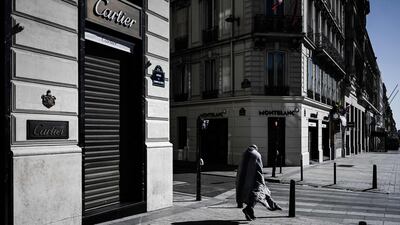
This picture taken on March 23, 2020 shows a homeless person walking down the deserted Champs Elysees in Paris, during the strict lockdown in France to stop the spread of the COVID-19 novel coronavirus. / AFP / Philippe LOPEZ -
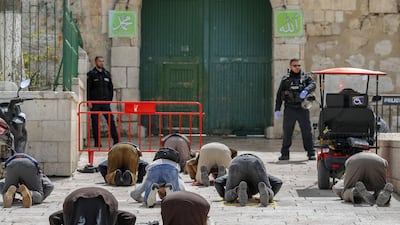
This picture taken on March 23, 2020 shows Palestinian Muslim men prostrate in prayer as Israeli security forces watch near the closed gate of the Aqsa mosque compound, which was closed by the Jordan Waqf religious authority administering the site as part of preventive measures against the spread of the COVID-19 novel coronavirus, in Jerusalem. / AFP / Ahmad GHARABLI -

This picture taken on March 23, 2020 shows a woman taking part in an online pilates class at home, as her dog Elvis stretches next to her, in Nicosia, as restrictions on movement and social distancing were imposed across Cyprus to contain the spread of the COVID-19 novel coronavirus. / AFP / Christina ASSI -

This picture taken on March 23, 2020 shows a pallbearer taking a picture of a coffin for the relatives of a deceased person at the cemetery of Grassobbio in the province of Bergamo, as they could not attend the ceremony because they are in quarantine as a result of the COVID-19 novel coronavirus. / AFP / Piero CRUCIATTI -
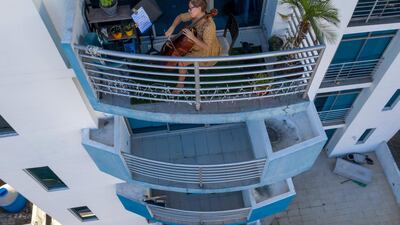
This picture taken on March 23, 2020 shows Uruguayan cellist Karina Nunez playing on the balcony of her apartment in Panama City, during the mandatory isolation from 5pm to 5am as a preventive measure against the spread of the COVID-19 novel coronavirus. / AFP / Luis ACOSTA -
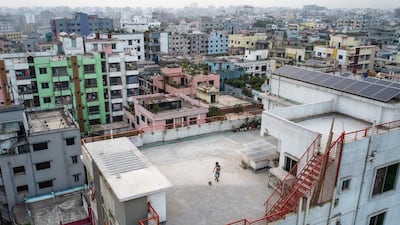
This picture taken on March 23, 2020 shows Samin Sharar, 9, playing on the rooftop of his building in Dhaka, as he avoids going out due to fears over the COVID-19 novel coronavirus. / AFP / Munir UZ ZAMAN -
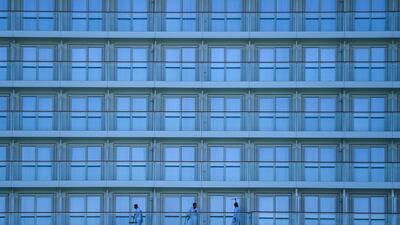
This picture taken on March 23, 2020 shows Norwegian Cruise Line employees cleaning a cruise ship in Miami, amid fears over the spread of the COVID-19 novel coronavirus. / AFP / Chandan KHANNA -

This picture taken on March 23, 2020 shows people in their apartments, amid fears over the spread of the COVID-19 novel coronavirus, in central Bangkok. / AFP / Mladen ANTONOV -
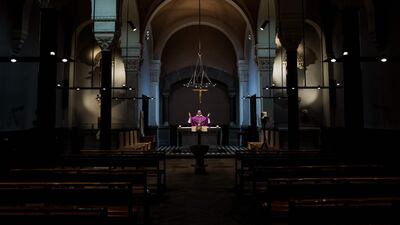
TOPSHOT - Auxiliary bishop of Lyon Emmanuel Gobilliard holds a streamed live Mass in the empty Saint-Irenee church, in Lyon, on March 24, 2020, on the eighth day of a lockdown aimed at curbing the spread of the virus. / AFP / JEFF PACHOUD -

This picture taken on March 23, 2020 shows Lookslikeavido fashion designer David Avido (C), 24, who makes face masks from remnants of cloth he uses and distributes them to the public for free almost everyday, giving his handmade face masks to people at a butcher shop in Kibera as a preventive measure against the spread of the COVID-19 novel coronavirus. / AFP / Yasuyoshi CHIBA -
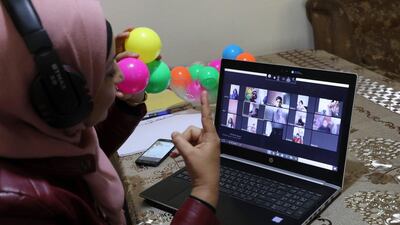
This picture taken on March 23, 2020 shows Palestinian teacher Jihad Abu Sharar presenting an online class from her home in the village of Dura near Hebron in the occupied West Bank, after schools were closed as a preventive measure against the spread of the COVID-19 novel coronavirus. / AFP / Hazem BADER -
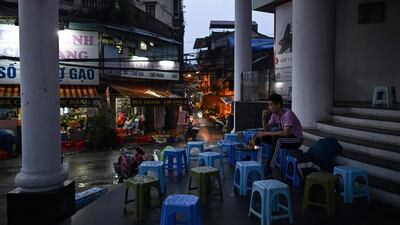
This picture taken on March 23, 2020 shows a man sitting alone at a street-cafe, amid concerns over the spread of the COVID-19 novel coronavirus, in Hanoi. / AFP / Manan VATSYAYANA -
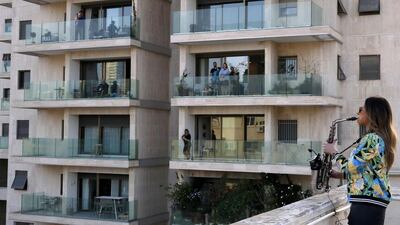
This picture taken on March 23, 2020 shows saxophonist Yarden Klayman performing on a rooftop for residents of Basel Square in Tel Aviv after her concert was cancelled due to the COVID-19 novel coronavirus. / AFP / Jack GUEZ -
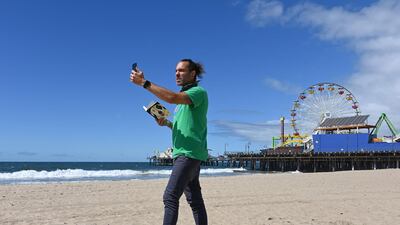
This picture taken on March 23, 2020 shows Adam Duford, owner of Surf City Tours, describing iconic sites in Santa Monica, California as part of a "virtual tour" via his Instagram feed, as the COVID-19 novel coronavirus situation forced his normal tour bus business to come to a halt. / AFP / Robyn Beck -

This picture taken on March 23, 2020 shows human resources professional Diya RoyChowdhury listening to music on her mobile phone while working from home in Mumbai, during a partial lockdown as a preventive measure against the spread of the COVID-19 novel coronavirus. / AFP / Indranil MUKHERJEE -

This picture taken on March 23, 2020 shows Yuki Sato, an employee in a startup company, working from home as a result of the COVID-19 novel coronavirus in Tokyo, as his daughters Yurina (L) and Hinano play and his wife Hitomi uses a mobile phone. / AFP / Behrouz MEHRI -

This picture taken on March 23, 2020 shows food delivery rider Dixon Abreu on a bicycle along the 9 de Julio Avenue in Buenos Aires, as he delivers meals due to an increase in orders as a result of the COVID-19 novel coronavirus. / AFP / Ronaldo SCHEMIDT -

This picture taken on March 23, 2020 shows a runner crossing a road closed to traffic as she exercises in Greenwich Park in south London, as people come to terms with the government's request for social distancing as a preventive measure against the spread of the COVID-19 novel coronavirus. / AFP / Ben STANSALL -

This picture taken on March 23, 2020 shows a member of the Layenne community praying in the sacred Cave of Almadies, where the community's upcoming annual pilgrimage has been cancelled due to the COVID-19 novel coronavirus, in Dakar. / AFP / John WESSELS -

This photo taken on March 23, 2020 shows Kwok Lam-sang, 67, who has been performing covers of Elvis Presley songs under the name of "Melvis" since 1992, walking with his guitar past closed bars in the usually busy drinking area of Lan Kwai Fong in Hong Kong, after restaurants and bars in the city were banned from selling alcohol as a preventive measure against the spread of the COVID-19 novel coronavirus. / AFP / Anthony WALLACE -

This picture taken on March 23, 2020 shows Bambang Soetono (C) and his relatives taking part in noon Islamic prayers at his home in Tangerang, after the government called on Muslims to avoid religious gatherings and practise social distancing as a preventive measure against the spread of the COVID-19 novel coronavirus. / AFP / Adek BERRY -

This picture taken on March 23, 2020 shows artist S.F., 16, spraypainting graffiti inspired by the COVID-19 novel coronavirus on the roof of his apartment building in Athens. - RESTRICTED TO EDITORIAL USE - MANDATORY MENTION OF THE ARTIST UPON PUBLICATION - TO ILLUSTRATE THE EVENT AS SPECIFIED IN THE CAPTION / AFP / Aris Messinis / RESTRICTED TO EDITORIAL USE - MANDATORY MENTION OF THE ARTIST UPON PUBLICATION - TO ILLUSTRATE THE EVENT AS SPECIFIED IN THE CAPTION -

This picture taken on March 23, 2020 shows members of a family studying together at home in Khartoum, as schools and universities close as a preventive measure against the spread of the COVID-19 novel coronavirus. / AFP / Ashraf SHAZLY -
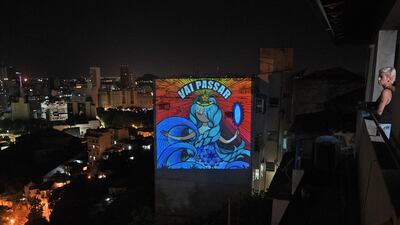
This picture taken on March 23, 2020 shows graffiti artist Rafamon projecting her artwork with a message that reads, "Vai Passar" (It will pass) onto a building near her home in Rio de Janeiro, after she decided to self-isolate as a preventive measure against the COVID-19 novel coronavirus. - RESTRICTED TO EDITORIAL USE - MANDATORY MENTION OF THE ARTIST UPON PUBLICATION - TO ILLUSTRATE THE EVENT AS SPECIFIED IN THE CAPTION / AFP / Carl DE SOUZA / RESTRICTED TO EDITORIAL USE - MANDATORY MENTION OF THE ARTIST UPON PUBLICATION - TO ILLUSTRATE THE EVENT AS SPECIFIED IN THE CAPTION


I’ve seen too much war in my lifetime, but there is one thing I know: war, humanitarian catastrophes and pandemics bring out the worst. But they also bring out the very best in people.
They gives people a chance to be the best version of themselves, and to be of service in the most profound way.
They allow them to be selfless, and to focus on the life of another human being. If bankers on Wall Street and in the City of London were rewarded in the past for greed and avarice with enormous annual bonuses, then we can surely find a way to reward the best test of our society right now: the people keeping us alive during the coronavirus pandemic.
Today, I received an email from Yale University, where I teach, with a photo of all of the alumni working on the front line in their masks. “Superheroes don’t always wear capes,” it read. Something about that touched me deeply. I could not agree more.
Janine di Giovanni is a senior fellow at Yale University’s Jackson Institute for Global Affairs and the author of The Morning They Came for Us: Dispatches from Syria

