

It's considered Morocco's worst earthquake since the 1960 devastation in the western coastal town of Agadir that killed an estimated 15,000 people and injured thousands more. Another 600 or so were killed when another disaster struck in 2004. Even as earthquakes have wreaked destruction in the North African country in the past, this most recent one could take months, if not years, for it to recover from, the International Federation of Red Cross and Red Crescent Societies has cautioned.
On Friday night, the 6.8 magnitude earthquake struck in the Atlas Mountains and exacted a cruel toll, one that is still rising: at least 2,012 people have been confirmed dead and thousands injured in Marrakesh and in regions to the south. In the 72 hours since, hundreds of people in Morocco have slept in open spaces, camping by the roads and streets, understandably fearful of returning indoors. Mouhamed Ayat Elhaj, a resident, said: "I returned to my house and noticed many cracks in the walls. I cannot sleep there." People are also worried with reason about tremors and aftershocks, which add to the trauma and damage where earthquakes occur.
In Morocco's hour of need, and as the country is in three days of mourning, world leaders expressed condolences to King Mohammed VI and his people. They also banded together, as is appropriate for the international community, to organise and send aid. President Sheikh Mohamed ordered an air bridge to be opened on Saturday to enable the relief effort. A similar air bridge in February enabled the UAE to send 260 flights with aid for the Turkey-Syria earthquake, which saw huge destruction and claimed 50,000 lives.
Other world leaders, many of whom were gathered in New Delhi for the G20 summit, also sent condolences and messages of support, including Saudi Arabia, Egypt and Turkey. Pledges came promptly from several countries in the Middle East, including Jordan, whose authorities said it will send aid flights. Algeria opened its airspace for the first time in two years so that flights could carry assistance. Additionally, the US, UK, France, Germany and Spain said they were preparing emergency aid.
Unfortunately, as any country that has experienced natural disasters knows all too well, the aftermath endures for a long time. Even as humanitarian instincts unite and propel foreign aid to be rushed into Morocco, the suffering of people is immense and not easily healed. Those who've lost loved ones, perhaps under the rubble, have to grapple with not just their own sorrow – conducting absentee funeral prayers for family members – but also with strained financial circumstances, as the local economy falters and disrupts livelihoods.
A major driver of the local economy is tourism, which is gravely affected as villages were flattened and Marrakesh, a famous World Heritage site, assess the extent of damage to its historical landmarks. The Kharbouch Mosque's minaret, on Jemaa El Fna square, has been badly damaged and the minaret of the Koutoubia Mosque, a Unesco heritage site from the 12th century, has had substantial cracks.
In the coming days and weeks, as the country fully assimilates its loss, the international community must continue to exercise compassion. It must not forget that the thousands of people in Morocco – who have overnight been robbed of family and homes – will need a steadying hand as the country begins the slow and painful process of getting back on its feet.
-
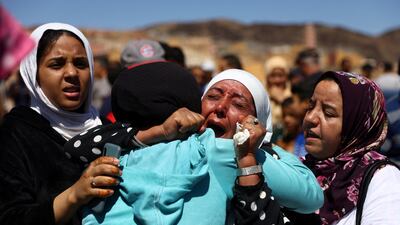
People react during the funeral of two victims of the deadly earthquake, in Moulay Brahim, Morocco. Reuters -
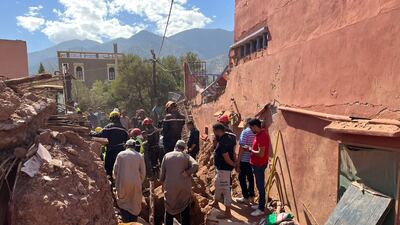
Earthquake devastation in Douar El Darb village in Weguen municipality of El Haouz district. Photo: Ghaya Ben Mbarek / The National -
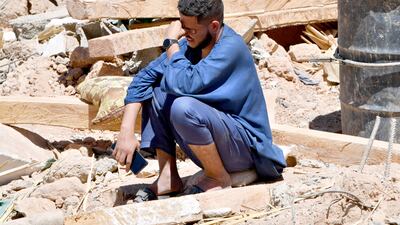
A man cries as he sits on the rubble of a house in the village of Tiksit, south of Adassil, two days after a devastating 6. 8-magnitude earthquake struck the country. Moroccans on September 10 mourned the victims of a devastating earthquake that killed more than 2,000 people as rescue teams raced to find survivors trapped under the rubble of flattened villages. AFP -
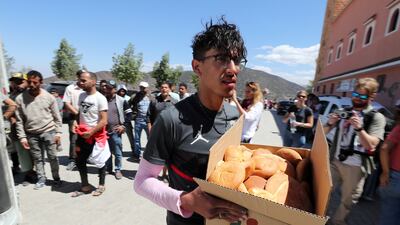
A man distributes bread to locals, in Moulay Brahim, south of Marrakesh, Morocco, following a powerful earthquake. The earthquake has affected more than 300,000 people in Marrakesh and its outskirts, the UN Office for the Coordination of Humanitarian Affairs (OCHA) said. Morocco's King Mohammed VI declared a three-day national mourning for the victims of the earthquake. EPA -

Villagers inspect the rubble of collapsed houses in Tafeghaghte, 60 kilometres (37 miles) southwest of Marrakesh, as rescue teams raced to find survivors. AFP -
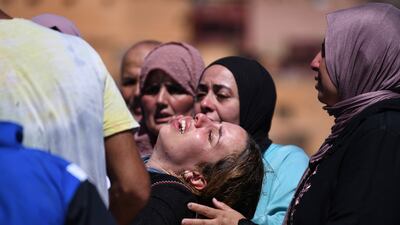
Women cry as they mourn victims of the earthquake in Moulay Brahim in the province of Al Haouz, Morocco. AP Photo -
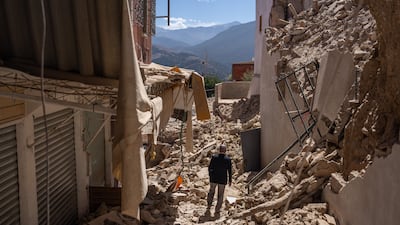
A man walks amongst the rubble of collapsed buildings following yesterday's earthquake, in Moulay Brahim, Morocco. Getty Images -
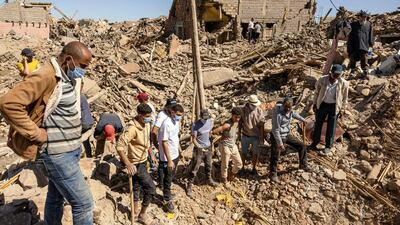
Volunteers watch as a digger moves rubble of collapsed houses in Tafeghaghte, 60 kilometres (37 miles) southwest of Marrakesh. AFP -
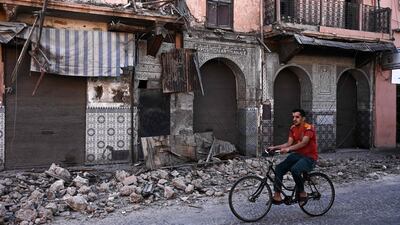
A man rides a bicycle past an earthquake-damaged building in the old quarters of Marrakesh. AFP -
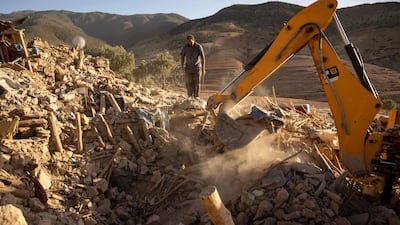
Rescue workers dig through rubble after an earthquake in the mountain village of Tafeghaghte, southwest of the city of Marrakesh. AFP -
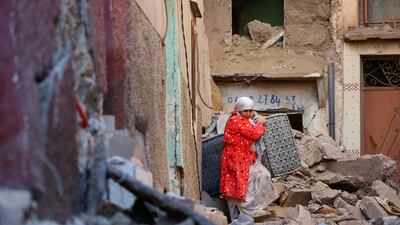
A woman carries belongings out of a damaged building in the aftermath of a deadly earthquake in Moulay Brahim, Morocco. Reuters -
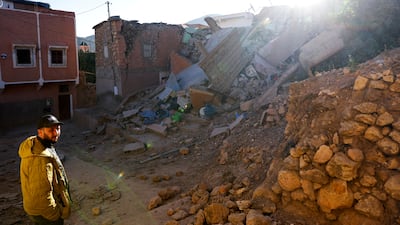
A man stands next to damaged buildings and debris, in the aftermath of a deadly earthquake in Moulay Brahim, Morocco. Reuters -
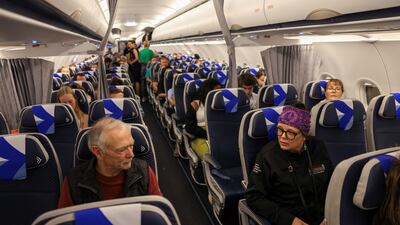
Foreign visitors to Morocco are evacuated from Marrakesh on a special Aegean Airlines flight following a powerful earthquake. Reuters -
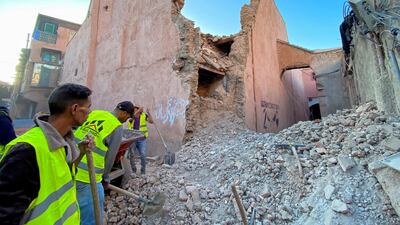
People work to clear debris in the historic city of Marrakesh after a 6.8-magnitude earthquake in Morocco. Reuters -
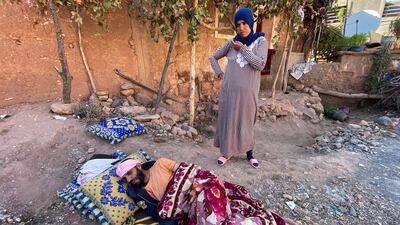
An injured man lies on the ground as he and his wife prepare to spend a second night in the open air in the village of Tansghart, Morocco. Reuters -
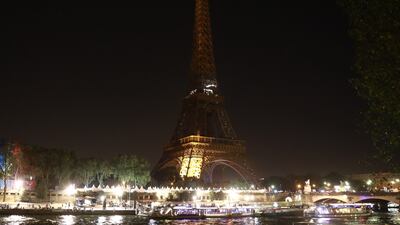
The Eiffel Tower's lights are turned off in Paris as a tribute to the victims of the Morocco earthquake. Getty Images -

A damaged room in the village of Tansghart after a powerful earthquake in Morocco. Reuters -
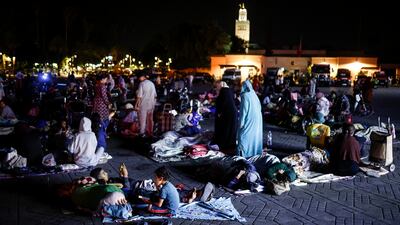
Hundreds of people sleep outside on Jeema El Fna square in Marrakesh after a deadly earthquake hit Morocco. EPA -
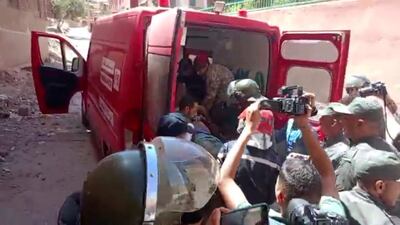
A person is rescued from under rubble and taken into an ambulance in Moulay Brahim village after an earthquake in Morocco that killed more than 2,000 people. Reuters -

A Moroccan man stands near his home in Al Haouz province, which was damaged during the quake. Reuters -

People sleep inside the Marrakesh airport waiting for a flight after the earthquake. EPA -

People sit in a tent on Mohammed VI Avenue in Marrakesh. EPA -
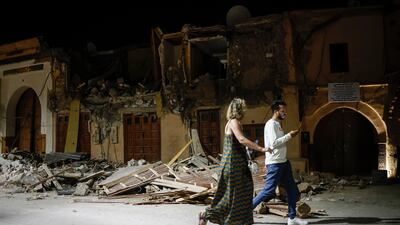
Many homes in Marrakesh were badly damaged during the magnitude 6.8 earthquake. EPA -
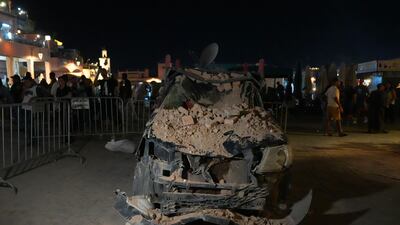
A car lies damaged under fallen rubble from a nearby building in Marrakesh. Getty Images -
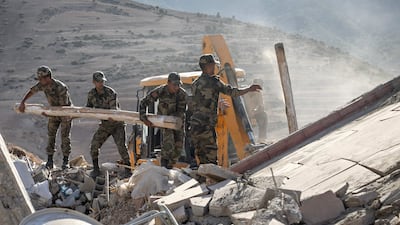
Moroccan Royal Armed Forces search through the rubble of houses after an earthquake in the mountain village of Tafeghaghte, south-west of the city of Marrakesh. AFP -
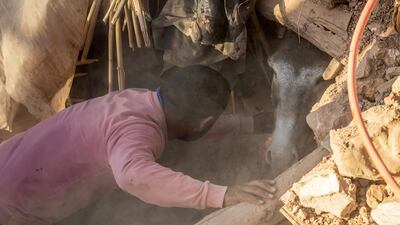
A man rescues a donkey trapped under rubble after an earthquake in the mountain village of Tafeghaghte, south-west of the city of Marrakesh. AFP -
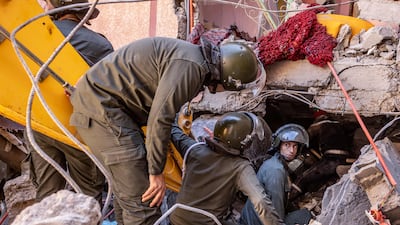
Rescue workers search for survivors in a collapsed house in Moulay Brahim, Al Haouz province, after an earthquake on Friday. AFP -
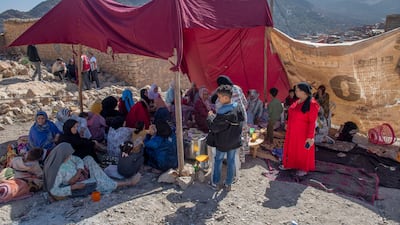
The earthquake that hit central Morocco killed more than 2,000 people and injured more than 2,000 others, according to a provisional report from the country's Interior Ministry. EPA -
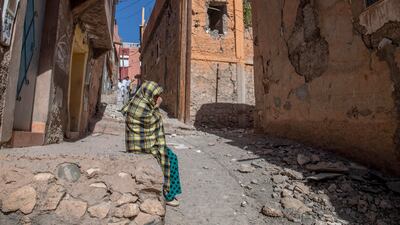
The earthquake, measuring magnitude 6.8 according to the USGS, damaged buildings from villages and towns in the Atlas Mountains to Marrakesh. EPA -
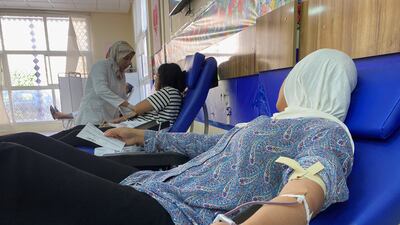
People donate blood following a powerful earthquake in the historic city of Marrakesh. Reuters -
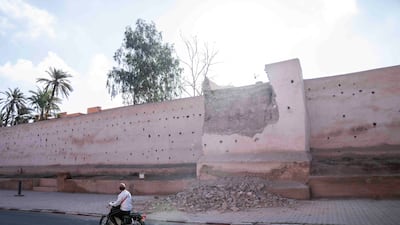
A man drives past a damaged wall of the historic Medina of Marrakesh. AP Photo -
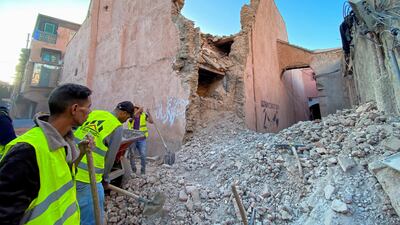
People work next to damage in Marrakesh. Reuters -
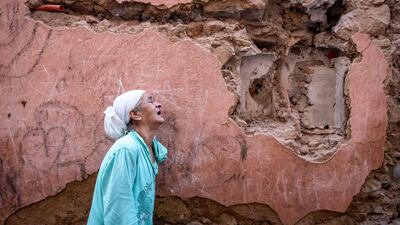
A woman reacts standing in front of her house damaged by an earthquake in the old city in Marrakesh. AFP -
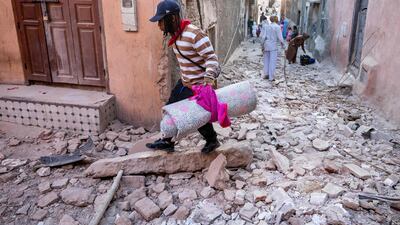
A man walks with his belongings through the rubble in an alleyway in the earthquake-damaged old city in Marrakesh. AFP -
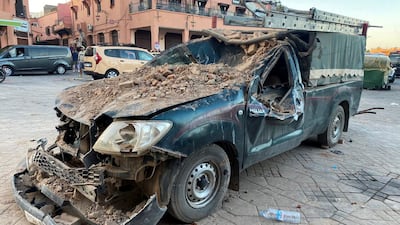
A damaged vehicle is pictured in the historic city of Marrakesh, following a powerful earthquake in Morocco on Friday. Reuters -
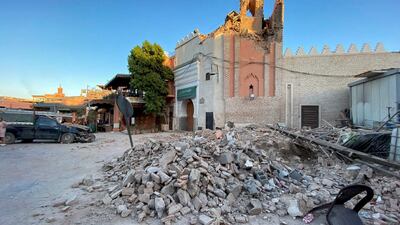
A view shows damage at an old mosque in the historic city of Marrakesh. Reuters -
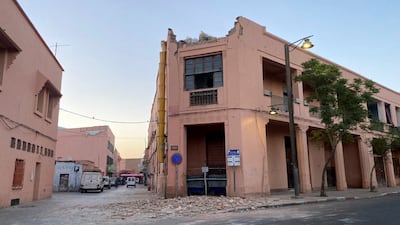
A view shows damage in Marrakesh. Reuters -
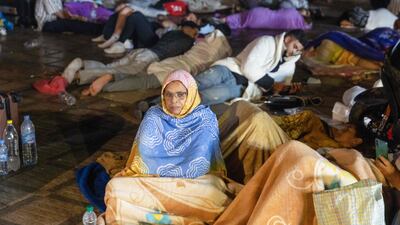
Residents take shelter outside at a square following an earthquake in Marrakesh on Friday. AFP -
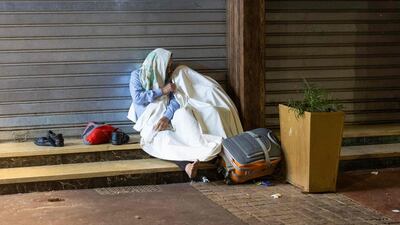
More than 2,000 people were killed after a powerful earthquake rattled Morocco on Friday night, with Marrakesh residents reporting "unbearable" screams after the 6.8-magnitude quake. AFP -
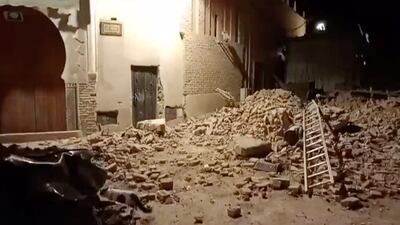
Debris in the aftermath of an earthquake in Marrakesh. Reuters -
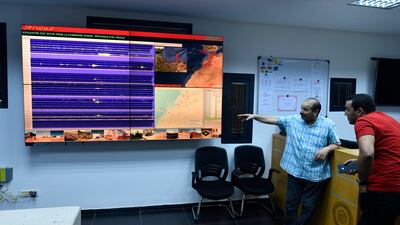
Employees of Morocco's National Institute of Geophysics in Rabat monitor earthquake developments on a screen. EPA -
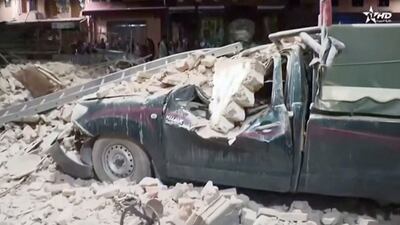
Debris and wreckage in the streets of Marrakesh. Reuters -
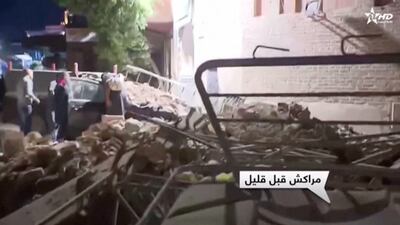
Earthquake damage in Morocco. Reuters -
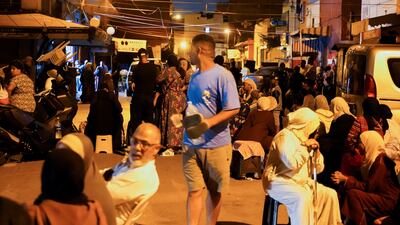
In Casablanca, residents gather after Friday's earthquake. Reuters -
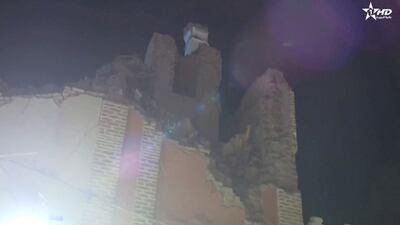
Damage to a building in Marrakesh in the aftermath of the earthquake. Reuters



