

It has been a significant week for the UAE in reinforcing Emirati national identity and instilling a sense of pride in its people. And it has capped off a remarkable year in terms of cultural milestones, with Abu Dhabi’s Saadiyat Cultural District at the centre of one of the most important of these achievements: the inauguration this week of the Zayed National Museum, on the UAE’s 54th National Day.
The completion of this immense national project, which had been in the works for more than a decade, was commemorated on Tuesday night, with celebrations witnessed by the rulers of all seven emirates in attendance.
To fittingly mark the legacy of the UAE's Founding Father, the late Sheikh Zayed bin Sultan Al Nahyan, the UAE National Orchestra conducted its first performance on the museum's opening night and paid a stirring musical tribute to the grand vision of Sheikh Zayed. As President Sheikh Mohamed said, "The new museum offers a window on to the UAE’s culture, heritage and traditions throughout history."
To appreciate fully the weight that such a moment carries, a dip into the history of the land is helpful. Which is to say, a visit to the museum is warranted to glean why exactly this is a historical moment.
Inside the six permanent galleries of the museum, the history of the ancient Emirati people and of the region is told through exhibits that go much further back into the stories of the land than when the foundations of a nation were laid down in the mid-20th century. On a visit to the museum one will learn that the beginning is marked by a 300,000-year-old stone tool found at Jebel Hafeet in Al Ain.
For visitors, the symbolic weight is evident even from a distance, as one draws closer to the museum and takes in the well-thought-out details of the building design. The striking facade of the monument, for example - the angled steel protrusions inspired by the wing of a falcon in flight designed by Foster + Partners– show the land's close relation to falconry, and are an instantly striking feature.
The sense of national pride that Emiratis feel with the doors of the museum opened to the public this week has also to do with how the museum collections came to be. Contributions of local cultural organisations have been pivotal, as have those from private collections across the UAE. The result is a comprehensive narration of the country’s history. The value of such a feat of collective unity is undeniable and it will play a sizeable role in furthering the UAE’s national identity.
Some of the most reputable cultural institutions in the world function as centres of learning. In this regard, too, Zayed National Museum is expected to encourage research into the region spanning present-day UAE, particularly given its important yet sometimes-underappreciated role in the human evolution.
The Zayed National Museum, then, is an opportunity for citizens, residents and visitors to engage with the country’s rich history, and appreciate how far the country has come and the progress that decades and millennia have brought to this land.
-
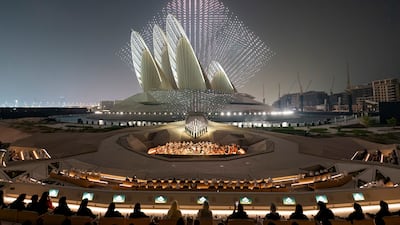
A drone show at the 54th Eid Al Etihad official celebration at the Zayed National Museum in Abu Dhabi. All photos: UAE Presidential Court -
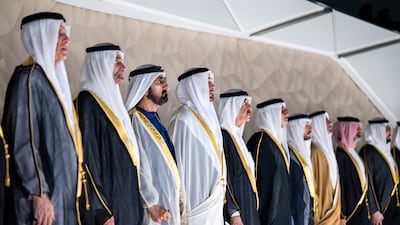
President Sheikh Mohamed, Sheikh Mohammed bin Rashid, Vice President, Prime Minister and Ruler of Dubai, Sheikh Mansour bin Zayed, Vice President, Deputy Prime Minister and Chairman of the Presidential Court, Sheikh Hamad bin Mohammed Al Sharqi, Ruler of Fujairah, Sheikh Saud bin Rashid Al Mualla, Ruler of Umm Al Quwain, and Sheikh Saud bin Saqr Al Qasimi, Ruler of Ras Al Khaimah, stand for the national anthem -
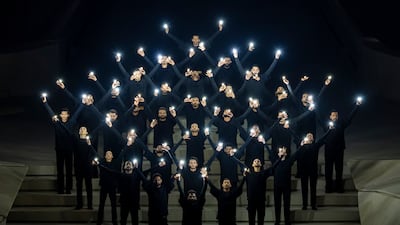
The extravaganza was beamed live to all seven emirates -
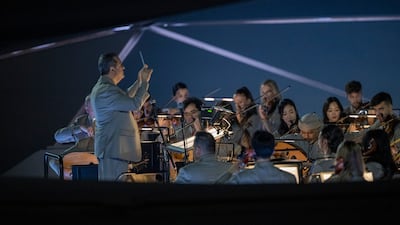
The UAE National Orchestra offered a stirring soundtrack -
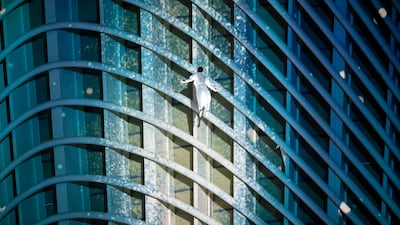
The venue is primed to be a jewel in the crown of Abu Dhabi's Saadiyat Cultural District -
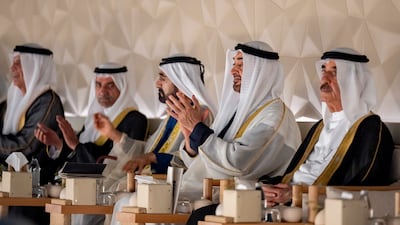
Sheikh Mohamed, Sheikh Mohammed bin Rashid, Sheikh Hamad bin Mohammed, Sheikh Saud bin Rashid and Sheikh Saud bin Saqr watch the show -
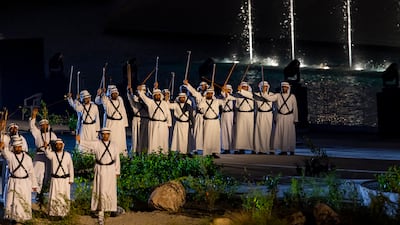
Archive footage and artistic performances documented the journey of the nation’s communities across thousands of years -
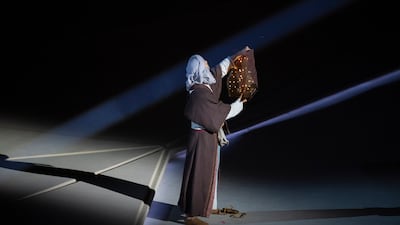
A narrator told how UAE Founding Father, the late Sheikh Zayed bin Sultan Al Nahyan, was a 'guardian of the desert' and 'explorer of the seas' -
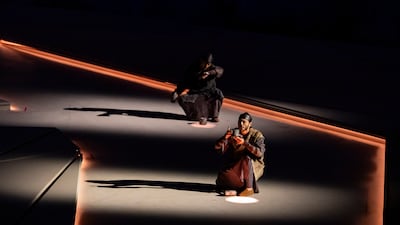
Sheikh Zayed recognised that 'true wealth lies in people' and that 'God's blessings must be shared' -
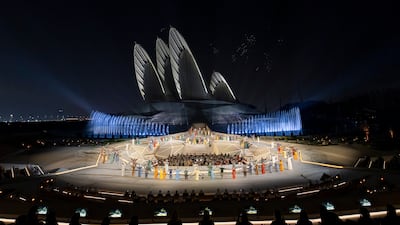
The Zayed National Museum served as a stunning backdrop to a series of theatrical performances held on its sprawling grounds -
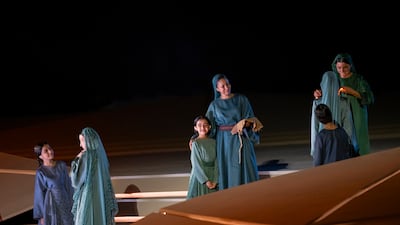
The show highlighted how the roots of the past continue to act as the firm foundation to cultivate growth -
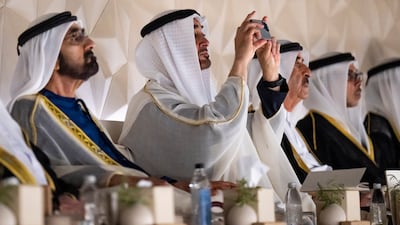
Sheikh Mohamed could be seen taking photos of the event, with Sheikh Mohammed bin Rashid, Sheikh Mansour and Sheikh Saud bin Rashid -
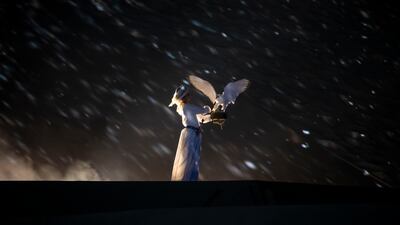
The show was non-chronological, regularly sweeping forwards and back in time during the country's history -
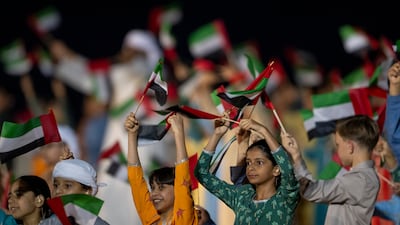
The UAE flag was a common sight -
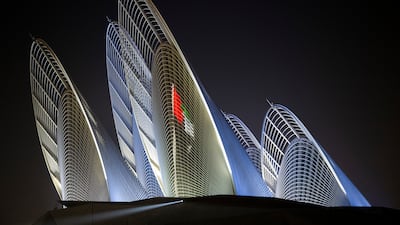
Zayed National Museum officially opens on Wednesday



