

Securing a lasting peace in Afghanistan has become one of the most bedevilling diplomatic tasks of the 21st century. Last February witnessed some cautious optimism when the Afghan government and the Taliban signed an initial peace agreement. Very few expected this to be an immediate game-changer, however, and the terrible violence that has taken place in the country this year has unfortunately proven the sceptical majority right.
Amid this bleak reality, US Secretary of Defence Christopher Miller made an unannounced visit to Afghanistan last week. Mr Miller met Afghan leader Ashraf Ghani to discuss US support to Kabul as President Donald Trump proceeds with plans to withdraw thousands more American troops from Afghanistan before President-elect Joe Biden takes office.

Mr Ghani is dealing this new security situation as peace talks are scheduled to resume with the Taliban on January 5. However, if recent history is anything to go by, negotiations are unlikely to deliver a peace dividend anytime soon. Since talks began in September, both sides have only managed to agree on procedural rules for future negotiations, as well as present each other with a list of topics they would like to discuss. Neither side is pleased with the other's proposed agenda and the Taliban have yet to renounce the violence that is ruining the lives of Afghans.
-
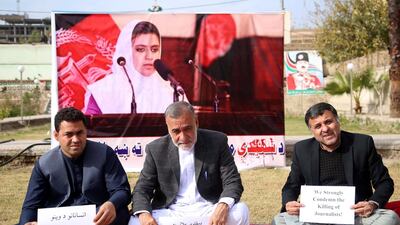
Journalists at a protest against the killing of Malala Maiwand, an Afghan journalist who was killed on 11 December. No group has claimed the attack. EPA -
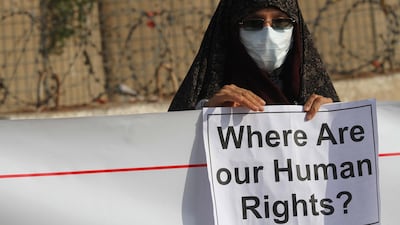
Activists gather in front of the UN office in Herat, Afghanistan, to demand peace and an end to war. EPA -
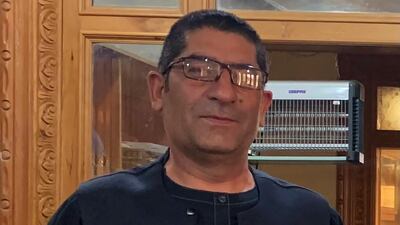
Afghan Journalist Rahmatullah Nikzad who was shot dead by unknown assailants in Afghanistan's central Ghazni province on Monday. AP -
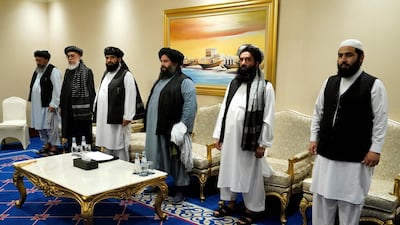
Members of the Taliban's peace negotiation team taking part in talks with the Afghan government in Doha. Reuters -
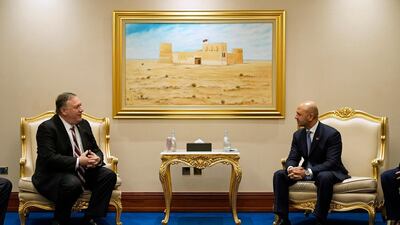
US Secretary of State Mike Pompeo talks to Afghanistan's State Minister for Peace Sayed Sadat Mansoor Naderi in Doha last November. The Afghan government and the Taliban are trying to hammer out a peace deal. AP -
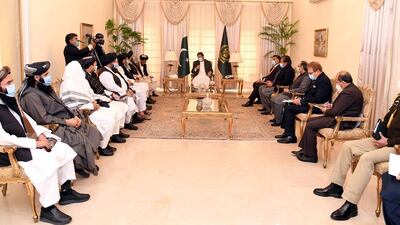
A Taliban delegation talking to Pakistan's Prime Minister Imran Khan in Islamabad last week. The two groups met to discuss an ongoing peace process. EPA -
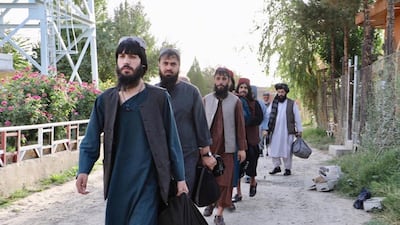
Taliban prisoners preparing to leave a government prison in Kabul, Afghanistan, as part of an arrangement to persuade the insurgent group to start peace talks. EPA


While such meetings amble along in luxury hotels abroad, life in Afghanistan remains as dangerous as before. This month alone, it is estimated that at least 93 civilians and 159 members of pro-government forces have been killed. Many of these deaths are at the hands of the Taliban, who, despite securing major rewards for agreeing to talks, including the Afghan government releasing up to 5,000 of their prisoners, continue to kill innocent Afghans at will.
The reality of daily life in Afghanistan and the noble goals of the lumbering peace process increasingly seem worlds apart. While peace negotiators squabble for days over an order of agenda, an almost daily chain of lethal "sticky bomb" attacks terrify civilians.
No earnest effort to build peace should ever be denigrated, particularly in a country such as Afghanistan, which has enjoyed so little of it.But the simple fact of the peace talks' existence cannot become a means by which the Taliban traps the government and its international backers into inaction. With no reduction in their acts of violence, serious questions must be asked about the group's sincerity in the peace process.
In the Taliban's proposed agenda for the next round of talks, a ceasefire is the very last item they list. The group, therefore, is holding out until the very end before it even entertains the prospect of ending its campaign of violence and the shedding of Afghan blood. If the pace of talks matches that of previous ones, this will be an intolerable burden for Afghans. It also shows that ending bloodshed is simply not a moral priority for the Taliban.
Such an attitude to peace reminds us that at the centre of all terrorist ideologies lies the extreme narcissism of self-serving political obsessions – never the lives and prosperity of innocent people.

