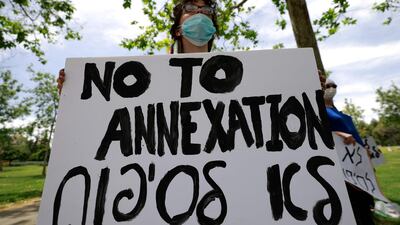
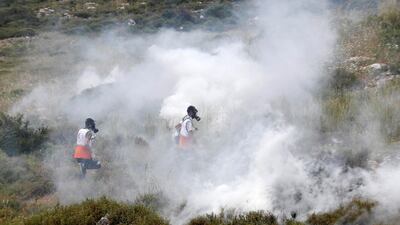
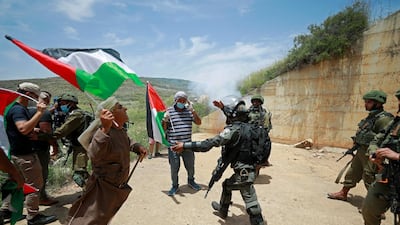
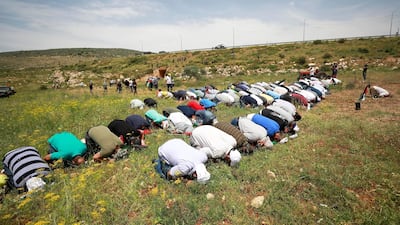
Israel’s control over the natural resources of the territories it occupies – whether in the Syrian Golan or in Palestine – has been one of the most important elements guiding Israeli policies, including the construction of the illegal annexation wall or the declaration of vast zones of the Jordan Valley as closed military zones.
Any peace plan has to take into consideration sovereign Palestinian rights over such resources. The so-called plan and “vision” presented by the US, however, not only ignore these rights, mainly with respect to water, but also endorse the Israeli vision of theft and the rejection of meaningful co-operation.
As per the bilateral negotiations that have long taken place between Israel and Palestine, water is considered a “permanent status issue”, meaning it is fundamental to a lasting resolution. While Israel has relied on the benefits it gains from controlling Palestinian natural resources thus far, this is not compatible with the idea of a sovereign Palestinian state.
In order to design a coherent legal and policy strategy, we on the Palestinian side have engaged with some of the most respected water experts in the world, including Professor Stephen McCaffrey, who was an architect of the 1997 UN Convention on the Law of Non-Navigational Uses of International Transboundary Watercourses, the main international legal reference for such matters.
Explaining the Palestinian position on this is not complicated: we are demanding what is rightfully ours.
Palestine and Israel share three aquifer basins that go through the West Bank, in addition to a coastal aquifer underneath Gaza. We also share the Jordan River basin along with Jordan, Syria and Lebanon. The four Arab countries with rights over the basin, including Palestine, are signatories to the 1997 UN convention.
Any solution has to be in line with a basic principle: what is shareable has to be shared, and the quotas per country have to be established based on the rules that form the basic principles for peaceful relations between states.
Israel’s near-monopoly over Palestinian water resources has been catastrophic for our economy in general and to our people in particular. Few are aware that we need Israeli permission to dig a new water well or even to rehabilitate an existing one. This has led to a situation whereby Palestinians have the lowest water consumption per capita in the region.
The water available to us in Gaza, moreover, is not even fit for human consumption. This was well documented in one UN report titled Gaza 2020: a Liveable Place?. Access to clean water and sanitation is a human right – surely, that is beyond dispute.
The team in Washington behind the US’s proposal had access to all of this information, but their goal was not to bring about a peace plan. It was rather a vision to normalise Israel’s control over Palestinian people, land and natural resources through annexation.
Although I understood that Washington was ideologically adamant about giving Israel all of Jerusalem and its illegal settlements, even I did not expect that it would totally dismiss Palestinian rights to water under international law.
The water made available to us in Gaza is not even fit for human consumption
The annexation of the Jordan Valley and the Palestinian part of the Jordan river should not be considered a mere “security procedure”, but rather a mortal blow to Palestine’s water rights and the possibility of reaching our full potential, which requires sovereign control over all the aspects of our economy.
Water, as demonstrated in the negotiation process, is an issue that calls for Israeli-Palestinian and Arab co-operation.
In several multilateral forums, including negotiations over the Red Sea-Dead Sea Water Conveyance project, an international initiative to prevent the shrinking of the Dead Sea, Palestinians managed to secure our riparian rights in the Jordan River basin and the Dead Sea. Israel was required to recognise them in order to become a part of the project.
Today, Mr Trump’s plan is telling us: “Forget it”.
The plan states that each party ought to recognise the right of the other to its “remaining water”. But if even Palestine’s maritime borders are under Israeli control, what water remains for us? It dictates, furthermore, that Israel and Palestine explore desalination and the treatment of wastewater – all the while, Israel will consume our legitimate water resources.
The Trump plan ignores the importance that the Jordan River has for any Palestinian economic model, including any ability to benefit from our heritage sites. It denies us Al Maghtas – an important Christian pilgrimage site – as well as the Dead Sea and its minerals.
The agreement between Jordan, Israel and Palestine that I personally negotiated and signed in December 2013 on the Red Sea-Dead Sea project is set to become, in accordance with Mr Trump’s vision, a bilateral agreement doomed to fail.
Fulfilment of Palestine’s water rights is a basic requirement for a just and lasting peace. As signatories of the 1997 UN convention we believe that the main outlines of a peace agreement between Israel and Palestine should not be, as presented by the Trump administration, legitimisation of theft, but rather an equitable and reasonable allocation of water resources. Is that too much to ask?
Shaddad Attili is Palestine’s former Minister for Water
DUNGEONS%20%26%20DRAGONS%3A%20HONOR%20AMONG%20THIEVES
%3Cp%3EDirectors%3A%20John%20Francis%20Daley%20and%20Jonathan%20Goldstein%3Cbr%3EStars%3A%20Chris%20Pine%2C%20Michelle%20Rodriguez%2C%20Rege-Jean%20Page%2C%20Justice%20Smith%2C%20Sophia%20Lillis%3Cbr%3ERating%3A%203%2F5%3C%2Fp%3E%0A
Terror attacks in Paris, November 13, 2015
- At 9.16pm, three suicide attackers killed one person outside the Atade de France during a foootball match between France and Germany
- At 9.25pm, three attackers opened fire on restaurants and cafes over 20 minutes, killing 39 people
- Shortly after 9.40pm, three other attackers launched a three-hour raid on the Bataclan, in which 1,500 people had gathered to watch a rock concert. In total, 90 people were killed
- Salah Abdeslam, the only survivor of the terrorists, did not directly participate in the attacks, thought to be due to a technical glitch in his suicide vest
- He fled to Belgium and was involved in attacks on Brussels in March 2016. He is serving a life sentence in France
Who has lived at The Bishops Avenue?
- George Sainsbury of the supermarket dynasty, sugar magnate William Park Lyle and actress Dame Gracie Fields were residents in the 1930s when the street was only known as ‘Millionaires’ Row’.
- Then came the international super rich, including the last king of Greece, Constantine II, the Sultan of Brunei and Indian steel magnate Lakshmi Mittal who was at one point ranked the third richest person in the world.
- Turkish tycoon Halis Torprak sold his mansion for £50m in 2008 after spending just two days there. The House of Saud sold 10 properties on the road in 2013 for almost £80m.
- Other residents have included Iraqi businessman Nemir Kirdar, singer Ariana Grande, holiday camp impresario Sir Billy Butlin, businessman Asil Nadir, Paul McCartney’s former wife Heather Mills.
Hunting park to luxury living
- Land was originally the Bishop of London's hunting park, hence the name
- The road was laid out in the mid 19th Century, meandering through woodland and farmland
- Its earliest houses at the turn of the 20th Century were substantial detached properties with extensive grounds
Quick facts on cancer
- Cancer is the second-leading cause of death worldwide, after cardiovascular diseases
- About one in five men and one in six women will develop cancer in their lifetime
- By 2040, global cancer cases are on track to reach 30 million
- 70 per cent of cancer deaths occur in low and middle-income countries
- This rate is expected to increase to 75 per cent by 2030
- At least one third of common cancers are preventable
- Genetic mutations play a role in 5 per cent to 10 per cent of cancers
- Up to 3.7 million lives could be saved annually by implementing the right health
strategies
- The total annual economic cost of cancer is $1.16 trillion
The biog
Name: Abeer Al Bah
Born: 1972
Husband: Emirati lawyer Salem Bin Sahoo, since 1992
Children: Soud, born 1993, lawyer; Obaid, born 1994, deceased; four other boys and one girl, three months old
Education: BA in Elementary Education, worked for five years in a Dubai school
Killing of Qassem Suleimani
OPINIONS ON PALESTINE & ISRAEL
SPEC%20SHEET%3A%20APPLE%20IPAD%20PRO%20(12.9%22%2C%202022)
%3Cp%3E%3Cstrong%3EDisplay%3A%3C%2Fstrong%3E%2012.9-inch%20Liquid%20Retina%20XDR%2C%202%2C732%20x%202%2C048%2C%20264ppi%2C%20wide%20colour%2C%20True%20Tone%2C%20ProMotion%2C%201%2C600%20nits%20max%2C%20Apple%20Pencil%20hover%3C%2Fp%3E%0A%3Cp%3E%3Cstrong%3EChip%3A%3C%2Fstrong%3E%20Apple%20M2%2C%208-core%20CPU%2C%2010-core%20GPU%2C%2016-core%20Neural%20Engine%3C%2Fp%3E%0A%3Cp%3E%3Cstrong%3EMemory%3A%3C%2Fstrong%3E%20Storage%20%E2%80%93%20128GB%2F256GB%2F512GB%20%2F%201TB%2F2TB%3B%20RAM%20%E2%80%93%208GB%2F16GB%3C%2Fp%3E%0A%3Cp%3E%3Cstrong%3EPlatform%3A%3C%2Fstrong%3E%20iPadOS%2016%3C%2Fp%3E%0A%3Cp%3E%3Cstrong%3EMain%20camera%3A%3C%2Fstrong%3E%20Dual%2012MP%20wide%20(f%2F1.8)%20%2B%2010MP%20ultra-wide%20(f%2F2.4)%2C%202x%20optical%2F5x%20digital%2C%20Smart%20HDR%204%3C%2Fp%3E%0A%3Cp%3E%3Cstrong%3EVideo%3A%3C%2Fstrong%3E%20ProRes%204K%20%40%2030fps%2C%204K%20%40%2024%2F25%2F30%2F60fps%2C%20full%20HD%20%40%2025%2F30%2F60fps%2C%20slo-mo%20%40%20120%2F240fps%3C%2Fp%3E%0A%3Cp%3E%3Cstrong%3EFront%20camera%3A%3C%2Fstrong%3E%20TrueDepth%2012MP%20ultra-wide%20(f%2F2.4)%2C%202x%2C%20Smart%20HDR%204%2C%20Centre%20Stage%2C%20Portrait%2C%20Animoji%2C%20Memoji%3B%20full%20HD%20%40%2025%2F30%2F60fps%3C%2Fp%3E%0A%3Cp%3E%3Cstrong%3EAudio%3A%3C%2Fstrong%3E%20Four-speaker%20stereo%3C%2Fp%3E%0A%3Cp%3E%3Cstrong%3EBiometrics%3A%3C%2Fstrong%3E%20Face%20ID%2C%20Touch%20ID%3C%2Fp%3E%0A%3Cp%3E%3Cstrong%3EI%2FO%3A%3C%2Fstrong%3E%20USB-C%2C%20smart%20connector%20(for%20folio%2Fkeyboard)%3C%2Fp%3E%0A%3Cp%3E%3Cstrong%3EBattery%3A%3C%2Fstrong%3E%20Up%20to%2010%20hours%20on%20Wi-Fi%3B%20up%20to%20nine%20hours%20on%20cellular%3C%2Fp%3E%0A%3Cp%3E%3Cstrong%3EFinish%3A%3C%2Fstrong%3E%20Silver%2C%20space%20grey%3C%2Fp%3E%0A%3Cp%3E%3Cstrong%3EIn%20the%20box%3A%3C%2Fstrong%3E%20iPad%2C%20USB-C-to-USB-C%20cable%2C%2020-watt%20power%20adapter%3C%2Fp%3E%0A%3Cp%3E%3Cstrong%3EPrice%3A%3C%2Fstrong%3E%20WiFi%20%E2%80%93%20Dh4%2C599%20(128GB)%20%2F%20Dh4%2C999%20(256GB)%20%2F%20Dh5%2C799%20(512GB)%20%2F%20Dh7%2C399%20(1TB)%20%2F%20Dh8%2C999%20(2TB)%3B%20cellular%20%E2%80%93%20Dh5%2C199%20%2F%20Dh5%2C599%20%2F%20Dh6%2C399%20%2F%20Dh7%2C999%20%2F%20Dh9%2C599%3C%2Fp%3E%0A
NYBL PROFILE
Company name: Nybl
Date started: November 2018
Founder: Noor Alnahhas, Michael LeTan, Hafsa Yazdni, Sufyaan Abdul Haseeb, Waleed Rifaat, Mohammed Shono
Based: Dubai, UAE
Sector: Software Technology / Artificial Intelligence
Initial investment: $500,000
Funding round: Series B (raising $5m)
Partners/Incubators: Dubai Future Accelerators Cohort 4, Dubai Future Accelerators Cohort 6, AI Venture Labs Cohort 1, Microsoft Scale-up
Ten tax points to be aware of in 2026
1. Domestic VAT refund amendments: request your refund within five years
If a business does not apply for the refund on time, they lose their credit.
2. E-invoicing in the UAE
Businesses should continue preparing for the implementation of e-invoicing in the UAE, with 2026 a preparation and transition period ahead of phased mandatory adoption.
3. More tax audits
Tax authorities are increasingly using data already available across multiple filings to identify audit risks.
4. More beneficial VAT and excise tax penalty regime
Tax disputes are expected to become more frequent and more structured, with clearer administrative objection and appeal processes. The UAE has adopted a new penalty regime for VAT and excise disputes, which now mirrors the penalty regime for corporate tax.
5. Greater emphasis on statutory audit
There is a greater need for the accuracy of financial statements. The International Financial Reporting Standards standards need to be strictly adhered to and, as a result, the quality of the audits will need to increase.
6. Further transfer pricing enforcement
Transfer pricing enforcement, which refers to the practice of establishing prices for internal transactions between related entities, is expected to broaden in scope. The UAE will shortly open the possibility to negotiate advance pricing agreements, or essentially rulings for transfer pricing purposes.
7. Limited time periods for audits
Recent amendments also introduce a default five-year limitation period for tax audits and assessments, subject to specific statutory exceptions. While the standard audit and assessment period is five years, this may be extended to up to 15 years in cases involving fraud or tax evasion.
8. Pillar 2 implementation
Many multinational groups will begin to feel the practical effect of the Domestic Minimum Top-Up Tax (DMTT), the UAE's implementation of the OECD’s global minimum tax under Pillar 2. While the rules apply for financial years starting on or after January 1, 2025, it is 2026 that marks the transition to an operational phase.
9. Reduced compliance obligations for imported goods and services
Businesses that apply the reverse-charge mechanism for VAT purposes in the UAE may benefit from reduced compliance obligations.
10. Substance and CbC reporting focus
Tax authorities are expected to continue strengthening the enforcement of economic substance and Country-by-Country (CbC) reporting frameworks. In the UAE, these regimes are increasingly being used as risk-assessment tools, providing tax authorities with a comprehensive view of multinational groups’ global footprints and enabling them to assess whether profits are aligned with real economic activity.
Contributed by Thomas Vanhee and Hend Rashwan, Aurifer
Formula%204%20Italian%20Championship%202023%20calendar
%3Cp%3EApril%2021-23%3A%20Imola%3Cbr%3EMay%205-7%3A%20Misano%3Cbr%3EMay%2026-28%3A%20SPA-Francorchamps%3Cbr%3EJune%2023-25%3A%20Monza%3Cbr%3EJuly%2021-23%3A%20Paul%20Ricard%3Cbr%3ESept%2029-Oct%201%3A%20Mugello%3Cbr%3EOct%2013-15%3A%20Vallelunga%3C%2Fp%3E%0A
Countries recognising Palestine
France, UK, Canada, Australia, Portugal, Belgium, Malta, Luxembourg, San Marino and Andorra
The specs
Engine: 4.0-litre V8 twin-turbocharged and three electric motors
Power: Combined output 920hp
Torque: 730Nm at 4,000-7,000rpm
Transmission: 8-speed dual-clutch automatic
Fuel consumption: 11.2L/100km
On sale: Now, deliveries expected later in 2025
Price: expected to start at Dh1,432,000