The Middle East and North Africa is often unfairly characterised in other parts of the world as being a region that only knows conflict. As this newspaper's coverage has shown, this is a place where innovation and collective achievement – in science and medicine, the arts, sport, business and other areas of civil society – thrive. And as the world continues to reel from the impact of the coronavirus pandemic, progress can be found in every corner of Mena, from locally designed healthcare robots in Tunis to the development of laser-based Covid-19 tests here in Abu Dhabi.
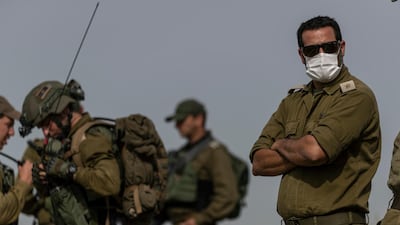
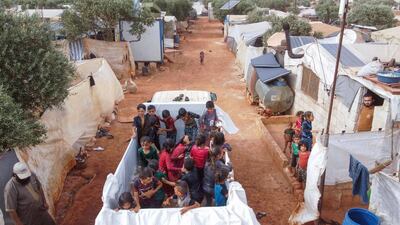
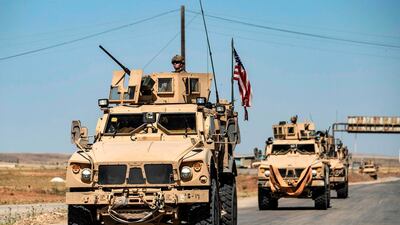
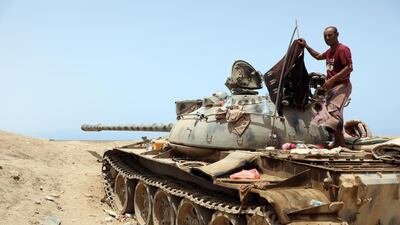
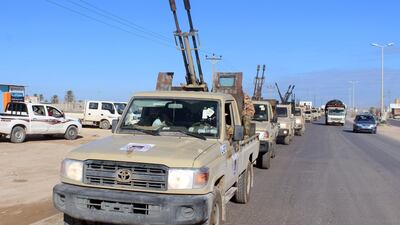
At the same time, a disproportionately large number of countries in the regional map are embroiled in one form of armed conflict or another. Separatist militants continue to destabilise the Sahel. In Libya, the civil war grows increasingly brutal. In Lebanon, Syria, Yemen and Iraq, a combination of jihadists, Iranian proxies, weak institutions and external powers launch wave after wave of assaults upon one another. In the eastern wing of this map, ISIS's influence resurges in Afghanistan and Pakistan, while at the very heart of the region, Israel prepares for an unprecedented annexation of Palestinian territory.
Yet for the first time in a very long time, as coronavirus continues to wash through every country on the map, there is a growing sense that the conflicts plaguing Mena pale in comparison to the actual plague brought on by the pandemic. This is especially the case today, when the nations of the region mark Eid Al Fitr, a time that would any other year be celebrated with family reunions and public feasts.
No war in the history of the Middle East has ever quieted Eid across the entire Muslim ummah the way the pandemic has. It is a force no army or band of militants can reckon with, and a lesson that the well-being of everyone in the region relies on seeing the larger picture.
The United Nations is just one of many voices that have repeatedly called for the nations of the world to use the coronavirus pandemic as an opportunity for a total ceasefire. The benefits of such actions to the Middle East and North Africa would be immeasurable.
The political aspirations that fuel the region’s wars are not trivial, nor would they be resolved through a ceasefire alone. But ending wars has little to do with either side’s desires, and more to do with what it can realistically achieve. Should the Mena region be completely overrun by a highly contagious and, in some cases, deadly virus, little will be achieved for anyone.
The pandemic is a force no army or band of militants can reckon with
Now is the time for the region to rest, convalesce and to take stock of what really matters. Co-operation in health care and economic recovery, and the exploration of political solutions to old conflicts are the wisest courses of action. With a bit of space for these considerations, at least some of the actors in the region’s many conflicts might find that their aspirations can be more aligned than they had previously thought.
ULTRA PROCESSED FOODS
- Carbonated drinks, sweet or savoury packaged snacks, confectionery, mass-produced packaged breads and buns
- margarines and spreads; cookies, biscuits, pastries, cakes, and cake mixes, breakfast cereals, cereal and energy bars;
- energy drinks, milk drinks, fruit yoghurts and fruit drinks, cocoa drinks, meat and chicken extracts and instant sauces
- infant formulas and follow-on milks, health and slimming products such as powdered or fortified meal and dish substitutes,
- many ready-to-heat products including pre-prepared pies and pasta and pizza dishes, poultry and fish nuggets and sticks, sausages, burgers, hot dogs, and other reconstituted meat products, powdered and packaged instant soups, noodles and desserts.
ENGLAND SQUAD
Goalkeepers Henderson, Pickford, Pope.
Defenders Alexander-Arnold, Chilwell, Coady, Dier, Gomez, Keane, Maguire, Maitland-Niles, Mings, Saka, Trippier, Walker.
Midfielders Henderson, Mount, Phillips, Rice, Ward-Prowse, Winks.
Forwards Abraham, Barnes, Calvert-Lewin, Grealish, Ings, Kane, Rashford, Sancho, Sterling.
65
%3Cp%3E%3Cstrong%3EDirectors%3A%20%3C%2Fstrong%3EScott%20Beck%2C%20Bryan%20Woods%3C%2Fp%3E%0A%3Cp%3E%3Cstrong%3EStars%3A%20%3C%2Fstrong%3EAdam%20Driver%2C%20Ariana%20Greenblatt%2C%20Chloe%20Coleman%3C%2Fp%3E%0A%3Cp%3E%3Cstrong%3ERating%3A%20%3C%2Fstrong%3E2%2F5%3C%2Fp%3E%0A
Other acts on the Jazz Garden bill
Sharrie Williams
The American singer is hugely respected in blues circles due to her passionate vocals and songwriting. Born and raised in Michigan, Williams began recording and touring as a teenage gospel singer. Her career took off with the blues band The Wiseguys. Such was the acclaim of their live shows that they toured throughout Europe and in Africa. As a solo artist, Williams has also collaborated with the likes of the late Dizzy Gillespie, Van Morrison and Mavis Staples.
Lin Rountree
An accomplished smooth jazz artist who blends his chilled approach with R‘n’B. Trained at the Duke Ellington School of the Arts in Washington, DC, Rountree formed his own band in 2004. He has also recorded with the likes of Kem, Dwele and Conya Doss. He comes to Dubai on the back of his new single Pass The Groove, from his forthcoming 2018 album Stronger Still, which may follow his five previous solo albums in cracking the top 10 of the US jazz charts.
Anita Williams
Dubai-based singer Anita Williams will open the night with a set of covers and swing, jazz and blues standards that made her an in-demand singer across the emirate. The Irish singer has been performing in Dubai since 2008 at venues such as MusicHall and Voda Bar. Her Jazz Garden appearance is career highlight as she will use the event to perform the original song Big Blue Eyes, the single from her debut solo album, due for release soon.
Milestones on the road to union
1970
October 26: Bahrain withdraws from a proposal to create a federation of nine with the seven Trucial States and Qatar.
December: Ahmed Al Suwaidi visits New York to discuss potential UN membership.
1971
March 1: Alex Douglas Hume, Conservative foreign secretary confirms that Britain will leave the Gulf and “strongly supports” the creation of a Union of Arab Emirates.
July 12: Historic meeting at which Sheikh Zayed and Sheikh Rashid make a binding agreement to create what will become the UAE.
July 18: It is announced that the UAE will be formed from six emirates, with a proposed constitution signed. RAK is not yet part of the agreement.
August 6: The fifth anniversary of Sheikh Zayed becoming Ruler of Abu Dhabi, with official celebrations deferred until later in the year.
August 15: Bahrain becomes independent.
September 3: Qatar becomes independent.
November 23-25: Meeting with Sheikh Zayed and Sheikh Rashid and senior British officials to fix December 2 as date of creation of the UAE.
November 29: At 5.30pm Iranian forces seize the Greater and Lesser Tunbs by force.
November 30: Despite a power sharing agreement, Tehran takes full control of Abu Musa.
November 31: UK officials visit all six participating Emirates to formally end the Trucial States treaties
December 2: 11am, Dubai. New Supreme Council formally elects Sheikh Zayed as President. Treaty of Friendship signed with the UK. 11.30am. Flag raising ceremony at Union House and Al Manhal Palace in Abu Dhabi witnessed by Sheikh Khalifa, then Crown Prince of Abu Dhabi.
December 6: Arab League formally admits the UAE. The first British Ambassador presents his credentials to Sheikh Zayed.
December 9: UAE joins the United Nations.
The five stages of early child’s play
From Dubai-based clinical psychologist Daniella Salazar:
1. Solitary Play: This is where Infants and toddlers start to play on their own without seeming to notice the people around them. This is the beginning of play.
2. Onlooker play: This occurs where the toddler enjoys watching other people play. There doesn’t necessarily need to be any effort to begin play. They are learning how to imitate behaviours from others. This type of play may also appear in children who are more shy and introverted.
3. Parallel Play: This generally starts when children begin playing side-by-side without any interaction. Even though they aren’t physically interacting they are paying attention to each other. This is the beginning of the desire to be with other children.
4. Associative Play: At around age four or five, children become more interested in each other than in toys and begin to interact more. In this stage children start asking questions and talking about the different activities they are engaging in. They realise they have similar goals in play such as building a tower or playing with cars.
5. Social Play: In this stage children are starting to socialise more. They begin to share ideas and follow certain rules in a game. They slowly learn the definition of teamwork. They get to engage in basic social skills and interests begin to lead social interactions.
Managing the separation process
- Choose your nursery carefully in the first place
- Relax – and hopefully your child will follow suit
- Inform the staff in advance of your child’s likes and dislikes.
- If you need some extra time to talk to the teachers, make an appointment a few days in advance, rather than attempting to chat on your child’s first day
- The longer you stay, the more upset your child will become. As difficult as it is, walk away. Say a proper goodbye and reassure your child that you will be back
- Be patient. Your child might love it one day and hate it the next
- Stick at it. Don’t give up after the first day or week. It takes time for children to settle into a new routine.And, finally, don’t feel guilty.
The specs: 2018 Volkswagen Teramont
Price, base / as tested Dh137,000 / Dh189,950
Engine 3.6-litre V6
Gearbox Eight-speed automatic
Power 280hp @ 6,200rpm
Torque 360Nm @ 2,750rpm
Fuel economy, combined 11.7L / 100km
Timeline
2012-2015
The company offers payments/bribes to win key contracts in the Middle East
May 2017
The UK SFO officially opens investigation into Petrofac’s use of agents, corruption, and potential bribery to secure contracts
September 2021
Petrofac pleads guilty to seven counts of failing to prevent bribery under the UK Bribery Act
October 2021
Court fines Petrofac £77 million for bribery. Former executive receives a two-year suspended sentence
December 2024
Petrofac enters into comprehensive restructuring to strengthen the financial position of the group
May 2025
The High Court of England and Wales approves the company’s restructuring plan
July 2025
The Court of Appeal issues a judgment challenging parts of the restructuring plan
August 2025
Petrofac issues a business update to execute the restructuring and confirms it will appeal the Court of Appeal decision
October 2025
Petrofac loses a major TenneT offshore wind contract worth €13 billion. Holding company files for administration in the UK. Petrofac delisted from the London Stock Exchange
November 2025
180 Petrofac employees laid off in the UAE
Tank warfare
Lt Gen Erik Petersen, deputy chief of programs, US Army, has argued it took a “three decade holiday” on modernising tanks.
“There clearly remains a significant armoured heavy ground manoeuvre threat in this world and maintaining a world class armoured force is absolutely vital,” the general said in London last week.
“We are developing next generation capabilities to compete with and deter adversaries to prevent opportunism or miscalculation, and, if necessary, defeat any foe decisively.”