High-risk Covid-19 patients in Abu Dhabi are being given round-the-clock care at their homes using a hi-tech device that tracks their oxygen saturation, temperature and heart rate.
The gadget, which is strapped to the wrist and can be removed, unlike tracking watches, automatically checks the patient’s vital signs, which also includes the respiratory rate, every hour.
Healthcare staff monitor the data on a dashboard that charts the readings.
They then call the patient if they spot any abnormalities, which could include a drop in oxygen, a rise in temperature or a quicker pulse.
If the change is concerning, the patient is advised to call an ambulance for assessment.
The device, which connects to the person’s phone via Bluetooth, was successfully trialled over the past three weeks by Abu Dhabi Health Services Company (Seha).
It will now be rolled out across all assessment centres in the emirate for use among high-risk patients who are eligible for the home isolation programme.
They include people over the age of 60, as well as people suffering from conditions such as high blood pressure, diabetes or lung conditions such as asthma, which are under control but make them vulnerable to developing complications from the coronavirus.
Technology allows health services to step in when needed

Dr Marwan Al Kaabi, acting group chief operations at Seha, said the device offers huge advantages, which includes being able to detect the first signs of deterioration in the patient.
“We can intervene timely,” he said.
Use of the technology led to one Covid-19 patient being admitted to the ICU this week after the data showed he had begun to struggle.
Donnah Sasing, a nurse with Abu Dhabi Telemedicine Centre, which manages the platform, said the condition of the patient, who is in his 70s, deteriorated quickly.
“At first he was OK, then later on the nurse noticed that the saturation was getting lower, to below 90 per cent,” she said.
“Sometimes that happens with the activities they are doing. But this time he was just resting.
“The nurse called him but he was then complaining of chest pain. So what happened was, it was very quick, in 20 to 30 minutes.
“The family was advised to call the ambulance. The paramedics tried stabilising him, but he was brought to the hospital and admitted to the ICU.”
His condition has since improved after receiving treatment in hospital, said Yousif Alhammadi, a senior SOS officer with Seha.
“Thankfully he is stable now,” he said.
Dr Al Kaabi said patients are sometimes reluctant to be discharged or to isolate at home because they feel anxious.
“Many of our patients, instead of being kept in the hospital for monitoring, we can do that from them in their own homes, and we can still get the same information,” he said.
“Having such a device gives them the reassurance they need to go home knowing someone is monitoring them and someone can intervene if they need that.”
Dr Al Kaabi said he expects the device to have uses outside Covid-19, such as booking and checking in patients for appointments electronically, as well as checking their vital signs.
“For now it is available in all our Covid assessment centres.
“And we think by next year, this technology will have wider uses outside Covid-19.”
The frontline fight against Covid-19:
-
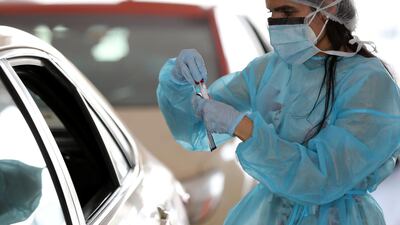
People get tested for coronavirus at the Mina Rashid screening centre in Dubai. Chris Whiteoak / The National -
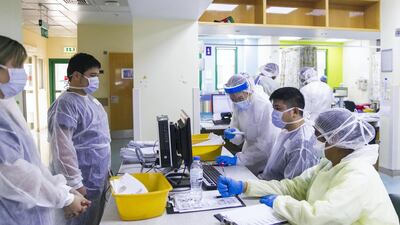
Since the beginning of the coronavirus pandemic, health authorities have called upon citizens and residents to join with the efforts of health care professionals. Health workers, such as these Sheikh Khalifa Medical City, have led the way. Reem Mohammed / The National -
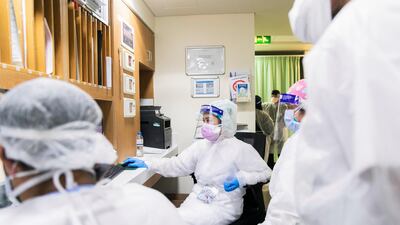
Healthcare workers at the emergency ward in Sheikh Khalifa Medical City. The President, Sheikh Khalifa, has paid tribute to the frontline workers who helped to curb Covid-19. Reem Mohammed / The National -
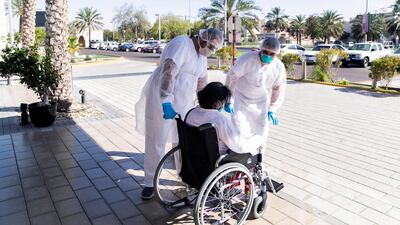
Healthcare workers at Sheikh Khalifa Medical City receive a patient outside the emergency department. Reem Mohammed / The National -
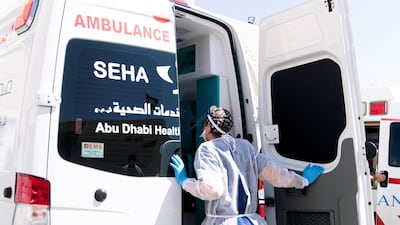
A consultant physician at the emergency department in Sheikh Khalifa Medical City, receives a Covid-19 patient. Reem Mohammed / The National -
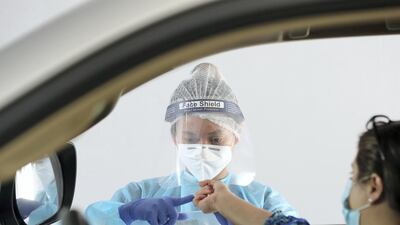
People get the laser blood test tests at the Mina Rashid screening centre in Dubai. Chris Whiteoak / The National -
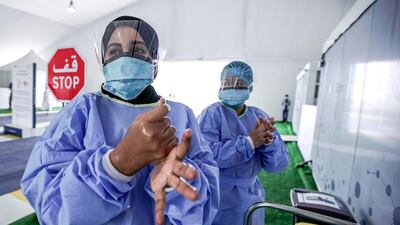
A nurse sanitises her hands after conducting a swab test at one of the UAE's screening drive-through centres in Mina Rashid, Dubai. Victor Besa / The National -
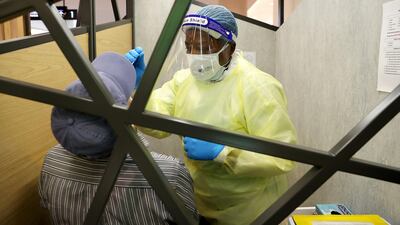
A health worker taking the Covid-19 nasal swab test at a testing station in thet Mall of the Emirates in Dubai. Pawan Singh / The National -
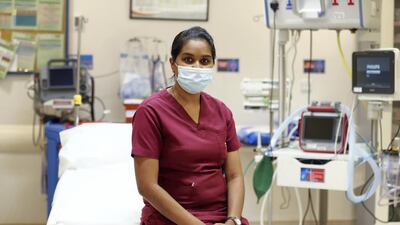
Nurse Renu Venugopal, who contracted Covid-19, recovered and continued to treat patients at Al Zahra Hospital, Sharjah. Chris Whiteoak / The National -
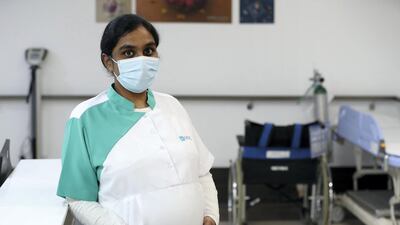
Ruth Deva Kiruba says being pregnant during a pandemic was surreal and sometimes lonely. Chris Whiteoak / The National -
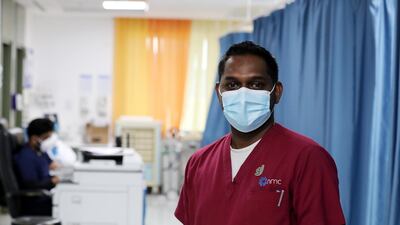
EMT nurse Jephy Antony, who contracted Covid-19, recovered and continued to treat patients at the NMC Royal Hospital, DIP, Dubai. Chris Whiteoak / The National -
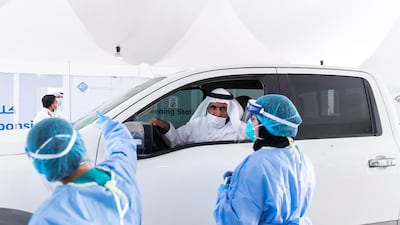
A visitor gets tested at the Ras Al Khaimah Covid-19 drive-through testing centre. Reem Mohammed / The National -
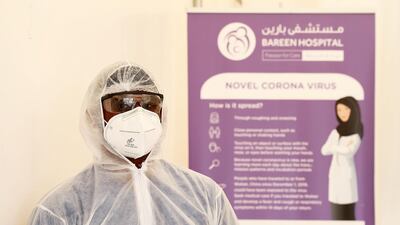
Nurse Nikhil Rajendran inside the fever clinic at the Bareen International Hospital in Mohamed Bin Zayed City in Abu Dhabi. Pawan Singh / The National -
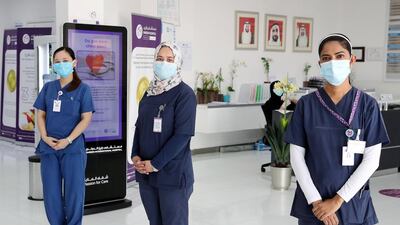
Shane Simeon Galang from Philippines, Mervat Aslan Mhgoub Mohamed from Egypt and Sowmya Kotian from India, who are nurses at the Bareen International Hospital in Mohamed bin Zayed City in Abu Dhabi. Pawan Singh / The National