


A prototype of a unit that can be used by astronauts to live on the lunar surface is on display at Abu Dhabi University.
Spartan Space, the French start-up responsible for the inflatable structure, called Euro Hab, has set up the presentation to inspire more students into space architecture.
The company also has a long-term vision of carrying out field tests at a remote UAE desert site using the lunar habitat, where test subjects would spend weeks in isolation to simulate missions to the Moon.
“We have this opportunity at Abu Dhabi University to set up the system on the campus,” Space Spartan founder Peter Weiss told The National.
“It’s been very useful because you need some kind of technical environment in order to set it up.
“Ultimately, what we would like to see is the system in an even more isolated area that can be used as a platform for local entities to test technology for simulation and astronaut training for lunar missions.
“It would be linked to a control centre somewhere here or in Europe, and it could even be a European-Emirati co-operation.”

No human beings have orbited or landed on the Moon since the Apollo missions, but now there are global efforts to return men and send the first woman to the lunar surface.
In this new space economy, many private companies are building space vehicles such landers, habitats and rovers to aid those efforts.
EuroHab, which can house up to four astronauts, would act as a secondary shelter to the landers that astronauts use to live on while on the surface. This would allow human beings to explore the surface for longer periods.
During the Apollo era, astronauts could explore for a only limited time before the light support system on their suit failed and they would have to return to their lander.
The balloon will be installed on the lander and inflate automatically once the command is sent.
Several airlocks will keep out lunar dust, with solar panels on the outside to recharge the habitat's power supply.
The company has not yet signed any deals to confirm the habitat as part of a future Moon mission, but it already receives support from the French Space Agency and France's Atomic Energy Commission.
It has also been selected to be part of the Mohammed bin Rashid Space Centre's Space Ventures programme, which aims to support start-ups in many ways, including access to technology.
EuroHab is on display at Abu Dhabi University until February 11, where visits from other universities and high schools can be arranged for viewing.
Dr Paolo Caratelli, associate professor of architecture at Abu Dhabi University, said students have been curious about the eye-catching structure on campus.
“We wanted all of our students, including those studying architecture and engineering, to get acquainted with the latest space efforts, because we suppose that within this decade humans would return to the Moon,” he told The National.
Nasa’s Artemis missions involve sending astronauts back to the Moon within this decade, with the first test mission launching this year.
The agency is preparing the Space Launch System and Orion spacecraft for the Artemis 1 launch, which will involve a three-week, un-crewed test flight.
The 101-metre tall rocket weighs 2,608 tonnes and will generate 3,991 tonnes of thrust when it lifts off.
The launch for Artemis 2 is planned for 2024 and will feature a crewed mission that will orbit the Moon.
Artemis 3, the first human lunar mission under the programme, has been delayed until 2025.
UAE's mission to the Moon - in pictures
-
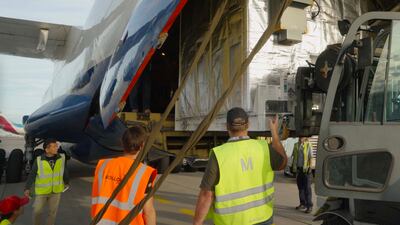
The Hakuto-R Mission 1 lunar lander is delivered to Florida's Cape Canaveral from where it will carry the UAE's Rashid rover to the Moon. Photo: ispace -
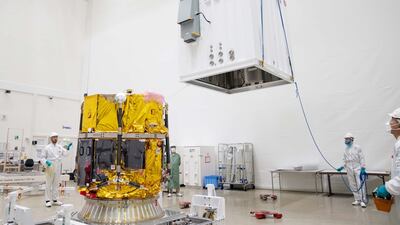
The Hakuto lander with the Rashid rover stored inside, ready to be shipped to Florida. Photo: ispace -
Rashid lunar rover's final prototype. Photo: Mohammed bin Rashid Space Centre -
An Emirati engineer tested the Moon rover in remote desert areas of Dubai. Photo: Mohammed bin Rashid Space Centre -
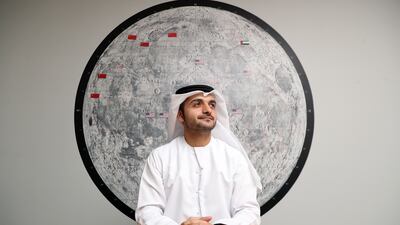
Dr Hamad Al Marzooqi, project manager of the Emirates lunar mission. Chris Whiteoak / The National -
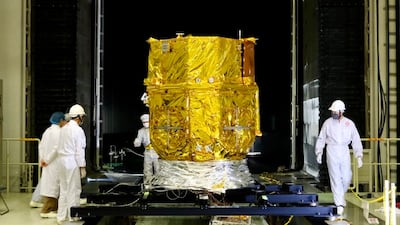
Development of the lander nears completion. Photo: ispace -
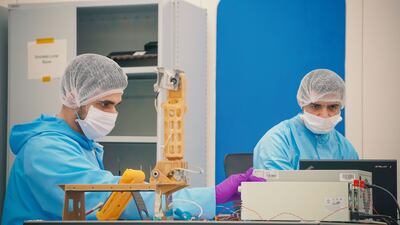
Emirati engineers test parts of the Rashid rover. Photo: Mohammed Bin Rashid Space Centre -
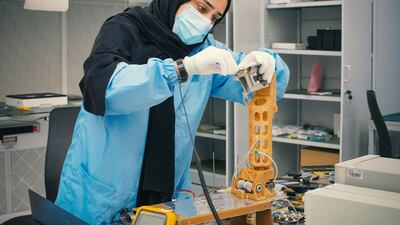
Emirati engineers test parts of the Rashid rover. Photo: Mohammed Bin Rashid Space Centre -
A full Moon gleams above Buenos Aires. AFP



