Sheikh Abdullah bin Zayed, Minister of Foreign Affairs and International Co-operation, has exchanged Ramadan greetings with his Iranian counterpart Hossein Amirabdollahian.
The two ministers spoke on the phone to convey the good wishes, state news agency Wam reported on Saturday.
During the call, Sheikh Abdullah and Mr Amirabdollahian also discussed bilateral relations, co-operation and ways to enhance ties between the two sides.
Ramadan 2022 in the region – in pictures
-
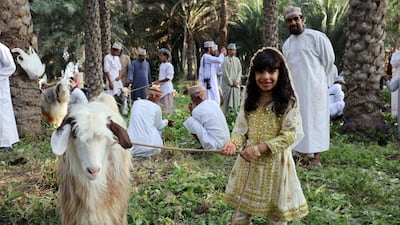
Omanis gather as goats are sold ahead of the Eid Al Fitr holiday, in the Surur area of Samail province, 80 kilometres south-west of the capital Muscat. AFP -
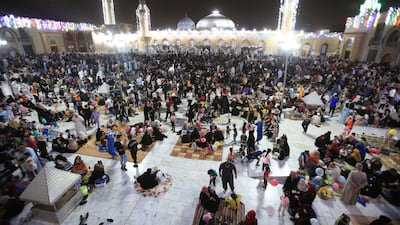
Iraqi Sunni Muslims gather for the Laylat Al Qadr – Night of Power – in the shrine of cleric Sheikh Abdel Kader Al Gilani, in central Baghdad. EPA -
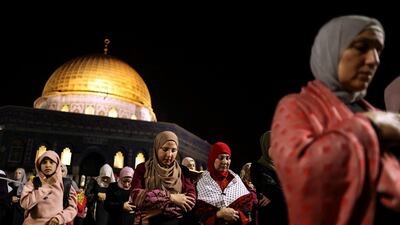
Palestinians pray on Laylat Al Qadr beside the Dome of the Rock shrine, at the Al Aqsa Mosque compound, in Jerusalem's Old City. Reuters -
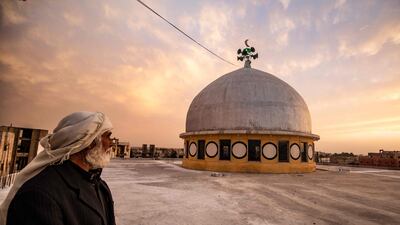
A man stares at the dome of a mosque, in Syria's northern city of Raqa. AFP -
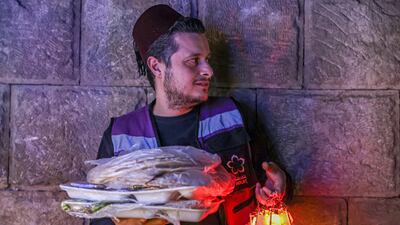
A volunteer from the charity Violet Org hands out food packages for the suhour meal eaten in Syria's rebel-held northwestern city of Idlib. AFP -
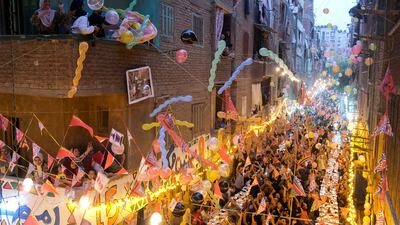
Residents of Ezbet Hamada gather to eat during iftar in Mataria, Cairo. Reuters -
Ramadan decorations at Global Village, Dubai. Chris Whiteoak / The National -
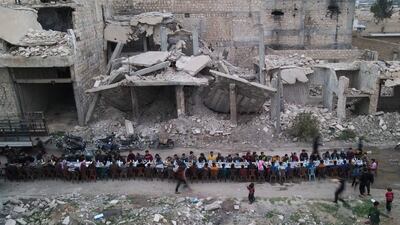
Syrians break their fast during a gathering organised by various groups in Tadef, near the city of Al Bab, in Aleppo province. AFP -
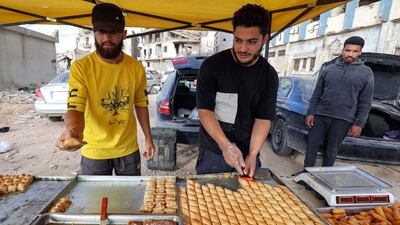
Street traders cut up dessert pastries for sale at a market in Libya's eastern city of Benghazi. AFP -
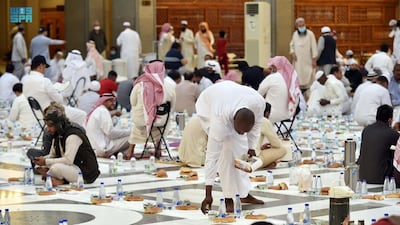
People breaking their fast at Quba Mosque, Madinah, Saudi Arabia. SPA -
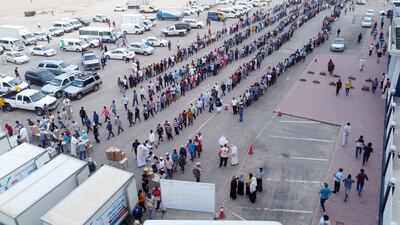
Fasting Muslim worshippers queue to receive iftar meals, donated by a charity, in Mahboula, south of Kuwait City. AFP -

Yemenis read the Quran during Ramadan at a mosque in the old city of Sanaa, Yemen. EPA -
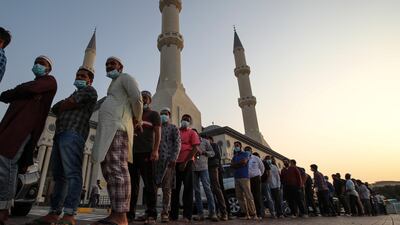
People queue outside Al Farooq Mosque in Dubai before sunset, waiting to break their fast. EPA -
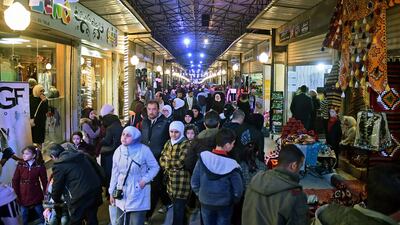
Shoppers at a market after their iftar meal, in the New Aleppo district of the northern Syrian city of Aleppo. AFP -
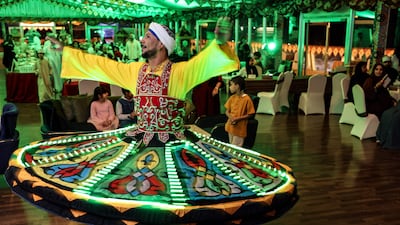
An Egyptian dancer performs the traditional tanoura dance at a restaurant in the Omani capital Muscat. AFP -
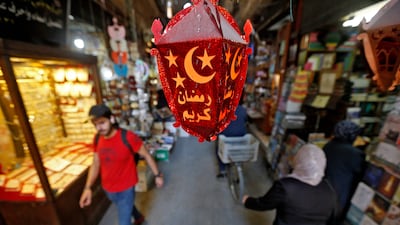
A famous Ramadan lantern inscribed with holy month greetings at Al Hamidiya market in Syria's capital Damascus. AFP -

Volunteers stir a pot of rice for a charity iftar at the eighth century Umayyad Mosque in Syria's capital Damascus. AFP -
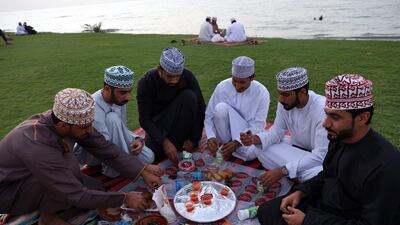
Omanis gather to break their fast on the beach in Muscat. AFP -
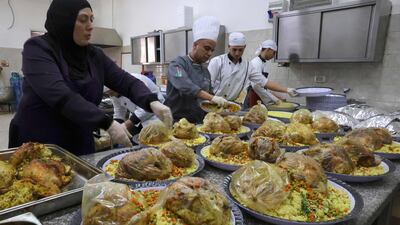
Cooks employed by the Islamic Charitable Society prepare iftar meals for Palestinian orphans and families in need, in the West Bank city of Hebron. AFP -

Iftar is served outside a mosque on the Jazeera State highway in the village of Al Nuba, about 50 kilometres south of Sudan's capital Khartoum. AFP -
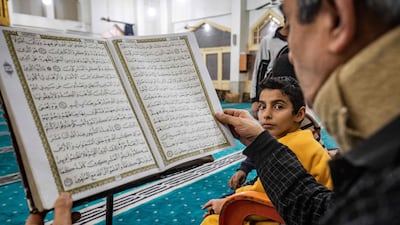
A worshipper reads the Quran inside a mosque in Syria's northern city of Raqqa. AFP -

The first Friday prayers of Ramadan at the shrine of Sheikh Abdul Qadir Al Kilani, the former Sunni Muslim preacher, in central Baghdad. AFP -
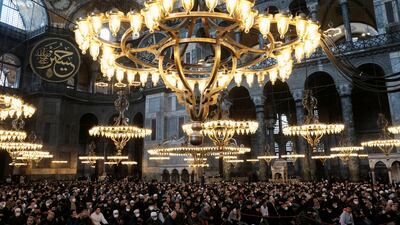
Worshippers attend the first Friday prayer of Ramadan at Hagia Sophia Grand Mosque in Istanbul, Turkey. Reuters -
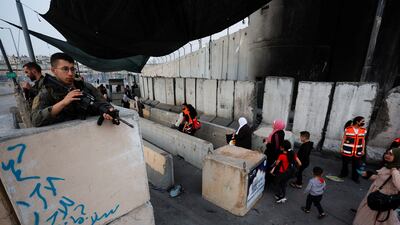
Palestinians cross the Qalandia checkpoint in the occupied West Bank on their way to the first Friday prayers of Ramadan at Jerusalem's Al Aqsa Mosque. Reuters -
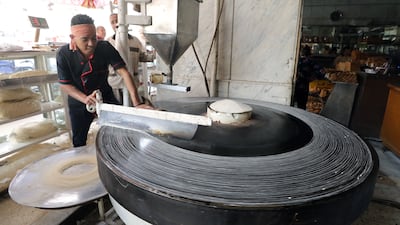
An Egyptian baker prepares kunafa, a Ramadan dessert favourite, at a market in Cairo. EPA -

Dawn awakeners known as musaharatis beat drums to wake Muslims for the suhour meal before the day's Ramadan fast in Damascus, Syria. AFP -
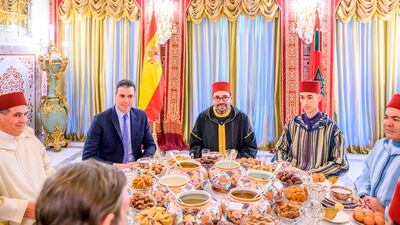
Moroccan King Mohammed VI, centre, and Spanish Prime Minister Pedro Sanchez, second left, share an iftar meal in Sale, Morocco. AP -
Iranian women read the Quran at the shrine of Shah Abdol-Azim in Tehran. Reuters -
A Ramadan catch-up at a cafe in Mosul, Iraq. Reuters -
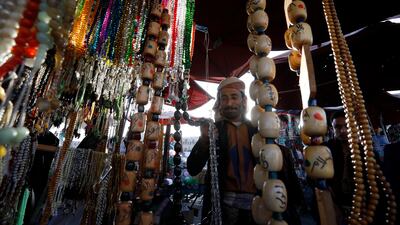
Prayer beads are in great demand during Ramadan in Sanaa, Yemen. EPA -
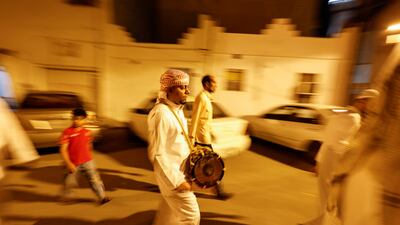
A musaharati drummer wakes people for suhour in Manama, Bahrain. Reuters -
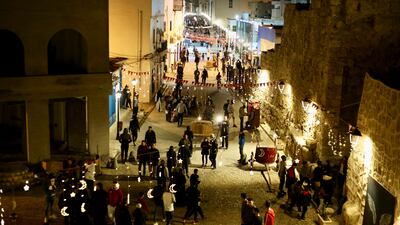
The old city in Tripoli in Libya is decked with Ramadan decorations. Reuters -
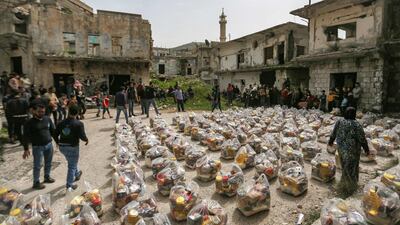
Food packets arranged for distribution in Al Najieh, in Syria's rebel-held Idlib province. AFP -
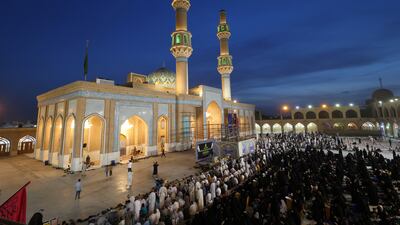
Worshippers gather at Al Sahlah Mosque in Kufa, near the city of Najaf, Iraq. Reuters -
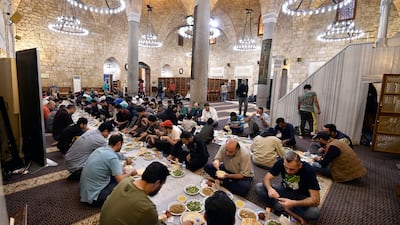
Iftar at the Prince Mansour Assaf Mosque in central Beirut, Lebanon. EPA -
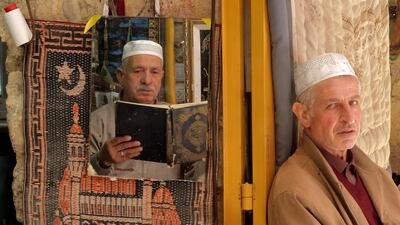
An elderly Palestinian reads the Quran at his shop in the old city of Hebron in the occupied West Bank. AFP -
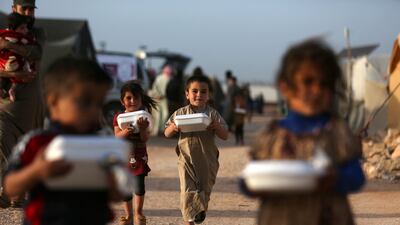
Displaced Syrian children return to their camps with boxes of food on the outskirts of the rebel-held town of Dana, in Idlib province. AFP -

Ramadan lanterns at a shop in Beirut. AP -
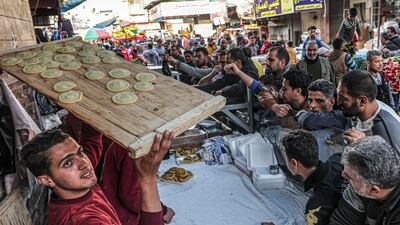
A Palestinian man carries a tray of qatayef, traditional Arabic dumplings, in Rafah, southern Gaza. AFP -
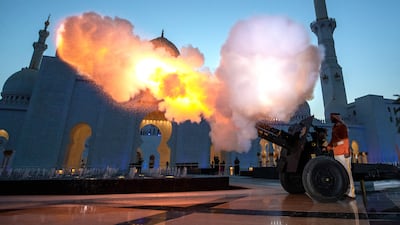
A cannon is fired at Sheikh Zayed Grand Mosque in Abu Dhabi to mark the end of fasting on the first day of Ramadan. Victor Besa / The National
Ten tax points to be aware of in 2026
1. Domestic VAT refund amendments: request your refund within five years
If a business does not apply for the refund on time, they lose their credit.
2. E-invoicing in the UAE
Businesses should continue preparing for the implementation of e-invoicing in the UAE, with 2026 a preparation and transition period ahead of phased mandatory adoption.
3. More tax audits
Tax authorities are increasingly using data already available across multiple filings to identify audit risks.
4. More beneficial VAT and excise tax penalty regime
Tax disputes are expected to become more frequent and more structured, with clearer administrative objection and appeal processes. The UAE has adopted a new penalty regime for VAT and excise disputes, which now mirrors the penalty regime for corporate tax.
5. Greater emphasis on statutory audit
There is a greater need for the accuracy of financial statements. The International Financial Reporting Standards standards need to be strictly adhered to and, as a result, the quality of the audits will need to increase.
6. Further transfer pricing enforcement
Transfer pricing enforcement, which refers to the practice of establishing prices for internal transactions between related entities, is expected to broaden in scope. The UAE will shortly open the possibility to negotiate advance pricing agreements, or essentially rulings for transfer pricing purposes.
7. Limited time periods for audits
Recent amendments also introduce a default five-year limitation period for tax audits and assessments, subject to specific statutory exceptions. While the standard audit and assessment period is five years, this may be extended to up to 15 years in cases involving fraud or tax evasion.
8. Pillar 2 implementation
Many multinational groups will begin to feel the practical effect of the Domestic Minimum Top-Up Tax (DMTT), the UAE's implementation of the OECD’s global minimum tax under Pillar 2. While the rules apply for financial years starting on or after January 1, 2025, it is 2026 that marks the transition to an operational phase.
9. Reduced compliance obligations for imported goods and services
Businesses that apply the reverse-charge mechanism for VAT purposes in the UAE may benefit from reduced compliance obligations.
10. Substance and CbC reporting focus
Tax authorities are expected to continue strengthening the enforcement of economic substance and Country-by-Country (CbC) reporting frameworks. In the UAE, these regimes are increasingly being used as risk-assessment tools, providing tax authorities with a comprehensive view of multinational groups’ global footprints and enabling them to assess whether profits are aligned with real economic activity.
Contributed by Thomas Vanhee and Hend Rashwan, Aurifer
Mercer, the investment consulting arm of US services company Marsh & McLennan, expects its wealth division to at least double its assets under management (AUM) in the Middle East as wealth in the region continues to grow despite economic headwinds, a company official said.
Mercer Wealth, which globally has $160 billion in AUM, plans to boost its AUM in the region to $2-$3bn in the next 2-3 years from the present $1bn, said Yasir AbuShaban, a Dubai-based principal with Mercer Wealth.
“Within the next two to three years, we are looking at reaching $2 to $3 billion as a conservative estimate and we do see an opportunity to do so,” said Mr AbuShaban.
Mercer does not directly make investments, but allocates clients’ money they have discretion to, to professional asset managers. They also provide advice to clients.
“We have buying power. We can negotiate on their (client’s) behalf with asset managers to provide them lower fees than they otherwise would have to get on their own,” he added.
Mercer Wealth’s clients include sovereign wealth funds, family offices, and insurance companies among others.
From its office in Dubai, Mercer also looks after Africa, India and Turkey, where they also see opportunity for growth.
Wealth creation in Middle East and Africa (MEA) grew 8.5 per cent to $8.1 trillion last year from $7.5tn in 2015, higher than last year’s global average of 6 per cent and the second-highest growth in a region after Asia-Pacific which grew 9.9 per cent, according to consultancy Boston Consulting Group (BCG). In the region, where wealth grew just 1.9 per cent in 2015 compared with 2014, a pickup in oil prices has helped in wealth generation.
BCG is forecasting MEA wealth will rise to $12tn by 2021, growing at an annual average of 8 per cent.
Drivers of wealth generation in the region will be split evenly between new wealth creation and growth of performance of existing assets, according to BCG.
Another general trend in the region is clients’ looking for a comprehensive approach to investing, according to Mr AbuShaban.
“Institutional investors or some of the families are seeing a slowdown in the available capital they have to invest and in that sense they are looking at optimizing the way they manage their portfolios and making sure they are not investing haphazardly and different parts of their investment are working together,” said Mr AbuShaban.
Some clients also have a higher appetite for risk, given the low interest-rate environment that does not provide enough yield for some institutional investors. These clients are keen to invest in illiquid assets, such as private equity and infrastructure.
“What we have seen is a desire for higher returns in what has been a low-return environment specifically in various fixed income or bonds,” he said.
“In this environment, we have seen a de facto increase in the risk that clients are taking in things like illiquid investments, private equity investments, infrastructure and private debt, those kind of investments were higher illiquidity results in incrementally higher returns.”
The Abu Dhabi Investment Authority, one of the largest sovereign wealth funds, said in its 2016 report that has gradually increased its exposure in direct private equity and private credit transactions, mainly in Asian markets and especially in China and India. The authority’s private equity department focused on structured equities owing to “their defensive characteristics.”
What can victims do?
Always use only regulated platforms
Stop all transactions and communication on suspicion
Save all evidence (screenshots, chat logs, transaction IDs)
Report to local authorities
Warn others to prevent further harm
Courtesy: Crystal Intelligence