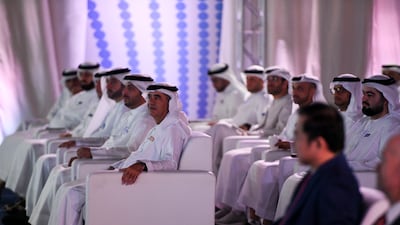
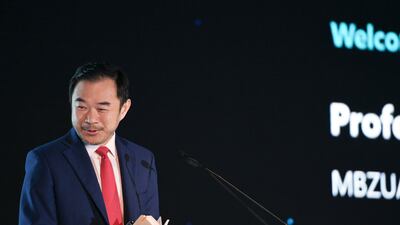
Artificial intelligence is being tipped to be the UAE's most important industry over the next 10 years, with universities urged to step up efforts to prepare the next generation of high-tech workers.
The fast-rising sector was ranked ahead of construction, electronics, aerospace, robotics, design engineering and IT and cybersecurity in a poll of technology and engineering employees in the Emirates.
The UAE government is driving forwards with ambitious plans to establish itself as a global AI hub.
In 2017, the country appointed Omar Al Olama as its first Minister of State for Artificial Intelligence and later adopted the National Artificial Intelligence Strategy 2031 to promote the growth of the cutting-edge technology.
The Mohamed bin Zayed University of Artificial Intelligence in Abu Dhabi was established in 2019 to develop the skills of top talent from across the world to lead workplaces of the future.
The survey, commissioned by the UK-based Institution of Engineering and Technology (IET), and carried out by YouGov, polled 325 employers and employees in the UAE in December 2021 and January 2022.
Julian Young, IET president, said artificial intelligence would most certainly continue to grow in prominence.
“Alongside that, I would almost add everything to do with digitalisation. Everything in the future in a highly advanced technological community, will be about digitalisation and getting computers to do far more work for us," said Mr Young.
“So if one has a skilled workforce in this field, one would be able to make a profitable company and a profitable organisation — and be a truly global player.
“I'm not surprised to see that these are the skill sets that are required in three years' time, that these are the skill sets required in 10 years' time.
"If you pick up artificial intelligence and then think about the type of courses that people are undertaking. Do we need courses in artificial intelligence? Yes, of course. But in the more traditional areas of engineering, mechanical, electrical, electronic aerospace, there needs to be a digital component."
He said all of the traditional industries need digital and software and computer science inputs to be able to make the best of their workforce.
Education must keep pace with career trends
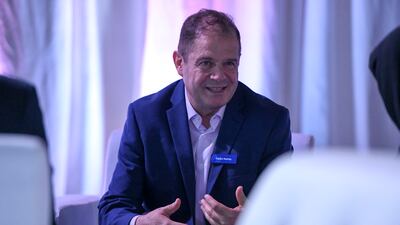
Ian Mercer, head of international operations for the Institution of Engineering and Technology, said universities could use the findings to ensure their courses run parallel to the immediate and future demands of the economy.
"If I were an academician, then I would be thinking, 'if that's where the where the industry is going to go then the courses that we're going to offer to students probably need to be ramped up to be where the need is going to be'," Mr Mercer said.
"At the end of the day, universities want jobs to be available for the people that they put through the system.
"If you look at the the ambitions of the UAE government, they want to become a tech hub of the world."
He said that in a post-oil and gas economy, technology may be one of the main workforce providers in the region.
The UAE is continuing to explore ways in which artificial intelligence can be used to boost business, make government departments more agile and efficient, and support health services.
Artificial intelligence could soon be used to tailor UAE government employees’ working hours to their own personal productivity.
The initiative, which is being studied by the Federal Authority for Government Human Resources, is one of a host of practical applications for AI in everyday life.
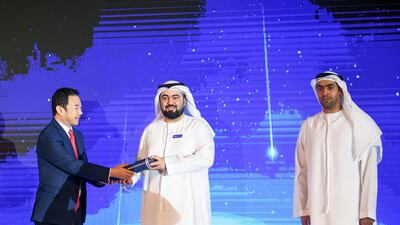
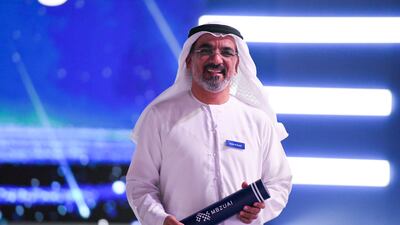
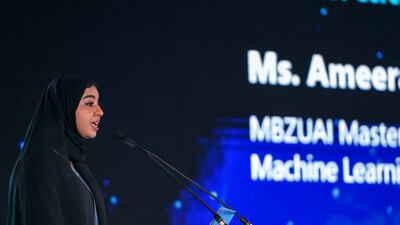
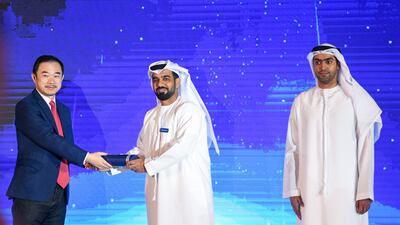
In March, 41 business leaders who took a three-month course at Mohamed bin Zayed University for Artificial Intelligence, celebrated their graduation.
The course aimed to support UAE government and business sectors. Participants were required to complete 12 rigorous weeks of coursework, lectures and collaborative project work.
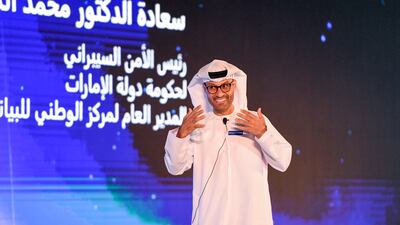
Dr Jamal Al Kaabi, undersecretary at the Department of Health in Abu Dhabi, joined the programme after the Covid-19 pandemic made him realise the potential of artificial intelligence.
He believes wearable technology and AI could be crucial in providing home services and follow-up care for the elderly.
Our family matters legal consultant
Name: Hassan Mohsen Elhais
Position: legal consultant with Al Rowaad Advocates and Legal Consultants.
MATCH INFO
Manchester United 1 (Rashford 36')
Liverpool 1 (Lallana 84')
Man of the match: Marcus Rashford (Manchester United)
Ten tax points to be aware of in 2026
1. Domestic VAT refund amendments: request your refund within five years
If a business does not apply for the refund on time, they lose their credit.
2. E-invoicing in the UAE
Businesses should continue preparing for the implementation of e-invoicing in the UAE, with 2026 a preparation and transition period ahead of phased mandatory adoption.
3. More tax audits
Tax authorities are increasingly using data already available across multiple filings to identify audit risks.
4. More beneficial VAT and excise tax penalty regime
Tax disputes are expected to become more frequent and more structured, with clearer administrative objection and appeal processes. The UAE has adopted a new penalty regime for VAT and excise disputes, which now mirrors the penalty regime for corporate tax.
5. Greater emphasis on statutory audit
There is a greater need for the accuracy of financial statements. The International Financial Reporting Standards standards need to be strictly adhered to and, as a result, the quality of the audits will need to increase.
6. Further transfer pricing enforcement
Transfer pricing enforcement, which refers to the practice of establishing prices for internal transactions between related entities, is expected to broaden in scope. The UAE will shortly open the possibility to negotiate advance pricing agreements, or essentially rulings for transfer pricing purposes.
7. Limited time periods for audits
Recent amendments also introduce a default five-year limitation period for tax audits and assessments, subject to specific statutory exceptions. While the standard audit and assessment period is five years, this may be extended to up to 15 years in cases involving fraud or tax evasion.
8. Pillar 2 implementation
Many multinational groups will begin to feel the practical effect of the Domestic Minimum Top-Up Tax (DMTT), the UAE's implementation of the OECD’s global minimum tax under Pillar 2. While the rules apply for financial years starting on or after January 1, 2025, it is 2026 that marks the transition to an operational phase.
9. Reduced compliance obligations for imported goods and services
Businesses that apply the reverse-charge mechanism for VAT purposes in the UAE may benefit from reduced compliance obligations.
10. Substance and CbC reporting focus
Tax authorities are expected to continue strengthening the enforcement of economic substance and Country-by-Country (CbC) reporting frameworks. In the UAE, these regimes are increasingly being used as risk-assessment tools, providing tax authorities with a comprehensive view of multinational groups’ global footprints and enabling them to assess whether profits are aligned with real economic activity.
Contributed by Thomas Vanhee and Hend Rashwan, Aurifer
ABU DHABI T10: DAY TWO
Bangla Tigers v Deccan Gladiators (3.30pm)
Delhi Bulls v Karnataka Tuskers (5.45pm)
Northern Warriors v Qalandars (8.00pm)
COMPANY%20PROFILE%20
%3Cp%3E%3Cstrong%3EName%3A%3C%2Fstrong%3E%20Haltia.ai%0D%3Cbr%3E%3Cstrong%3EStarted%3A%3C%2Fstrong%3E%202023%0D%3Cbr%3E%3Cstrong%3ECo-founders%3A%3C%2Fstrong%3E%20Arto%20Bendiken%20and%20Talal%20Thabet%0D%3Cbr%3E%3Cstrong%3EBased%3A%3C%2Fstrong%3E%20Dubai%2C%20UAE%0D%3Cbr%3E%3Cstrong%3EIndustry%3A%3C%2Fstrong%3E%20AI%0D%3Cbr%3E%3Cstrong%3ENumber%20of%20employees%3A%3C%2Fstrong%3E%2041%0D%3Cbr%3E%3Cstrong%3EFunding%3A%3C%2Fstrong%3E%20About%20%241.7%20million%0D%3Cbr%3E%3Cstrong%3EInvestors%3A%3C%2Fstrong%3E%20Self%2C%20family%20and%20friends%26nbsp%3B%3C%2Fp%3E%0A
Who was Alfred Nobel?
The Nobel Prize was created by wealthy Swedish chemist and entrepreneur Alfred Nobel.
- In his will he dictated that the bulk of his estate should be used to fund "prizes to those who, during the preceding year, have conferred the greatest benefit to humankind".
- Nobel is best known as the inventor of dynamite, but also wrote poetry and drama and could speak Russian, French, English and German by the age of 17. The five original prize categories reflect the interests closest to his heart.
- Nobel died in 1896 but it took until 1901, following a legal battle over his will, before the first prizes were awarded.
Mercer, the investment consulting arm of US services company Marsh & McLennan, expects its wealth division to at least double its assets under management (AUM) in the Middle East as wealth in the region continues to grow despite economic headwinds, a company official said.
Mercer Wealth, which globally has $160 billion in AUM, plans to boost its AUM in the region to $2-$3bn in the next 2-3 years from the present $1bn, said Yasir AbuShaban, a Dubai-based principal with Mercer Wealth.
“Within the next two to three years, we are looking at reaching $2 to $3 billion as a conservative estimate and we do see an opportunity to do so,” said Mr AbuShaban.
Mercer does not directly make investments, but allocates clients’ money they have discretion to, to professional asset managers. They also provide advice to clients.
“We have buying power. We can negotiate on their (client’s) behalf with asset managers to provide them lower fees than they otherwise would have to get on their own,” he added.
Mercer Wealth’s clients include sovereign wealth funds, family offices, and insurance companies among others.
From its office in Dubai, Mercer also looks after Africa, India and Turkey, where they also see opportunity for growth.
Wealth creation in Middle East and Africa (MEA) grew 8.5 per cent to $8.1 trillion last year from $7.5tn in 2015, higher than last year’s global average of 6 per cent and the second-highest growth in a region after Asia-Pacific which grew 9.9 per cent, according to consultancy Boston Consulting Group (BCG). In the region, where wealth grew just 1.9 per cent in 2015 compared with 2014, a pickup in oil prices has helped in wealth generation.
BCG is forecasting MEA wealth will rise to $12tn by 2021, growing at an annual average of 8 per cent.
Drivers of wealth generation in the region will be split evenly between new wealth creation and growth of performance of existing assets, according to BCG.
Another general trend in the region is clients’ looking for a comprehensive approach to investing, according to Mr AbuShaban.
“Institutional investors or some of the families are seeing a slowdown in the available capital they have to invest and in that sense they are looking at optimizing the way they manage their portfolios and making sure they are not investing haphazardly and different parts of their investment are working together,” said Mr AbuShaban.
Some clients also have a higher appetite for risk, given the low interest-rate environment that does not provide enough yield for some institutional investors. These clients are keen to invest in illiquid assets, such as private equity and infrastructure.
“What we have seen is a desire for higher returns in what has been a low-return environment specifically in various fixed income or bonds,” he said.
“In this environment, we have seen a de facto increase in the risk that clients are taking in things like illiquid investments, private equity investments, infrastructure and private debt, those kind of investments were higher illiquidity results in incrementally higher returns.”
The Abu Dhabi Investment Authority, one of the largest sovereign wealth funds, said in its 2016 report that has gradually increased its exposure in direct private equity and private credit transactions, mainly in Asian markets and especially in China and India. The authority’s private equity department focused on structured equities owing to “their defensive characteristics.”
The specs: Aston Martin DB11 V8 vs Ferrari GTC4Lusso T
Price, base: Dh840,000; Dh120,000
Engine: 4.0L V8 twin-turbo; 3.9L V8 turbo
Transmission: Eight-speed automatic; seven-speed automatic
Power: 509hp @ 6,000rpm; 601hp @ 7,500rpm
Torque: 695Nm @ 2,000rpm; 760Nm @ 3,000rpm
Fuel economy, combined: 9.9L / 100km; 11.6L / 100km
Silent Hill f
Publisher: Konami
Platforms: PlayStation 5, Xbox Series X/S, PC
Rating: 4.5/5
The%20specs
%3Cp%3E%3Cstrong%3EEngine%3A%3C%2Fstrong%3E%201.8-litre%204-cyl%20turbo%0D%3Cbr%3E%3Cstrong%3EPower%3A%20%3C%2Fstrong%3E190hp%20at%205%2C200rpm%0D%3Cbr%3E%3Cstrong%3ETorque%3A%3C%2Fstrong%3E%20320Nm%20from%201%2C800-5%2C000rpm%0D%3Cbr%3E%3Cstrong%3ETransmission%3A%20%3C%2Fstrong%3ESeven-speed%20dual-clutch%20auto%0D%3Cbr%3E%3Cstrong%3EFuel%20consumption%3A%3C%2Fstrong%3E%206.7L%2F100km%0D%3Cbr%3E%3Cstrong%3EPrice%3A%3C%2Fstrong%3E%20From%20Dh111%2C195%0D%3Cbr%3E%3Cstrong%3EOn%20sale%3A%20%3C%2Fstrong%3ENow%3C%2Fp%3E%0A
F1 The Movie
Starring: Brad Pitt, Damson Idris, Kerry Condon, Javier Bardem
Director: Joseph Kosinski
Rating: 4/5
The specs: Macan Turbo
Engine: Dual synchronous electric motors
Power: 639hp
Torque: 1,130Nm
Transmission: Single-speed automatic
Touring range: 591km
Price: From Dh412,500
On sale: Deliveries start in October
HEADLINE HERE
- I would recommend writing out the text in the body
- And then copy into this box
- It can be as long as you link
- But I recommend you use the bullet point function (see red square)
- Or try to keep the word count down
- Be wary of other embeds lengthy fact boxes could crash into
- That's about it
How to keep control of your emotions
If your investment decisions are being dictated by emotions such as fear, greed, hope, frustration and boredom, it is time for a rethink, Chris Beauchamp, chief market analyst at online trading platform IG, says.
Greed
Greedy investors trade beyond their means, open more positions than usual or hold on to positions too long to chase an even greater gain. “All too often, they incur a heavy loss and may even wipe out the profit already made.
Tip: Ignore the short-term hype, noise and froth and invest for the long-term plan, based on sound fundamentals.
Fear
The risk of making a loss can cloud decision-making. “This can cause you to close out a position too early, or miss out on a profit by being too afraid to open a trade,” he says.
Tip: Start with a plan, and stick to it. For added security, consider placing stops to reduce any losses and limits to lock in profits.
Hope
While all traders need hope to start trading, excessive optimism can backfire. Too many traders hold on to a losing trade because they believe that it will reverse its trend and become profitable.
Tip: Set realistic goals. Be happy with what you have earned, rather than frustrated by what you could have earned.
Frustration
Traders can get annoyed when the markets have behaved in unexpected ways and generates losses or fails to deliver anticipated gains.
Tip: Accept in advance that asset price movements are completely unpredictable and you will suffer losses at some point. These can be managed, say, by attaching stops and limits to your trades.
Boredom
Too many investors buy and sell because they want something to do. They are trading as entertainment, rather than in the hope of making money. As well as making bad decisions, the extra dealing charges eat into returns.
Tip: Open an online demo account and get your thrills without risking real money.
Six large-scale objects on show
- Concrete wall and windows from the now demolished Robin Hood Gardens housing estate in Poplar
- The 17th Century Agra Colonnade, from the bathhouse of the fort of Agra in India
- A stagecloth for The Ballet Russes that is 10m high – the largest Picasso in the world
- Frank Lloyd Wright’s 1930s Kaufmann Office
- A full-scale Frankfurt Kitchen designed by Margarete Schütte-Lihotzky, which transformed kitchen design in the 20th century
- Torrijos Palace dome
All Black 39-12 British & Irish Lions
UAE currency: the story behind the money in your pockets