• A healthcare worker uses an umbrella as shade from the sun in Abu Dhabi. All photos: Victor Besa / The National
    A healthcare worker uses an umbrella as shade from the sun in Abu Dhabi. All photos: Victor Besa / The National
  • Commuters wait for their bus on a sunny and humid day in Al Shahama, Abu Dhabi.
    Commuters wait for their bus on a sunny and humid day in Al Shahama, Abu Dhabi.
  • A man on his bike crosses a road overpass in the sunshine.
    A man on his bike crosses a road overpass in the sunshine.
  • Sunny and humid weather has been forecast for the UAE this week.
    Sunny and humid weather has been forecast for the UAE this week.
  • A pedestrian protects himself from the sun with a headscarf and hat.
    A pedestrian protects himself from the sun with a headscarf and hat.
  • A hazy day in Abu Dhabi.
    A hazy day in Abu Dhabi.
  • It's hot and sunny in Abu Dhabi.
    It's hot and sunny in Abu Dhabi.

UAE weather: Cloudy conditions throughout the week


  • English
  • Arabic

Low clouds and humid weather have been forecast for the rest of the week across the UAE.

The maximum temperature will stay just above 30°C for most of the country over the next few days.

The sea will be rough with windy conditions throughout Monday in the Arabian Gulf and Sea of Oman, said the National Centre of Meteorology.

Cloudy weather and humidity at night are due to a combination of “an extension of a low-pressure system from the east and high pressure from the west”, the meteorology department said.

Fog and mist formation will cover internal areas until Tuesday and extend to coastal areas on Thursday and Friday.

Wind speeds could pick up over the sea later this week, reaching 30 kilometres an hour.

The maximum humidity will range from 70 to 90 per cent across coastal areas, 65 to 90 per cent in interior regions and between 45 to 65 per cent in the mountains.

UAE cloud-seeding flights use salt flares to make it rain - in pictures

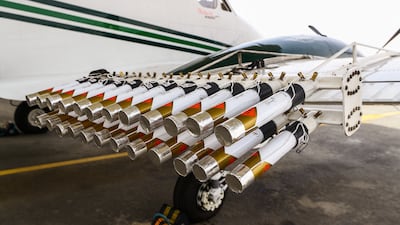
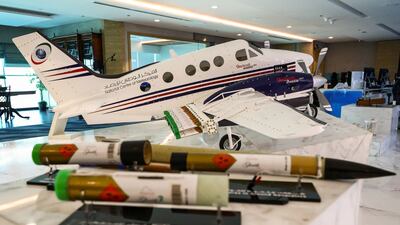
  • Hygroscopic (water-attracting) salt flares are attached to an aircraft at Al Ain International Airport before a cloud-seeding flight operated by the National Centre of Meteorology. The UAE has been leading the effort to seed clouds and increase precipitation, which remains at less than 100 millimetres a year on average. All photos by Reuters
    Hygroscopic (water-attracting) salt flares are attached to an aircraft at Al Ain International Airport before a cloud-seeding flight operated by the National Centre of Meteorology. The UAE has been leading the effort to seed clouds and increase precipitation, which remains at less than 100 millimetres a year on average. All photos by Reuters
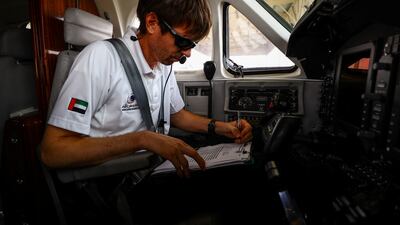
  • Pilot Michael Anstis writes a weather report before the cloud-seeding flight from Al Ain.
    Pilot Michael Anstis writes a weather report before the cloud-seeding flight from Al Ain.
  • An airport employee closes an aircraft door, with hygroscopic salt flares seen in the background, before the cloud-seeding flight.
    An airport employee closes an aircraft door, with hygroscopic salt flares seen in the background, before the cloud-seeding flight.
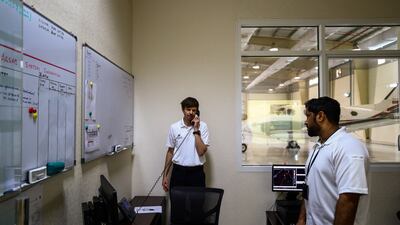
  • Pilots Michael Anstis and Ahmed Al Jaberi receive instructions before the flight.
    Pilots Michael Anstis and Ahmed Al Jaberi receive instructions before the flight.
  • The control room at the National Centre of Meteorology in Abu Dhabi.
    The control room at the National Centre of Meteorology in Abu Dhabi.
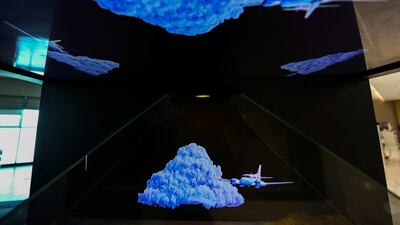
  • An explanatory hologram of the cloud-seeding process in the National Centre of Meteorology control room in Abu Dhabi.
    An explanatory hologram of the cloud-seeding process in the National Centre of Meteorology control room in Abu Dhabi.
  • Cloud-seeding flares in the National Centre of Meteorology control room.
    Cloud-seeding flares in the National Centre of Meteorology control room.
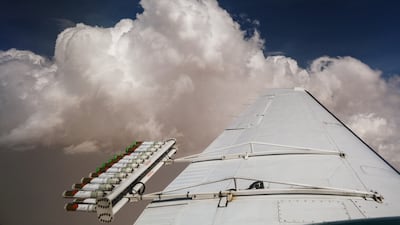
  • Hygroscopic salt flares are attached to an aircraft during a cloud-seeding flight between Al Ain and Al Hayer. At 9,000 feet above sea level, the plane releases the flares into the most promising white clouds, hoping to trigger rainfall.
    Hygroscopic salt flares are attached to an aircraft during a cloud-seeding flight between Al Ain and Al Hayer. At 9,000 feet above sea level, the plane releases the flares into the most promising white clouds, hoping to trigger rainfall.
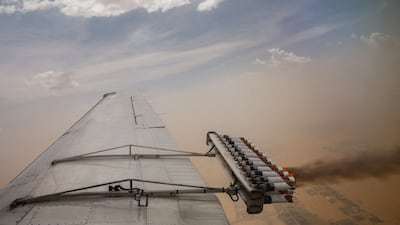
  • Hygroscopic salt flares are attached to an aircraft during a cloud-seeding flight. Scientists in Abu Dhabi combine shooting the flares with releasing salt nanoparticles, a newer technology, into the clouds to stimulate and accelerate the condensation process and hopefully produce droplets big enough to then fall as rain.
    Hygroscopic salt flares are attached to an aircraft during a cloud-seeding flight. Scientists in Abu Dhabi combine shooting the flares with releasing salt nanoparticles, a newer technology, into the clouds to stimulate and accelerate the condensation process and hopefully produce droplets big enough to then fall as rain.
  • Flares are released during a cloud-seeding flight between Al Ain and Al Hayer.
    Flares are released during a cloud-seeding flight between Al Ain and Al Hayer.
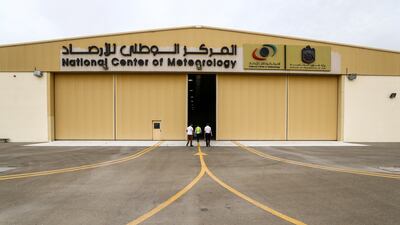
  • Employees walk towards a hangar at Al Ain International Airport after a cloud-seeding flight.
    Employees walk towards a hangar at Al Ain International Airport after a cloud-seeding flight.
Updated: November 14, 2022, 8:06 AM