UAE astronaut Sultan Al Neyadi has completed an experiment on the International Space Station that seeks to reveal more about sleep quality on extended missions.
Dubai Media Office on Sunday said the Emirati astronaut had successfully conducted the experiment, which saw him wear a specially-designed headband to capture key data.
Called the “Dreams” experiment, it was carried out in collaboration with European Space Agency, French space agency CNES, and Toulouse University Hospital.
The Dreams experiment employs the "dry-EEG (electroencephalography)" system to monitor sleep patterns of astronauts in the microgravity environment on the space station.
Dr Al Neyadi wore a headband equipped with an electroencephalogram sensor to capture a range of sleep-related data, such as sleep cycle durations and heart rate variations.
The unique conditions aboard the space station, where astronauts witness 16 sunrises and sunsets each day, can disrupt the natural day to night cycle, significantly affecting sleep patterns.
This study, therefore, is intended to help develop therapies for astronauts to improve sleep quality and overall health during extended space missions.
In a video posted by the media office, Al Neyadi is shown trying the headband.
“This research helps us learn more about sleep disorders in humans and the health problems they experience on earth,” he said.
Adnan Al Rais, mission manager of the UAE Astronaut Programme, said the experiment was a "crucial step forward in our understanding of the human body's adaptability in space."
“The knowledge we gain here is instrumental to the success of future long-duration space missions, including trips to the Moon and Mars," said Mr Al Rais. "We are incredibly proud of the contributions made by the UAE towards the international space community.”
Sebastien Barde, associate director for exploration and human space flight at CNES, said it was a testament to international co-operation.
“For ESA astronaut Thomas Pesquet's Alpha mission [in 2021], the Dream experiment was developed and monitored by CADMOS [part of the French government space agency CNES] as part of the French contribution. CNES is delighted that this experiment is being continued with astronaut Sultan Al Neyadi. Science knows no frontiers, as this example clearly illustrates.”
Dr Al Neyadi arrived on the space station on March 3 and is due to return in mid-August. Since arriving he has completed several other experiments and performed the first spacewalk by an Arab astronaut.
Sultan Al Neyadi in space - in pictures
-
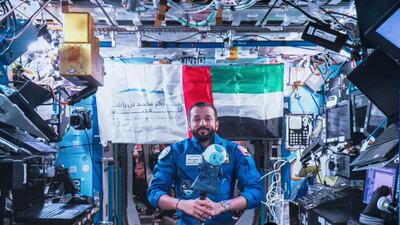
Emirati astronaut Sultan Al Neyadi speaks to students at UAE University in Al Ain on a live call from the International Space Station on May 23. Ryan Lim/The National -

Dr Al Neyadi with the mission's commander, Stephen Bowen, on February 23, days before their flight to the ISS. Sarwat Nasir / The National -
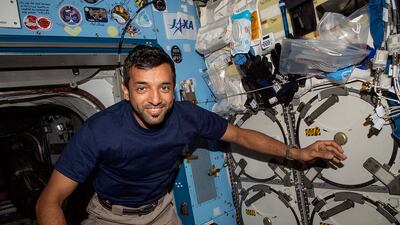
Dr Al Neyadi on March 4, a day after he arrived on the ISS. Photo: MBRSC -

Dr Al Neyadi on March 7, holding small tomatoes grown on the ISS. Photo: Nasa -
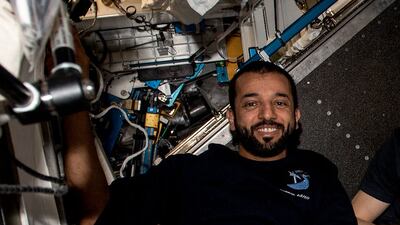
Dr Al Neyadi on March 16. -
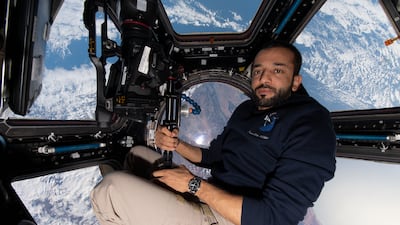
Dr Al Neyadi in front of the cupola on March 14. Photo: Nasa