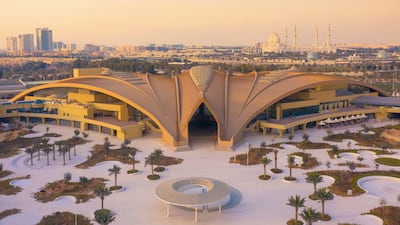
The first plaque was installed on the facade of the Abu Dhabi Cultural Foundation on Thursday. Photo: Abu Dhabi Media Office

Abu Dhabi to install plaques at historic landmarks


  • English
  • Arabic

More than 60 plaques will be installed at landmarks across Abu Dhabi to mark their status as modern heritage sites.

Each of the landmarks, most of which date from the 1970s and 1980s, will be registered on Abu Dhabi's Historic Environment Record.

The first plaque was installed this week on the facade of the Abu Dhabi Cultural Foundation, the first structure to be designated as a modern heritage site.

The announcement was made by the Department of Culture and Tourism – Abu Dhabi during a ceremony at the site on Thursday.

“The iconic buildings recognised as modern heritage sites are integral to Abu Dhabi's cultural fabric, reflecting our rich heritage and evolution,” said Mohamed Al Mubarak, chairman of the DCT Abu Dhabi.

“Therefore, it is our mission to safeguard and promote these landmarks and we commemorate the first step in our journey as we highlight and protect Abu Dhabi's modern heritage sites for future generations.”

The Abu Dhabi Cultural Foundation was founded in 1981 and is set on the capital's oldest historical site, Qasr Al Hosn.

The site offers numerous workshops, events and classes, including one on traditional Arabic calligraphy.

Last year the DCT announced that it had identified 64 buildings and sites that required “immediate and unconditional protection” as part of its initiative to safeguard Abu Dhabi's heritage.

The department's Modern Heritage Conservation Initiative prioritises maintaining and rehabilitating the buildings according to their designated grade. No demolition applications are allowed.

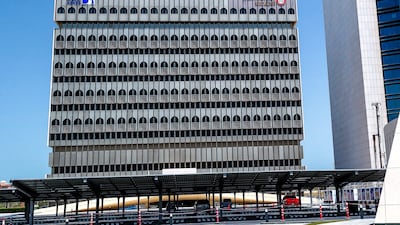
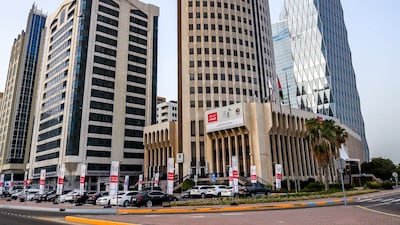
These buildings include Al Manhal Palace, where the UAE flag was raised after the country joined the UN in 1971, the old Adnoc headquarters, the Central Bank, Abu Dhabi Chamber of Commerce, Zayed Sports City, and the city's main bus terminal.

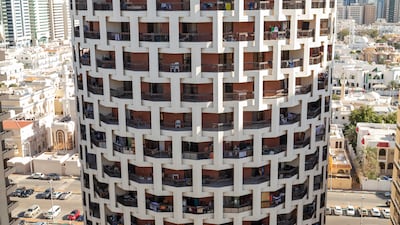
The list also included less familiar places, including parks, water tanks, a health complex, one of the early residential towers and even a cluster of ghaf trees in the city.

Some of Abu Dhabi's 64 protected buildings – in pictures

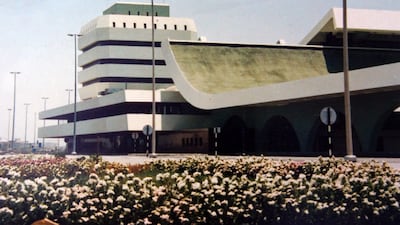
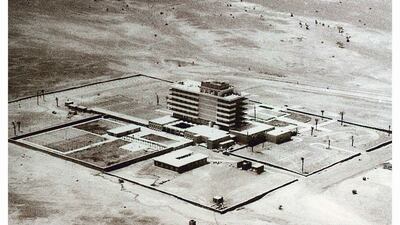
  • The Abu Dhabi main bus terminal in the late 1980s or early 1990s. Photo: Archive of Stanka Lozanova-Dundakova and Kuno Dundakov, accessed by Elena Balabanska.
    The Abu Dhabi main bus terminal in the late 1980s or early 1990s. Photo: Archive of Stanka Lozanova-Dundakova and Kuno Dundakov, accessed by Elena Balabanska.
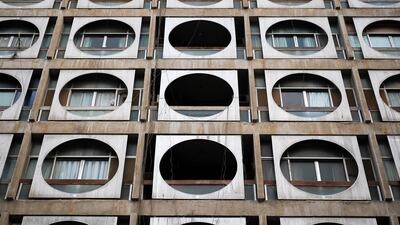
  • The Obaid Al ­Mazrouei Building. Brian Kerrigan / The National
    The Obaid Al ­Mazrouei Building. Brian Kerrigan / The National
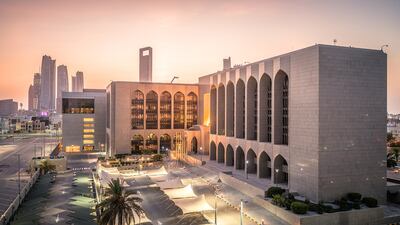
  • UAE Central Bank. Photo: UAE Central Bank
    UAE Central Bank. Photo: UAE Central Bank
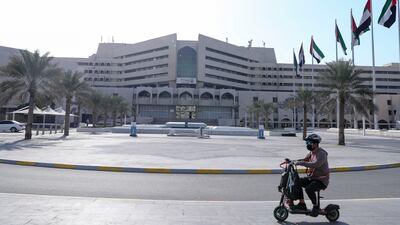
  • Abu Dhabi City Municipality. Khushnum Bhandari / The National
    Abu Dhabi City Municipality. Khushnum Bhandari / The National
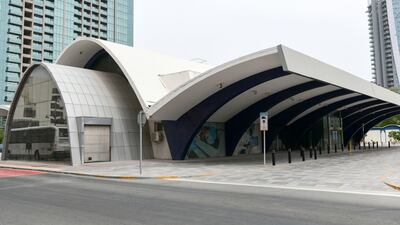
  • City Terminal. Khushnum Bhandari / The National
    City Terminal. Khushnum Bhandari / The National
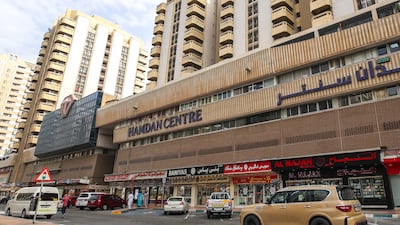
  • Hamdan Centre was one of the city's early malls. Victor Besa / The National
    Hamdan Centre was one of the city's early malls. Victor Besa / The National
  • Saeed Al Kalili Building (Ibrahimi). Photo: Department of Culture and Tourism - Abu Dhabi
    Saeed Al Kalili Building (Ibrahimi). Photo: Department of Culture and Tourism - Abu Dhabi
  • The Armed Forces Officers Club was repurposed as a hotel and resort called Erth. Photo: Erth
    The Armed Forces Officers Club was repurposed as a hotel and resort called Erth. Photo: Erth
  • The old Adnoc headquarters. Victor Besa / The National
    The old Adnoc headquarters. Victor Besa / The National
  • Abu Dhabi Chamber of Commerce and Industry. Victor Besa / The National
    Abu Dhabi Chamber of Commerce and Industry. Victor Besa / The National
  • The Hilton Al Ain was built in the 1970s. It is now a Radisson Blu. Photo: Hilton
    The Hilton Al Ain was built in the 1970s. It is now a Radisson Blu. Photo: Hilton
  • The tiles and arches of the restored Cultural Foundation. Reem Mohammed / The National
    The tiles and arches of the restored Cultural Foundation. Reem Mohammed / The National
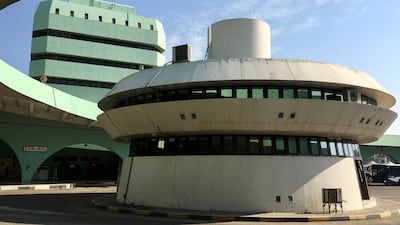
  • Abu Dhabi Main Bus Terminal. John Dennehy / The National
    Abu Dhabi Main Bus Terminal. John Dennehy / The National
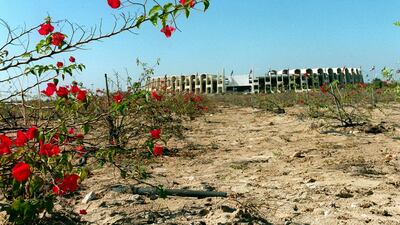
  • Zayed Sports City Stadium. Matthew Ashton / Empics via Getty Images
    Zayed Sports City Stadium. Matthew Ashton / Empics via Getty Images
UAE currency: the story behind the money in your pockets
Poacher
%3Cp%3E%3Cstrong%3EDirector%3A%20%3C%2Fstrong%3ERichie%20Mehta%26nbsp%3B%3C%2Fp%3E%0A%3Cp%3E%3Cstrong%3EStarring%3A%3C%2Fstrong%3E%20Nimisha%20Sajayan%2C%20Roshan%20Mathew%2C%20Dibyendu%20Bhattacharya%3C%2Fp%3E%0A%3Cp%3E%3Cstrong%3ERating%3A%20%3C%2Fstrong%3E3%2F5%3C%2Fp%3E%0A
The Year Earth Changed

Directed by:Tom Beard

Narrated by: Sir David Attenborough

Stars: 4

MATCH INFO

Red Star Belgrade v Tottenham Hotspur, midnight (Thursday), UAE

Key findings
  • Over a period of seven years, a team of scientists analysed dietary data from 50,000 North American adults.
  • Eating one or two meals a day was associated with a relative decrease in BMI, compared with three meals. Snacks count as a meal. Likewise, participants who ate more than three meals a day experienced an increase in BMI: the more meals a day, the greater the increase. 
  • People who ate breakfast experienced a relative decrease in their BMI compared with “breakfast-skippers”. 
  • Those who turned the eating day on its head to make breakfast the biggest meal of the day, did even better. 
  • But scrapping dinner altogether gave the best results. The study found that the BMI of subjects who had a long overnight fast (of 18 hours or more) decreased when compared even with those who had a medium overnight fast, of between 12 and 17 hours.
Ten tax points to be aware of in 2026

1. Domestic VAT refund amendments: request your refund within five years

If a business does not apply for the refund on time, they lose their credit.

2. E-invoicing in the UAE

Businesses should continue preparing for the implementation of e-invoicing in the UAE, with 2026 a preparation and transition period ahead of phased mandatory adoption. 

3. More tax audits

Tax authorities are increasingly using data already available across multiple filings to identify audit risks. 

4. More beneficial VAT and excise tax penalty regime

Tax disputes are expected to become more frequent and more structured, with clearer administrative objection and appeal processes. The UAE has adopted a new penalty regime for VAT and excise disputes, which now mirrors the penalty regime for corporate tax.

5. Greater emphasis on statutory audit

There is a greater need for the accuracy of financial statements. The International Financial Reporting Standards standards need to be strictly adhered to and, as a result, the quality of the audits will need to increase.

6. Further transfer pricing enforcement

Transfer pricing enforcement, which refers to the practice of establishing prices for internal transactions between related entities, is expected to broaden in scope. The UAE will shortly open the possibility to negotiate advance pricing agreements, or essentially rulings for transfer pricing purposes. 

7. Limited time periods for audits

Recent amendments also introduce a default five-year limitation period for tax audits and assessments, subject to specific statutory exceptions. While the standard audit and assessment period is five years, this may be extended to up to 15 years in cases involving fraud or tax evasion. 

8. Pillar 2 implementation 

Many multinational groups will begin to feel the practical effect of the Domestic Minimum Top-Up Tax (DMTT), the UAE's implementation of the OECD’s global minimum tax under Pillar 2. While the rules apply for financial years starting on or after January 1, 2025, it is 2026 that marks the transition to an operational phase.

9. Reduced compliance obligations for imported goods and services

Businesses that apply the reverse-charge mechanism for VAT purposes in the UAE may benefit from reduced compliance obligations. 

10. Substance and CbC reporting focus

Tax authorities are expected to continue strengthening the enforcement of economic substance and Country-by-Country (CbC) reporting frameworks. In the UAE, these regimes are increasingly being used as risk-assessment tools, providing tax authorities with a comprehensive view of multinational groups’ global footprints and enabling them to assess whether profits are aligned with real economic activity. 

Contributed by Thomas Vanhee and Hend Rashwan, Aurifer

The five pillars of Islam

1. Fasting 

2. Prayer 

3. Hajj 

4. Shahada 

5. Zakat 

Islamophobia definition

A widely accepted definition was made by the All Party Parliamentary Group on British Muslims in 2019: “Islamophobia is rooted in racism and is a type of racism that targets expressions of Muslimness or perceived Muslimness.” It further defines it as “inciting hatred or violence against Muslims”.

Updated: February 01, 2024, 3:08 PM