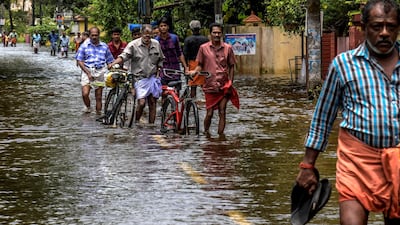
WMO scientists say phenomena such as the Pakistan floods show climate change is going in the wrong direction. AFP

UN says world 'going in wrong direction' on climate change


  • English
  • Arabic

Humanity is “going in the wrong direction” on climate change, the UN said on Tuesday in an assessment showing that planet-warming emissions are higher than before the coronavirus pandemic.

The UN's World Meteorological Organisation and its Environment Programme said that catastrophes will become commonplace should countries fail to decarbonise in line with what science says is needed to prevent the worst impacts of global warming.

The agencies pointed to Pakistan's monumental floods and China's crop-withering heatwave this year as examples of what to expect.

The UN said last month that the drought gripping the Horn of Africa and threatening millions with acute food shortages was now likely to extend into a fifth year.

“Floods, droughts, heatwaves, extreme storms and wildfires are going from bad to worse, breaking records with alarming frequency,” said UN Secretary General Antonio Guterres.

“There is nothing natural about the new scale of these disasters. They are the price of humanity's fossil fuel addiction.”

Millions of people in the Horn of Africa region are going hungry because of drought, and thousands have died, with Somalia hit especially hard. AP

The UN's United in Science report underscores how, nearly three years since Covid-19 handed governments a unique opportunity to reassess how to power their economies, countries are continuing to pollute.

It found that after an unprecedented 5.4 per cent fall in emissions in 2020 due to lockdowns and travel restrictions, preliminary data from January-May this year shows global CO2 emissions are 1.2 per cent higher than before Covid-19.

This is mostly down to large year-on-year increases in the US, India and most European countries, the assessment found.

“The science is unequivocal: we are going in the wrong direction,” said WMO Secretary General Petteri Taalas.

“Greenhouse gas concentrations are continuing to rise, reaching new record highs. Fossil fuel emission rates are now above pre-pandemic levels. The past seven years were the warmest on record.”

Last week, the European Union's Copernicus climate monitor said that summer 2022 was the hottest in Europe and one of the hottest globally since records began in the 1970s.

Tuesday's report said there was a 93 per cent chance that the record for the hottest year globally — currently 2016 — will be broken within five years.

It said that the continued use of fossil fuels meant the chance of the annual mean global temperature temporarily exceeding 1.5°C above pre-industrial levels in one of the next five years was roughly even, at 48 per cent.

Polluters paying no heed to Paris Agreement

Keeping longer-term temperatures below 1.5°C is the most ambitious goal of the 2015 Paris Agreement.

Despite more than three decades of UN-led negotiations, rich polluters show little sign of being willing to make the kind of large-scale emissions cuts that would keep the goal in play.

The UN's Environment Programme, in an update to its annual “emissions gap” assessment following new pledges made at last November's Cop26 summit in Glasgow, said on Tuesday that even these promises were far from adequate.

In fact, it said the ambition even in countries' most recent pledges would need to be four times greater to limit warming to 2°C, and seven times higher to make 1.5°C.

All told, current worldwide climate policies put Earth on course to warm by 2.8°C by 2100, the agency said.

Mr Guterres said that Tuesday's assessment showed “climate impacts heading into uncharted territory of destruction”.

“Yet each year, we double down on this fossil fuel addiction, even as the symptoms get rapidly worse,” he said in a video message.

Tasneem Essop, executive director of Climate Action Network, said that the coming Cop27 climate conference in Egypt needed leaders to agree to new funding to help communities in at-risk nations rebuild after extreme events.

“The terrifying picture painted by the United in Science report is already a lived reality for millions of people facing recurring climate disasters,” she said.

Climate change tipping points — in pictures

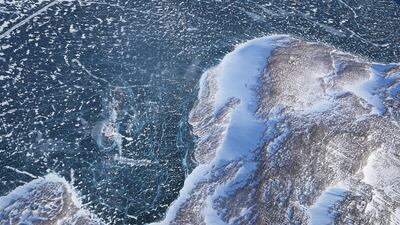
  • Greenland ice sheet disintegration – Rising temperatures causing the retreat of the ice sheet, which would cause sea levels to rise.
    Greenland ice sheet disintegration – Rising temperatures causing the retreat of the ice sheet, which would cause sea levels to rise.
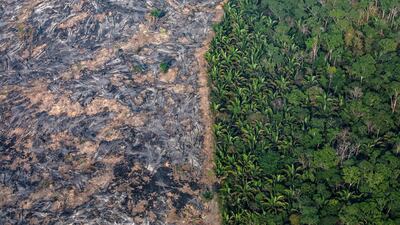
  • Amazon rainforest dieback – Large-scale dieback of the forest, via increased temperatures and drying, or direct deforestation, would amplify global warming.
    Amazon rainforest dieback – Large-scale dieback of the forest, via increased temperatures and drying, or direct deforestation, would amplify global warming.
  • Permafrost loss – Thawing of carbon-rich soils, which releases greenhouse gas into the atmosphere.
    Permafrost loss – Thawing of carbon-rich soils, which releases greenhouse gas into the atmosphere.
  • Atlantic meridional overturning circulation breakdown – An increased amount of freshwater in the Northern Atlantic disrupting the system of currents.
    Atlantic meridional overturning circulation breakdown – An increased amount of freshwater in the Northern Atlantic disrupting the system of currents.
  • Boreal forest shift – Warming causes dieback in the south of the forests, and expansion into the tundra in the north, which would cause regional warming.
    Boreal forest shift – Warming causes dieback in the south of the forests, and expansion into the tundra in the north, which would cause regional warming.
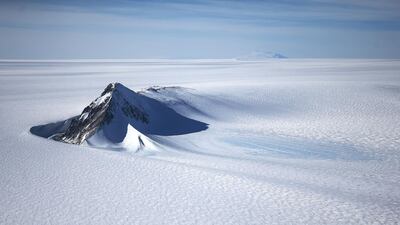
  • West Antarctic ice sheet disintegration – The melting of major ice sheets would lead to significant increases in sea level.
    West Antarctic ice sheet disintegration – The melting of major ice sheets would lead to significant increases in sea level.
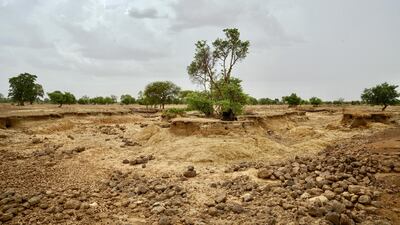
  • West African monsoon shift – A change in the monsoon season would lead to agricultural disruption and effect the ecosystem.
    West African monsoon shift – A change in the monsoon season would lead to agricultural disruption and effect the ecosystem.
  • Indian monsoon shift – An increase in the planetary albedo (increases in the atmospheric brown cloud haze over India) has the capability of switching off the monsoon, which is crucial for the local economy, as well as being important for agriculture.
    Indian monsoon shift – An increase in the planetary albedo (increases in the atmospheric brown cloud haze over India) has the capability of switching off the monsoon, which is crucial for the local economy, as well as being important for agriculture.
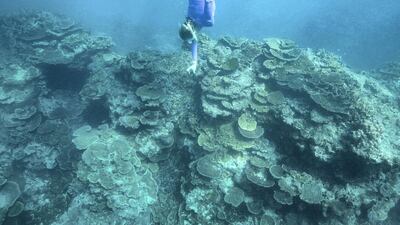
  • Coral reef die-off – Exposure to increased sea temperatures can kill off reefs, which has a serious effect on ecosystems and local economies.
    Coral reef die-off – Exposure to increased sea temperatures can kill off reefs, which has a serious effect on ecosystems and local economies.
Mercedes V250 Avantgarde specs

Engine: 2.0-litre in-line four-cylinder turbo

Gearbox: 7-speed automatic

Power: 211hp at 5,500rpm

Torque: 350Nm

Fuel economy, combined: 6.0 l/100 km

Price: Dh235,000

Ten tax points to be aware of in 2026

1. Domestic VAT refund amendments: request your refund within five years

If a business does not apply for the refund on time, they lose their credit.

2. E-invoicing in the UAE

Businesses should continue preparing for the implementation of e-invoicing in the UAE, with 2026 a preparation and transition period ahead of phased mandatory adoption. 

3. More tax audits

Tax authorities are increasingly using data already available across multiple filings to identify audit risks. 

4. More beneficial VAT and excise tax penalty regime

Tax disputes are expected to become more frequent and more structured, with clearer administrative objection and appeal processes. The UAE has adopted a new penalty regime for VAT and excise disputes, which now mirrors the penalty regime for corporate tax.

5. Greater emphasis on statutory audit

There is a greater need for the accuracy of financial statements. The International Financial Reporting Standards standards need to be strictly adhered to and, as a result, the quality of the audits will need to increase.

6. Further transfer pricing enforcement

Transfer pricing enforcement, which refers to the practice of establishing prices for internal transactions between related entities, is expected to broaden in scope. The UAE will shortly open the possibility to negotiate advance pricing agreements, or essentially rulings for transfer pricing purposes. 

7. Limited time periods for audits

Recent amendments also introduce a default five-year limitation period for tax audits and assessments, subject to specific statutory exceptions. While the standard audit and assessment period is five years, this may be extended to up to 15 years in cases involving fraud or tax evasion. 

8. Pillar 2 implementation 

Many multinational groups will begin to feel the practical effect of the Domestic Minimum Top-Up Tax (DMTT), the UAE's implementation of the OECD’s global minimum tax under Pillar 2. While the rules apply for financial years starting on or after January 1, 2025, it is 2026 that marks the transition to an operational phase.

9. Reduced compliance obligations for imported goods and services

Businesses that apply the reverse-charge mechanism for VAT purposes in the UAE may benefit from reduced compliance obligations. 

10. Substance and CbC reporting focus

Tax authorities are expected to continue strengthening the enforcement of economic substance and Country-by-Country (CbC) reporting frameworks. In the UAE, these regimes are increasingly being used as risk-assessment tools, providing tax authorities with a comprehensive view of multinational groups’ global footprints and enabling them to assess whether profits are aligned with real economic activity. 

Contributed by Thomas Vanhee and Hend Rashwan, Aurifer

RESULTS

6.30pm: Emirates Holidays Maiden (TB) Dh 82,500 (Dirt) 1,900m
Winner: Lady Snazz, Richard Mullen (jockey), Satish Seemar (trainer).

7.05pm: Arabian Adventures Maiden (TB) Dh 82,500 (D) 1,200m
Winner: Zhou Storm, Connor Beasley, Ali Rashid Al Raihe.

7.40pm: Emirates Skywards Handicap (TB) Dh 82,500 (D) 1,200m
Winner: Rich And Famous, Royston Ffrench, Salem bin Ghadayer.

8.15pm: Emirates Airline Conditions (TB) Dh 120,000 (D) 1,400m
Winner: Rio Angie, Sam Hitchcock, Doug Watson.

8.50pm: Emirates Sky Cargo (TB) Dh 92,500 (D) 1,400m
Winner: Kinver Edge, Richard Mullen, Satish Seemar.

9.15pm: Emirates.com (TB) Dh 95,000 (D) 2,000m
Winner: Firnas, Xavier Ziani, Salem bin Ghadayer.

Updated: September 13, 2022, 5:44 PM