• Abdulaziz Al Jaberi, Senior Project manager at Tadweer at the fallen stock incinerator facility. Khushnum Bhandari / The National
    Abdulaziz Al Jaberi, Senior Project manager at Tadweer at the fallen stock incinerator facility. Khushnum Bhandari / The National
  • The fallen stock incinerator facility where Tadweer disposes off dead animals will be operational later this year. Khushnum Bhandari / The National
    The fallen stock incinerator facility where Tadweer disposes off dead animals will be operational later this year. Khushnum Bhandari / The National
  • Tadweer will use the facility to dispose of dead animals such as cows, camels, chickens who have died of diseases. Khushnum Bhandari / The National
    Tadweer will use the facility to dispose of dead animals such as cows, camels, chickens who have died of diseases. Khushnum Bhandari / The National
  • The treatment process takes 45 minutes for big animals, and 15 minutes for smaller ones. Khushnum Bhandari / The National
    The treatment process takes 45 minutes for big animals, and 15 minutes for smaller ones. Khushnum Bhandari / The National
  • The fallen stock incinerator facility is automatic, so humans are not required to touch the carcasses. Khushnum Bhandari / The National
    The fallen stock incinerator facility is automatic, so humans are not required to touch the carcasses. Khushnum Bhandari / The National
  • One chamber that burns at 850°C, has been designed for the bodies of small-sized animals like sheep, hens and goats. Next to it is a bigger chamber that cremates the bodies of larger animals like camels, cows and horses at 1,000°C. Khushnum Bhandari / The National
    One chamber that burns at 850°C, has been designed for the bodies of small-sized animals like sheep, hens and goats. Next to it is a bigger chamber that cremates the bodies of larger animals like camels, cows and horses at 1,000°C. Khushnum Bhandari / The National
  • The plant also treats noxious gases that emerge during the burning process, and contains an odour control system to mitigate the smell from the decomposing carcasses. Khushnum Bhandari / The National
    The plant also treats noxious gases that emerge during the burning process, and contains an odour control system to mitigate the smell from the decomposing carcasses. Khushnum Bhandari / The National

How Abu Dhabi’s environmentally friendly incinerator will help stop the spread of viruses


Haneen Dajani
  • English
  • Arabic

An incinerator constructed in Abu Dhabi will provide hygienic disposal for thousands of tonnes of fallen livestock each year.

The plant, which is scheduled to open within the next few months, will cremate dead animals using an environmentally friendly method instead of sending carcasses to landfill.

Cremation is designed to prevent the spread of bacteria and viruses that can occur when diseased animals are buried, said Abdulaziz Al Jaberi, senior project manager at Abu Dhabi Waste Management Centre (Tadweer).

It is very important to have a good system in place. If there is a dead animal, take it automatically to the system and burn it.

“If one animal catches a disease, it could spread to other animals and humans even after it is buried,” Mr Al Jaberi said.

“It is not safe to dispose or bury the animal, as viruses and bacteria can be transferred through the soil and underground water, and then the whole community will be affected.

“This is a big issue. That is why fallen stock shouldn’t be buried."

Diseases such as bovine spongiform encephalopathy (mad cow disease), bird flu and swine flu can spread quickly through farm stock, and also pass from animals to humans.

Scientists studying the source of the coronavirus think this is one theory about how the pandemic started.

A World Health Organisation report recently said it was "likely" that the coronavirus originated in animals, and made the jump to humans through an as-yet unidentified intermediary animal.

This potential threat of animal diseases to humans is why incineration is the best way to dispose of carcasses safely, Mr Al Jaberi said.

"It is very important to have a good system in place,” he said.

"If there is a dead animal, take it automatically to the system and burn it."

How does the new incinerator work?

Workers at Tadweer's fallen stock incinerator facility. Khushnum Bhandari / The National

The National visited the Abu Dhabi city facility, which is located between the capital and Al Dhafra.

The 3,710 square metre plant is ready to operate but is awaiting Tadweer certification.

The treatment process takes 45 minutes for big animals, and 15 minutes for smaller ones.

“In [Tadweer's plant at] Al Ain, smaller animals make up 80 per cent of the stock they receive,” Mr Al Jaberi said.

One chamber burns at 850°C and has been designed for the bodies of small-sized animals like sheep, hens and goats.

Next to it is a larger incinerator that cremates the bodies of larger animals like camels, cows and horses at 1,000°C.

The plant also treats noxious gases that emerge during the process.

“After the burning, the gases go to the secondary chamber where they are burnt at 1,000°C to ensure all the gases are treated, and only non-toxic gas is released back into the air through the chimney," Mr Al Jaberi said.

“This is very important, otherwise harmful gases will go out to the atmosphere.”

The biggest challenge of the project, however, was controlling the stench that comes from the decomposing carcasses, so the engineers created an odour control system.

Fans have been placed alongside the walls close to the ceiling. On one side, the fans expel air and on the other side they suck it in. This ensures a flow of air through the room to clear the smell.

The site also includes a machine that cleans the vehicles that carry the carcasses, to ensure they are decontaminated before they return to the city.

Further protective measures include the design of the incinerator itself.

The chamber walls are very thick to ensure the heat does not escape, and the bodies of the dead animals are lifted to the big chamber using a lifting plate.

This ensures "there is no human interaction with them at all," Mr Al Jaberi said.

The economic benefit of recycling

Abdulaziz Al Jaberi, is senior project manager at Tadweer's fallen stock incinerator. Khushnum Bhandari / The National

Tadweer set up its first incinerator at Al Ain in 2010, and the plant has acted as a successful model, Mr Al Jaberi said.

“Since we proved to have a good approach there, minimised the ashes and saved land, Tadweer decided to apply the same approach in Abu Dhabi city," he said.

“The next stage will include a new plant to serve Al Dhafra.”

The plant in Al Ain has processed around 100,000 tonnes of fallen stock every year since it started operations, an average of 20 tonnes per day.

The plant is now being expanded to include the pilot for a recycling system that could become a source of revenue.

It will be the first time for such a system in the GCC, Mr Al Jaberi said.

“In Europe, they extract protein out of them [dead animals] and there is a very good market for it,” he said.

“The country is now focusing on recycling and decreasing disposal, so when the project is up and running, and we see the demand for the recycled product in the market, we can limit incineration and focus on recycling.”

In pictures: the Ghayathi crusher turning construction waste into stone

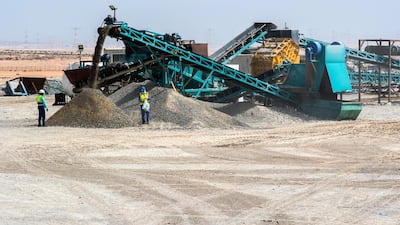
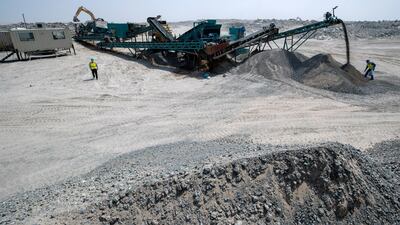
  • The Ghayathi crusher in Al Dhafra, Abu Dhabi. All photos by Victor Besa / The National
    The Ghayathi crusher in Al Dhafra, Abu Dhabi. All photos by Victor Besa / The National
  • About 2,000 tonnes of construction waste are recycled every day here.
    About 2,000 tonnes of construction waste are recycled every day here.
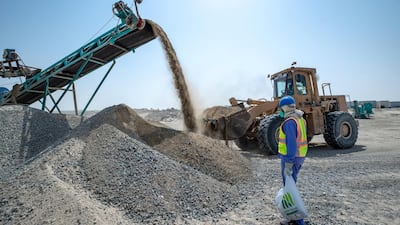
  • The 60-metre long crusher turns huge stones into gravel that can be used on the country's roads.
    The 60-metre long crusher turns huge stones into gravel that can be used on the country's roads.
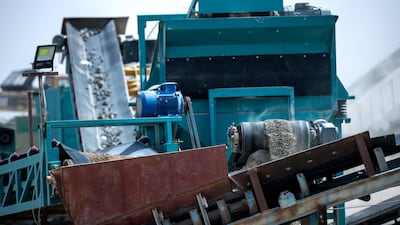
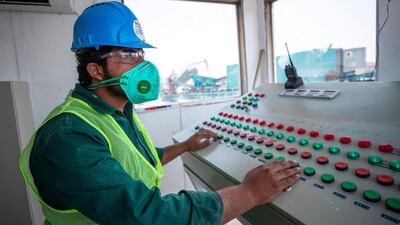
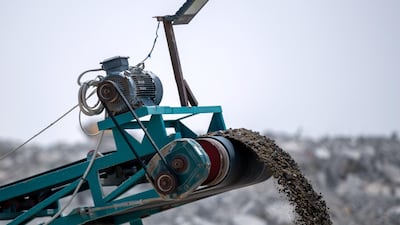
  • The waste travels on a magnetic conveyer belt where any metals or contaminated material is removed.
    The waste travels on a magnetic conveyer belt where any metals or contaminated material is removed.
  • The material is sold for use in infrastructure projects.
    The material is sold for use in infrastructure projects.
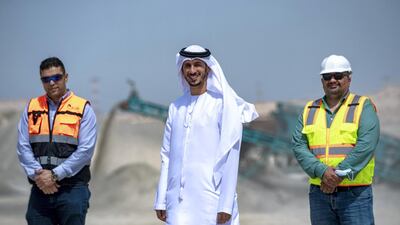
  • From left: Mohannad Raouf, plant manager; Khalid Al Khanbashi, Khalid Al Khanbashi, senior waste officer at Tadweer; and Ahmed Nour Gamil, operations director.
    From left: Mohannad Raouf, plant manager; Khalid Al Khanbashi, Khalid Al Khanbashi, senior waste officer at Tadweer; and Ahmed Nour Gamil, operations director.
  • The material is screened to ensure it has been crushed to the right size – between 0 and 37.5mm.
    The material is screened to ensure it has been crushed to the right size – between 0 and 37.5mm.
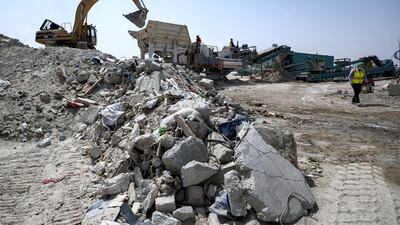
  • All stone from construction sites and demolished buildings in Al Dhafra is recycled, reused and sold to boost the economy.
    All stone from construction sites and demolished buildings in Al Dhafra is recycled, reused and sold to boost the economy.
  • Previously the waste was brought to landfill, which damaged the environment.
    Previously the waste was brought to landfill, which damaged the environment.
  • Hundreds of thousands of tonnes of waste this year could be processed at the plant.
    Hundreds of thousands of tonnes of waste this year could be processed at the plant.
  • The crusher is part of Tadweer's plant to limit waste and pollution and encourage industrial recycling.
    The crusher is part of Tadweer's plant to limit waste and pollution and encourage industrial recycling.
UAE currency: the story behind the money in your pockets

At Eternity’s Gate

Director: Julian Schnabel

Starring: Willem Dafoe, Oscar Isaacs, Mads Mikkelsen

Three stars

The burning issue

The internal combustion engine is facing a watershed moment – major manufacturer Volvo is to stop producing petroleum-powered vehicles by 2021 and countries in Europe, including the UK, have vowed to ban their sale before 2040. The National takes a look at the story of one of the most successful technologies of the last 100 years and how it has impacted life in the UAE.

Part three: an affection for classic cars lives on

Read part two: how climate change drove the race for an alternative 

Read part one: how cars came to the UAE

The specs: 2019 GMC Yukon Denali

Price, base: Dh306,500
Engine: 6.2-litre V8
Transmission: 10-speed automatic
Power: 420hp @ 5,600rpm
Torque: 621Nm @ 4,100rpm​​​​​​​
​​​​​​​Fuel economy, combined: 12.9L / 100km

2.0

Director: S Shankar

Producer: Lyca Productions; presented by Dharma Films

Cast: Rajnikanth, Akshay Kumar, Amy Jackson, Sudhanshu Pandey

Rating: 3.5/5 stars

Teams

Punjabi Legends Owners: Inzamam-ul-Haq and Intizar-ul-Haq; Key player: Misbah-ul-Haq

Pakhtoons Owners: Habib Khan and Tajuddin Khan; Key player: Shahid Afridi

Maratha Arabians Owners: Sohail Khan, Ali Tumbi, Parvez Khan; Key player: Virender Sehwag

Bangla Tigers Owners: Shirajuddin Alam, Yasin Choudhary, Neelesh Bhatnager, Anis and Rizwan Sajan; Key player: TBC

Colombo Lions Owners: Sri Lanka Cricket; Key player: TBC

Kerala Kings Owners: Hussain Adam Ali and Shafi Ul Mulk; Key player: Eoin Morgan

Venue Sharjah Cricket Stadium

Format 10 overs per side, matches last for 90 minutes

Timeline October 25: Around 120 players to be entered into a draft, to be held in Dubai; December 21: Matches start; December 24: Finals

The%20specs
%3Cp%3E%3Cstrong%3EEngine%3A%3C%2Fstrong%3E%201.8-litre%204-cyl%20turbo%0D%3Cbr%3E%3Cstrong%3EPower%3A%20%3C%2Fstrong%3E190hp%20at%205%2C200rpm%0D%3Cbr%3E%3Cstrong%3ETorque%3A%3C%2Fstrong%3E%20320Nm%20from%201%2C800-5%2C000rpm%0D%3Cbr%3E%3Cstrong%3ETransmission%3A%20%3C%2Fstrong%3ESeven-speed%20dual-clutch%20auto%0D%3Cbr%3E%3Cstrong%3EFuel%20consumption%3A%3C%2Fstrong%3E%206.7L%2F100km%0D%3Cbr%3E%3Cstrong%3EPrice%3A%3C%2Fstrong%3E%20From%20Dh111%2C195%0D%3Cbr%3E%3Cstrong%3EOn%20sale%3A%20%3C%2Fstrong%3ENow%3C%2Fp%3E%0A