


Sheikh Mohammed bin Rashid celebrates his 73rd birthday on Friday.
During his 16 years as Vice President and Ruler of Dubai, he has overseen the growth and transformation of the emirate and country into a thriving global centre of business, industry and tourism.
Sheikh Mohammed was born on July 15, 1949, and raised in the Al Maktoum family home in Shindagha on the banks of Dubai Creek.
He was privately tutored in Arabic and Islamic studies from the age of four and began formal education two years later.
He later trained at Mons Officer Cadet School in Aldershot, which is now part of the Royal Military Academy Sandhurst. There he would emerge as the top Commonwealth student before going to Italy to be trained as a pilot.
In 1968, when he was 19, he became the world’s youngest defence minister and was appointed the head of Dubai Police and Public Security force.
He became the nation’s first Minister of Defence in 1971 after the formation of the UAE.
-

The Expo 2020 site under construction in the Dubai South area of Dubai, in July 2017. Christopher Pike / The National -
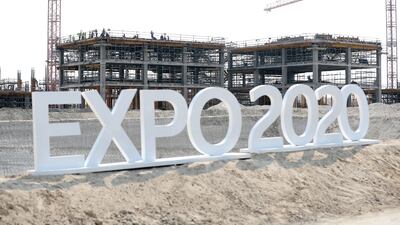
Construction work on the Expo 2020 site at the Al Wasl Plaza in November 2017. Chris Whiteoak / The National -

The Expo 2020 site in April 2018. Pawan Singh / The National -
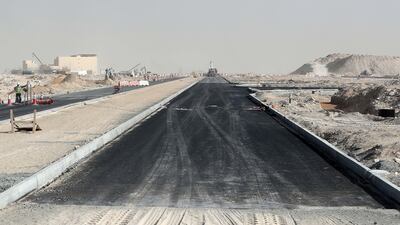
The under construction site in Dubai in April 2018. Pawan Singh / The National -
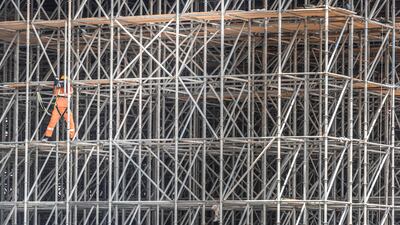
A man climbs through scaffolding during the construction of the new fly-over on Sheikh Zayed road near the Al Safa interchange, in May 2018. Antonie Robertson/The National -

General image of the site in October 2018. Antonie Robertson/The National -
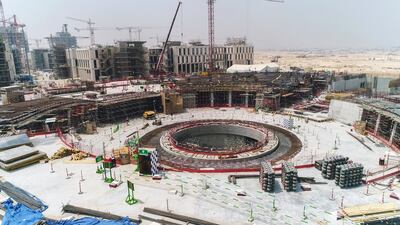
The Expo construction site in October 2018. Photo: Dubai Expo -
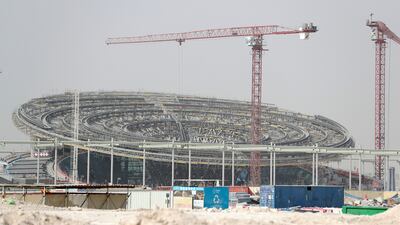
Progress at the Sustainability pavilion, seen in July 2019. Chris Whiteoak / The National -
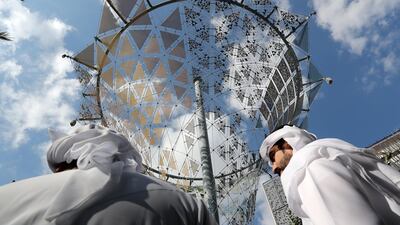
Visitors at the Invention centre at the Expo 2020 House of Volunteers office, in January 2020. Pawan Singh / The National -
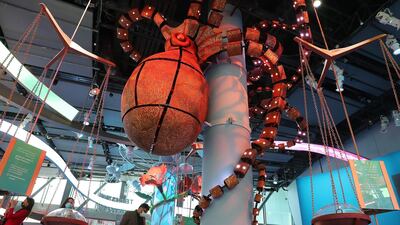
Inside view of the Dubai Expo 2020 Sustainability pavilion during a media tour in January 2021. Pawan Singh / The National -
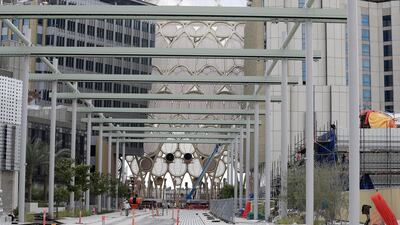
The Al Wasl Plaza, the heart of the Expo 2020 site, in January 2020. Pawan Singh / The National -
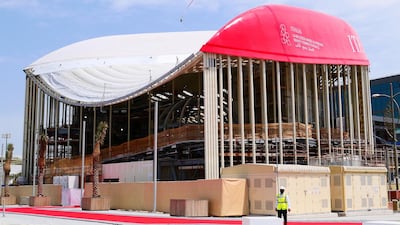
The Italy pavilion in April 2021, being readied ahead of the opening in October. Pawan Singh / The National -
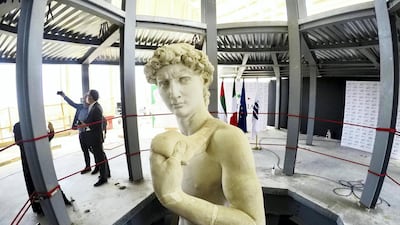
The David statue, unveiled at the Italy pavilion in April 2021. Pawan Singh/The National -
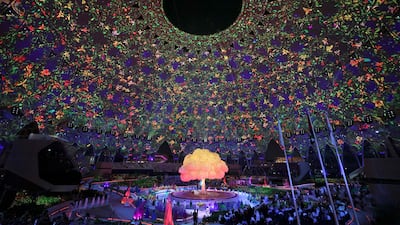
The opening ceremony of Dubai Expo 2020, on September 30, 2021. AFP -
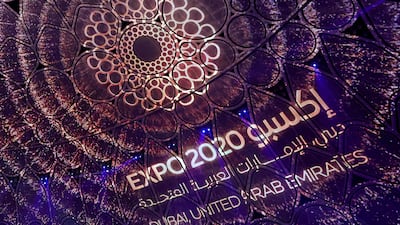
A logo of the Dubai Expo 2020 is projected during the opening ceremony, on September 30, 2021. AFP -

Visitors enjoying the fog inside the Switzerland pavilion in October 2021. Pawan Singh / The National -
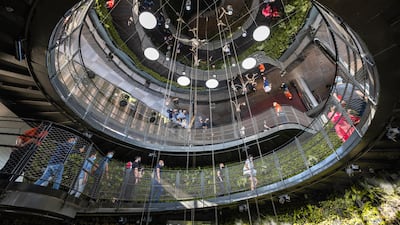
Visitors at the Singapore Pavilion in October 2021. Photo: Expo 2020 Dubai -
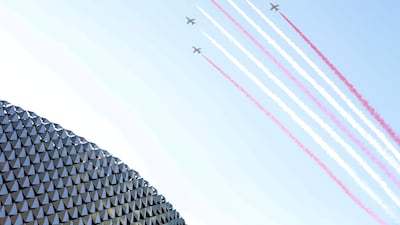
Airshow above the Pakistan pavilion in October 2021. Khushnum Bhandari/ The National -
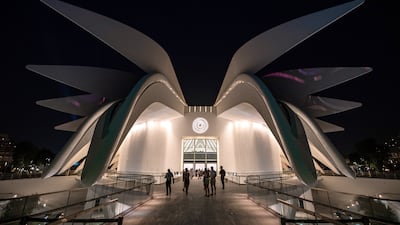
The UAE pavilion in October 2021. Victor Besa/The National -
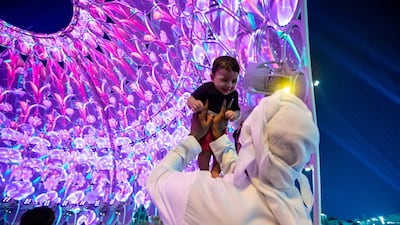
Light show at the Al Wasl Plaza in October 2021. Victor Besa/The National. -
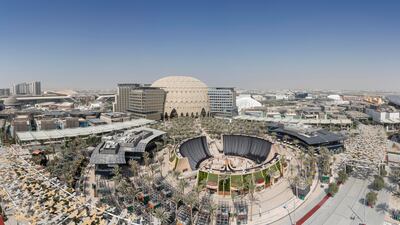
View from the Garden in the Sky at Expo 2020, in November 2021. Antonie Robertson / The National -
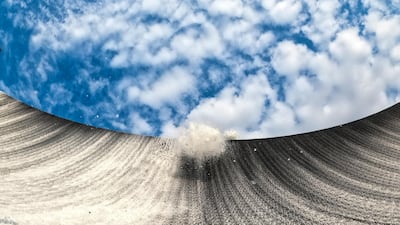
The Water Feature, in November 2021. Photo: Expo 2020 Dubai -
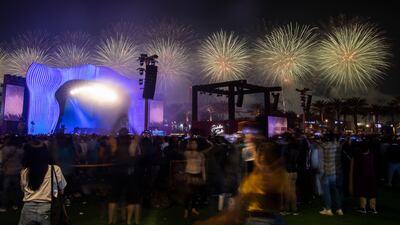
Closing fireworks at Expo 2020 Dubai, on April 1, 2022. Ruel Pableo/The National -

A sign outside the Sustainability gate saying: 'The gates are closed but the memories will remain. Until we meet again.' Chris Whiteoak / The National


While a significant part of his development took place under the tutelage of academics and military officials overseas, sitting under the learning tree provided by his father, Sheikh Rashid bin Saeed, in the Emirates proved vital.
As a young man, he had a front row seat to his father’s pro-business mentality that established Dubai as a commercial and trading centre after the collapse of the pearling industry and well before the discovery of oil.
During the 1980s, Dubai’s population soared past 500,000. The city became a thriving international destination with the creation of Emirates airline in 1985, and events such as the Dubai Desert Classic tournament, held at the first grass course in the Middle East, the Emirates Golf Course, which opened in 1988.
Sheikh Rashid died in October 1990 and was succeeded by his eldest son, Sheikh Maktoum bin Rashid, with Sheikh Mohammed appointed Crown Prince in 1995.
Sheikh Mohammed took responsibility for the airport and oil industry and merged Port Rashid and Jebel Ali to create Dubai Ports Authority, now DP World, one of the world’s most successful companies.
Looking to the future and recognising early the potential of the internet and the digital age, he ordered all government services to move online in 1999.
He also oversaw the development of the Burj Al Arab, which opened in September 1999, two months after his 50th birthday. Its now familiar sail shape confirming that Dubai was a leading holiday destination.
Sheikh Mohammed became the ruler of Dubai in 2006 after the death of Sheikh Maktoum, who died unexpectedly on a visit to Australia.
The growth of Dubai accelerated under his rule. The world's tallest tower, the Burj Khalifa, was completed in 2009, followed soon afterwards by The Dubai Mall and Dubai Metro.
Since then, Dubai's population has risen from 1.7 million in 2009 to more than 3.5 million today.
The Mohammed bin Rashid Space Centre sent the UAE’s first astronaut into space as the ruler turned 70. In February last year, the space centre’s Hope probe began orbiting Mars.
During a momentous 12 months, Sheikh Mohammed has overseen the successful hosting of Expo 2020 Dubai and the UAE's 50th year celebrations.
Looking to the future, Sheikh Mohammed recently unveiled Expo City Dubai, which will soon welcome thousands of new residents and businesses, and launched a series of projects and initiatives to boost the UAE's development.
Expo City Dubai will host the 28th UN Climate Change Conference of the Parties (Cop28) in November 2023. The meeting of world leaders will seek to find solutions to the threats posed by climate change.
Sheikh Mohammed bin Rashid unveils Expo City Dubai - in pictures
-
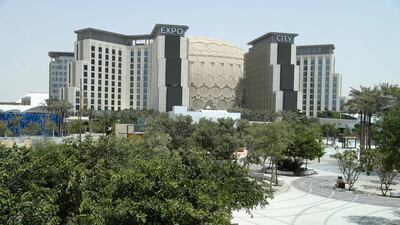
Expo City Dubai is set to open in phases from September 2022, with a full relaunch in October. All photos: Pawan Singh / The National -
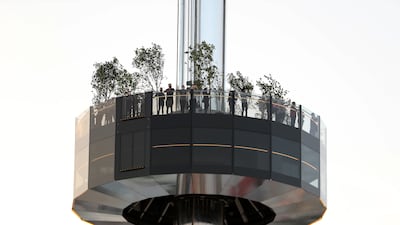
Visitors can take a trip on the Garden in the Sky from September 1 for Dh30. -
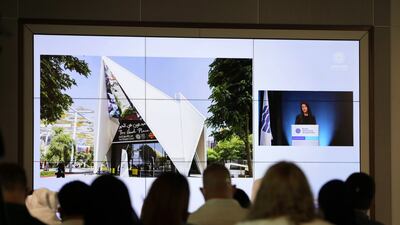
Later, as residential sectors open, the district will become a '24-hour neighbourhood' in which people live and work, and can visit. -
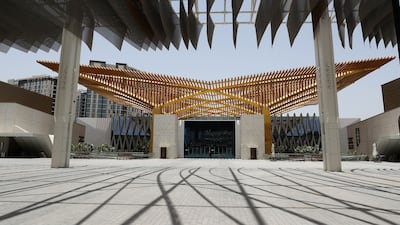
The Expo metro station in June 2022. -
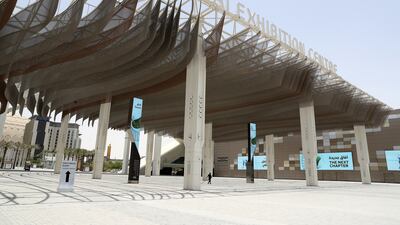
Dubai Exhibition Centre in June 2022. -

Ahmed Al Khatib, chief development and delivery officer and Marjan Faraidooni, chief visitor experience officer at Expo 2020 Dubai, at a news conference in June 2022 to announce Expo City Dubai. -

The entrance gates await new residents and businesses. -

Ahmed Al Khatib said the district would be free of single plastics and was built with an emphasis on the environment. -
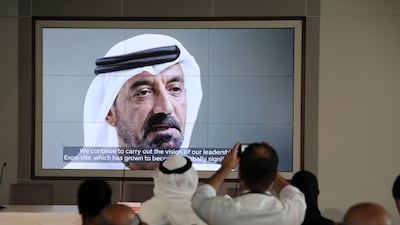
Sheikh Ahmed Bin Saeed, chairman of Dubai Airports, speaking at a press conference welcoming the next chapter at Expo City Dubai.



