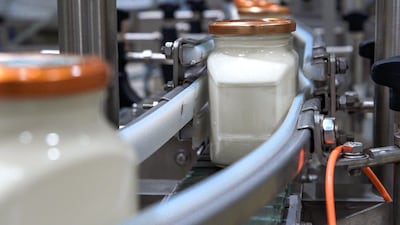
Abu Dhabi, United Arab Emirates, February 2, 2021. A look inside Pinar, the UAE’s first processed cheese factory in Abu Dhabi. -- Sterillised cheese containers being filled with cheese on the automated production line. Victor Besa/The National. Section: NA Reporter : Nilanjana Gupta
Abu Dhabi, United Arab Emirates, February 2, 2021. A look inside Pinar, the UAE’s first processed cheese factory in Abu Dhabi. -- Sterillised cheese containers being filled with cheese on the automate

Inside UAE’s first processed cheese factory


Nilanjana Gupta
  • English
  • Arabic

At a factory in Abu Dhabi's Khalifa Industrial Zone, cheese products are being made at a brisk pace.

The 20,000-square-metre plant is the first in the UAE to make processed cheese.

It is also the first factory in the country to export processed cheese to countries around  the globe.

Launched in November 2019 by Turkish food brand Pinar, the plant has the capacity to produce 30,000 tonnes of processed cheese each year.

Last year, it exported the first "made in UAE" processed cheese products to 17 countries, including the US, Philippines, Pakistan, Thailand and Israel.

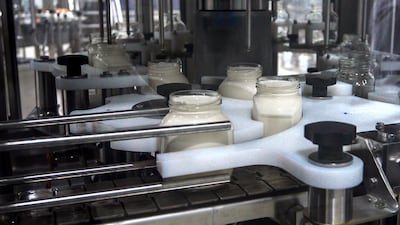
  • Bottles of just-filled spreadable cheese on their way to get labelled on the automated production line. Victor Besa / The National
    Bottles of just-filled spreadable cheese on their way to get labelled on the automated production line. Victor Besa / The National
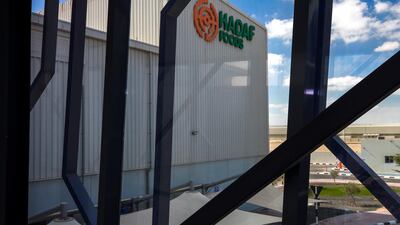
  • Pinar, the UAE’s first processed cheese factory in Abu Dhabi, produces 30,000 tonnes of product around the world. Victor Besa / The National
    Pinar, the UAE’s first processed cheese factory in Abu Dhabi, produces 30,000 tonnes of product around the world. Victor Besa / The National
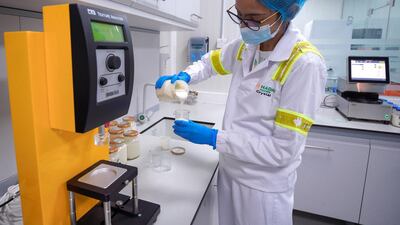
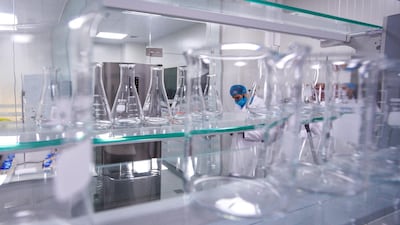
  • Crystal D'Costa, a microbiologist at the Pinar factory in Abu Dhabi, carries out some tests on the cheese in the lab. Victor Besa / The National
    Crystal D'Costa, a microbiologist at the Pinar factory in Abu Dhabi, carries out some tests on the cheese in the lab. Victor Besa / The National
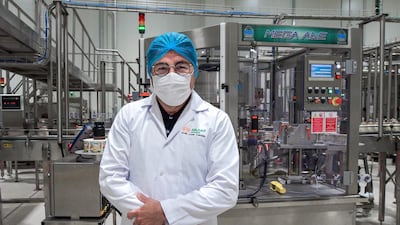
  • Arda Cenk Tokbas, managing director of Hadaf Foods Industries, at the Pinar factory in Abu Dhabi. Victor Besa / The National
    Arda Cenk Tokbas, managing director of Hadaf Foods Industries, at the Pinar factory in Abu Dhabi. Victor Besa / The National
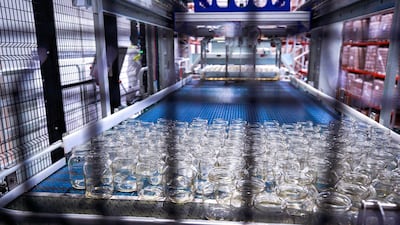
  • Sterilised glass containers are filled with spreadable cheese on the automated production line. Victor Besa / The National
    Sterilised glass containers are filled with spreadable cheese on the automated production line. Victor Besa / The National
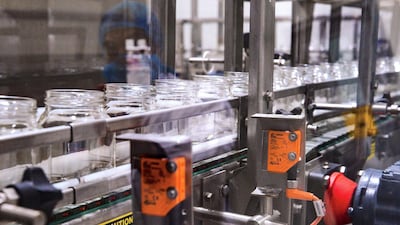
  • Sterilised glass containers on the automated conveyor system are UV checked before being filled with cheese in the production line. Victor Besa / The National
    Sterilised glass containers on the automated conveyor system are UV checked before being filled with cheese in the production line. Victor Besa / The National
  • The Pinar laboratory, where quality tests are conducted on the cheese products. Victor Besa / The National
    The Pinar laboratory, where quality tests are conducted on the cheese products. Victor Besa / The National
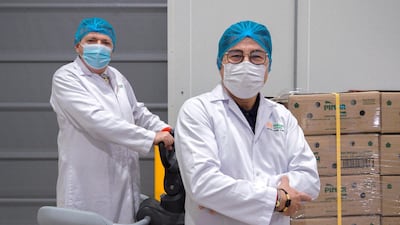
  • L-R: Adnan Peynirci, factory director, and Arda Cenk Tokbas, managing director of Hadaf Foods Industries. Victor Besa / The National
    L-R: Adnan Peynirci, factory director, and Arda Cenk Tokbas, managing director of Hadaf Foods Industries. Victor Besa / The National
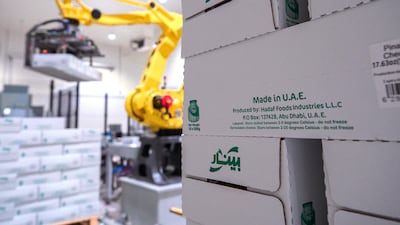
  • A robotic arm lifts boxes of processed cheese from the automated conveyor system at Pinar and loads them to crates to be delivered. Victor Besa / The National Reporter : Nilanjana Gupta
    A robotic arm lifts boxes of processed cheese from the automated conveyor system at Pinar and loads them to crates to be delivered. Victor Besa / The National Reporter : Nilanjana Gupta
  • Sterilised glass containers on the automated conveyor system are UV checked before being filled with cheese in the production line. Victor Besa / The National
    Sterilised glass containers on the automated conveyor system are UV checked before being filled with cheese in the production line. Victor Besa / The National
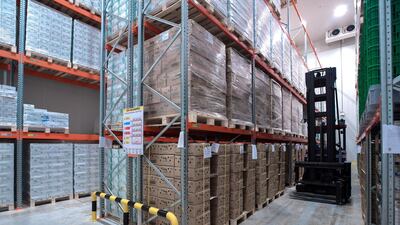
  • The temperature-controlled stockroom at the Pinar factory in Abu Dhabi. Victor Besa / The National
    The temperature-controlled stockroom at the Pinar factory in Abu Dhabi. Victor Besa / The National

Arda Cenk Tokbas, managing director at Hadaf Foods Industries, Pinar’s regional office, said: “All our cheese is prepared using cow’s milk which is locally sourced from farms in the UAE.

"With this facility, we hope to contribute to the country’s goal of becoming one of the most food secure countries in the world.”

He said the company was planning to double the factory’s annual production, to more than 60,000 tonnes, in the next few years.

The production centre is fully automated with more than 50 machines that can process and pack cheese in different forms and sizes. Products include spreadable cream cheese and cheddar cheese in jars, and mozzarella cheese, in shredded form and as mozzarella balls. Some of the ingredients, such as milk proteins and butter, are imported from Europe.

Adnan Peynirci, the factory director at Hadaf Foods Industries, said there were three production lines.

"The first step is to process the cheese and the second is packaging," Mr Peynirci said.

"We use dozens of machines imported from Germany, Turkey and Italy that can work efficiently with minimum human interference."

The factory employs about 70 people who work in production, maintenance, logistics quality assurance, research and supply chain management.

Mr Peynirci said the aim is to turn it into a ‘smart factory’, a completely digitised system that continuously collects and shares data through connected machines, by 2023.


ABU%20DHABI'S%20KEY%20TOURISM%20GOALS%3A%20BY%20THE%20NUMBERS
%3Cp%3EBy%202030%2C%20Abu%20Dhabi%20aims%20to%20achieve%3A%3C%2Fp%3E%0A%3Cp%3E%3Cstrong%3E%E2%80%A2%2039.3%20million%20visitors%2C%3C%2Fstrong%3E%20nearly%2064%25%20up%20from%202023%3C%2Fp%3E%0A%3Cp%3E%3Cstrong%3E%E2%80%A2%20Dh90%20billion%20contribution%20to%20GDP%2C%3C%2Fstrong%3E%20about%2084%25%20more%20than%20Dh49%20billion%20in%202023%3C%2Fp%3E%0A%3Cp%3E%3Cstrong%3E%E2%80%A2%20178%2C000%20new%20jobs%2C%3C%2Fstrong%3E%20bringing%20the%20total%20to%20about%20366%2C000%3C%2Fp%3E%0A%3Cp%3E%3Cstrong%3E%E2%80%A2%2052%2C000%20hotel%20rooms%2C%3C%2Fstrong%3E%20up%2053%25%20from%2034%2C000%20in%202023%3C%2Fp%3E%0A%3Cp%3E%3Cstrong%3E%E2%80%A2%207.2%20million%20international%20visitors%2C%3C%2Fstrong%3E%20almost%2090%25%20higher%20compared%20to%202023's%203.8%20million%3C%2Fp%3E%0A%3Cp%3E%3Cstrong%3E%E2%80%A2%203.9%20international%20overnight%20hotel%20stays%2C%3C%2Fstrong%3E%2022%25%20more%20from%203.2%20nights%20in%202023%3C%2Fp%3E%0A
The specs: 2019 Haval H6

Price, base: Dh69,900

Engine: 2.0-litre turbocharged four-cylinder

Transmission: Seven-speed automatic

Power: 197hp @ 5,500rpm

Torque: 315Nm @ 2,000rpm

Fuel economy, combined: 7.0L / 100km

Our legal consultants

Name: Hassan Mohsen Elhais

Position: legal consultant with Al Rowaad Advocates and Legal Consultants.

Company%20profile
%3Cp%3E%3Cstrong%3ECompany%20name%3A%20%3C%2Fstrong%3EXare%C2%A0%3C%2Fp%3E%0A%3Cp%3E%3Cstrong%3EStarted%3A%20%3C%2Fstrong%3EJanuary%2018%2C%202021%C2%A0%3C%2Fp%3E%0A%3Cp%3E%3Cstrong%3EFounders%3A%20%3C%2Fstrong%3EPadmini%20Gupta%2C%20Milind%20Singh%2C%20Mandeep%20Singh%C2%A0%3C%2Fp%3E%0A%3Cp%3E%3Cstrong%3EBased%3A%20%3C%2Fstrong%3EDubai%C2%A0%3C%2Fp%3E%0A%3Cp%3E%3Cstrong%3ESector%3A%20%3C%2Fstrong%3EFinTech%C2%A0%3C%2Fp%3E%0A%3Cp%3E%3Cstrong%3EFunds%20Raised%3A%20%3C%2Fstrong%3E%2410%20million%C2%A0%3C%2Fp%3E%0A%3Cp%3E%3Cstrong%3ECurrent%20number%20of%20staff%3A%20%3C%2Fstrong%3E28%C2%A0%3C%2Fp%3E%0A%3Cp%3E%3Cstrong%3EInvestment%20stage%3A%20%3C%2Fstrong%3Eundisclosed%3C%2Fp%3E%0A%3Cp%3E%3Cstrong%3EInvestors%3A%20%3C%2Fstrong%3EMS%26amp%3BAD%20Ventures%2C%20Middle%20East%20Venture%20Partners%2C%20Astra%20Amco%2C%20the%20Dubai%20International%20Financial%20Centre%2C%20Fintech%20Fund%2C%20500%20Startups%2C%20Khwarizmi%20Ventures%2C%20and%20Phoenician%20Funds%3C%2Fp%3E%0A
Sun jukebox

Rufus Thomas, Bear Cat (The Answer to Hound Dog) (1953)

This rip-off of Leiber/Stoller’s early rock stomper brought a lawsuit against Phillips and necessitated Presley’s premature sale to RCA.

Elvis Presley, Mystery Train (1955)

The B-side of Presley’s final single for Sun bops with a drummer-less groove.

Johnny Cash and the Tennessee Two, Folsom Prison Blues (1955)

Originally recorded for Sun, Cash’s signature tune was performed for inmates of the titular prison 13 years later.

Carl Perkins, Blue Suede Shoes (1956)

Within a month of Sun’s February release Elvis had his version out on RCA.

Roy Orbison, Ooby Dooby (1956)

An essential piece of irreverent juvenilia from Orbison.

Jerry Lee Lewis, Great Balls of Fire (1957)

Lee’s trademark anthem is one of the era’s best-remembered – and best-selling – songs.

Three tips from La Perle's performers

1 The kind of water athletes drink is important. Gwilym Hooson, a 28-year-old British performer who is currently recovering from knee surgery, found that out when the company was still in Studio City, training for 12 hours a day. “The physio team was like: ‘Why is everyone getting cramps?’ And then they realised we had to add salt and sugar to the water,” he says.

2 A little chocolate is a good thing. “It’s emergency energy,” says Craig Paul Smith, La Perle’s head coach and former Cirque du Soleil performer, gesturing to an almost-empty open box of mini chocolate bars on his desk backstage.

3 Take chances, says Young, who has worked all over the world, including most recently at Dragone’s show in China. “Every time we go out of our comfort zone, we learn a lot about ourselves,” she says.

MATCH INFO

Manchester United 2 (Heaton (og) 42', Lindelof 64')

Aston Villa 2 (Grealish 11', Mings 66')

Episode list:

Ep1: A recovery like no other- the unevenness of the economic recovery 

Ep2: PCR and jobs - the future of work - new trends and challenges 

Ep3: The recovery and global trade disruptions - globalisation post-pandemic 

Ep4: Inflation- services and goods - debt risks 

Ep5: Travel and tourism 

Cracks in the Wall

Ben White, Pluto Press 

'Worse than a prison sentence'

Marie Byrne, a counsellor who volunteers at the UAE government's mental health crisis helpline, said the ordeal the crew had been through would take time to overcome.

“It was worse than a prison sentence, where at least someone can deal with a set amount of time incarcerated," she said.

“They were living in perpetual mystery as to how their futures would pan out, and what that would be.

“Because of coronavirus, the world is very different now to the one they left, that will also have an impact.

“It will not fully register until they are on dry land. Some have not seen their young children grow up while others will have to rebuild relationships.

“It will be a challenge mentally, and to find other work to support their families as they have been out of circulation for so long. Hopefully they will get the care they need when they get home.”

Ten tax points to be aware of in 2026

1. Domestic VAT refund amendments: request your refund within five years

If a business does not apply for the refund on time, they lose their credit.

2. E-invoicing in the UAE

Businesses should continue preparing for the implementation of e-invoicing in the UAE, with 2026 a preparation and transition period ahead of phased mandatory adoption. 

3. More tax audits

Tax authorities are increasingly using data already available across multiple filings to identify audit risks. 

4. More beneficial VAT and excise tax penalty regime

Tax disputes are expected to become more frequent and more structured, with clearer administrative objection and appeal processes. The UAE has adopted a new penalty regime for VAT and excise disputes, which now mirrors the penalty regime for corporate tax.

5. Greater emphasis on statutory audit

There is a greater need for the accuracy of financial statements. The International Financial Reporting Standards standards need to be strictly adhered to and, as a result, the quality of the audits will need to increase.

6. Further transfer pricing enforcement

Transfer pricing enforcement, which refers to the practice of establishing prices for internal transactions between related entities, is expected to broaden in scope. The UAE will shortly open the possibility to negotiate advance pricing agreements, or essentially rulings for transfer pricing purposes. 

7. Limited time periods for audits

Recent amendments also introduce a default five-year limitation period for tax audits and assessments, subject to specific statutory exceptions. While the standard audit and assessment period is five years, this may be extended to up to 15 years in cases involving fraud or tax evasion. 

8. Pillar 2 implementation 

Many multinational groups will begin to feel the practical effect of the Domestic Minimum Top-Up Tax (DMTT), the UAE's implementation of the OECD’s global minimum tax under Pillar 2. While the rules apply for financial years starting on or after January 1, 2025, it is 2026 that marks the transition to an operational phase.

9. Reduced compliance obligations for imported goods and services

Businesses that apply the reverse-charge mechanism for VAT purposes in the UAE may benefit from reduced compliance obligations. 

10. Substance and CbC reporting focus

Tax authorities are expected to continue strengthening the enforcement of economic substance and Country-by-Country (CbC) reporting frameworks. In the UAE, these regimes are increasingly being used as risk-assessment tools, providing tax authorities with a comprehensive view of multinational groups’ global footprints and enabling them to assess whether profits are aligned with real economic activity. 

Contributed by Thomas Vanhee and Hend Rashwan, Aurifer

The burning issue

The internal combustion engine is facing a watershed moment – major manufacturer Volvo is to stop producing petroleum-powered vehicles by 2021 and countries in Europe, including the UK, have vowed to ban their sale before 2040. The National takes a look at the story of one of the most successful technologies of the last 100 years and how it has impacted life in the UAE.

Read part three: the age of the electric vehicle begins

Read part two: how climate change drove the race for an alternative 

Read part one: how cars came to the UAE

What can you do?

Document everything immediately; including dates, times, locations and witnesses

Seek professional advice from a legal expert

You can report an incident to HR or an immediate supervisor

You can use the Ministry of Human Resources and Emiratisation’s dedicated hotline

In criminal cases, you can contact the police for additional support

Jordan cabinet changes

In

  • Raed Mozafar Abu Al Saoud, Minister of Water and Irrigation
  • Dr Bassam Samir Al Talhouni, Minister of Justice
  • Majd Mohamed Shoueikeh, State Minister of Development of Foundation Performance
  • Azmi Mahmud Mohafaza, Minister of Education and Minister of Higher Education and Scientific Research
  • Falah Abdalla Al Ammoush, Minister of Public Works and Housing
  • Basma Moussa Ishakat, Minister of Social Development
  • Dr Ghazi Monawar Al Zein, Minister of Health
  • Ibrahim Sobhi Alshahahede, Minister of Agriculture and Minister of Environment
  • Dr Mohamed Suleiman Aburamman, Minister of Culture and Minister of Youth

Out

  • Dr Adel Issa Al Tawissi, Minister of High Education and Scientific Research
  • Hala Noaman “Basiso Lattouf”, Minister of Social Development
  • Dr Mahmud Yassin Al Sheyab, Minister of Health
  • Yahya Moussa Kasbi, Minister of Public Works and Housing
  • Nayef Hamidi Al Fayez, Minister of Environment
  • Majd Mohamed Shoueika, Minister of Public Sector Development
  • Khalid Moussa Al Huneifat, Minister of Agriculture
  • Dr Awad Abu Jarad Al Mushakiba, Minister of Justice
  • Mounir Moussa Ouwais, Minister of Water and Agriculture
  • Dr Azmi Mahmud Mohafaza, Minister of Education
  • Mokarram Mustafa Al Kaysi, Minister of Youth
  • Basma Mohamed Al Nousour, Minister of Culture