
Nasa said it would announce an exciting new discovery about the Moon on Monday.
The results come from its Stratospheric Observatory for Infrared Astronomy, or Sofia.
Sofia, a modified Boeing 747 with a telescope, is the world's largest airborne observatory.
It proved important for Nasa to map the Milky Way, but now the agency is turning its focus closer to home.
More details will be revealed next week but it comes as Nasa ramps up efforts to go back to the Moon before more complex attempts to land humans on Mars.
Under its Artemis programme, the agency will send the first woman and next man to the lunar surface in 2024 to prepare for human exploration of Mars as early as the 2030s, it said.
The UAE Space Agency signed an agreement to be part of Nasa's Artemis Accords – an international treaty outlining responsible space exploration. The UAE is also planning to send a small rover to the Moon by 2024.
The Nasa press conference, meanwhile, takes place at midday eastern time in the US (8pm in the UAE). Audio of the conference will be streamed live on Nasa's website.
______________
UAE to send rover to the moon
-
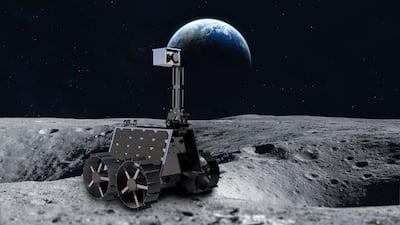
An artist's impression of the UAE's lunar rover called Rashid. -

Dr Hamad Al Marzooqi, project manager of the Emirates Lunar Mission at the Mohammed bin Rashid Space Centre. Chris Whiteoak / The National -
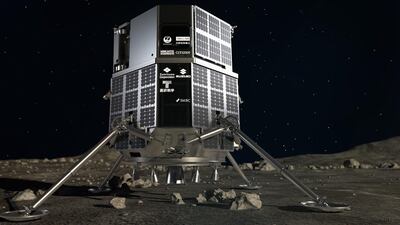
An artist's impression of iSpace's Hakuto-Reboot lunar lander. It will carry UAE's Rashid rover to the surface of the Moon in 2022. -
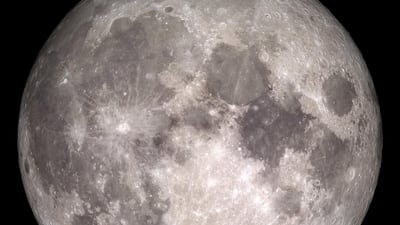
The UAE aims to land the Rashid rover on the near side of the Moon due to its smoother surface. -
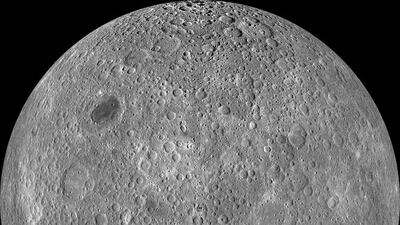
The far side of the Moon remains largely unexplored, but Nasa is turning its focus back to the lunar surface. -
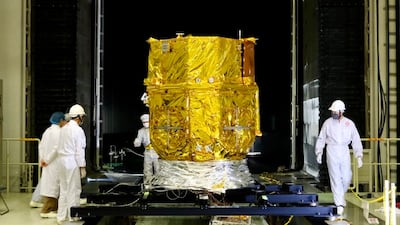
The HAKUTO-R lander, which will deliver the UAE's Rashid rover to the lunar surface in 2022, is now in final stages of assembly. -
The ispace team completed the assembly of the lander's structure thermal model in April. Courtesy: ispace -
The final assembly of the lander is being carried out in co-operation with the Ariane Group GmbH at the Ariane Group facility in Lampoldshausen, Germany. Courtesy: ispace -
Using a lander and rocket that is already available helps Emirati engineers and scientists get quicker and easier access to space. Courtesy: ispace -
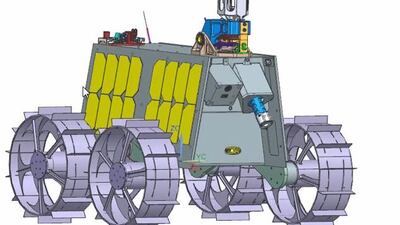
The initial concept design of the Rashid rover. Courtesy: MBRSC -
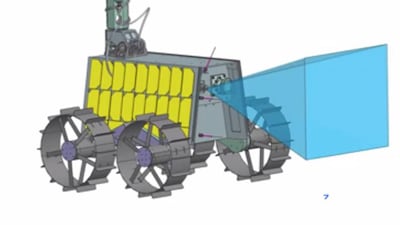
Rashid rover's thermal imager will analyse the Moon's properties through thermal energy. Courtesy: MBRSC -
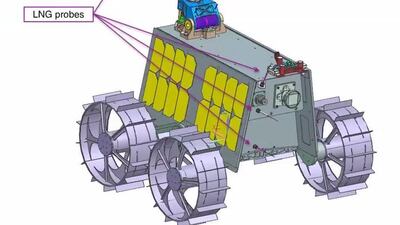
The Langmuir probes on the rover will analyse the lunar surface charge and electric fields. Courtesy: MBRSC -
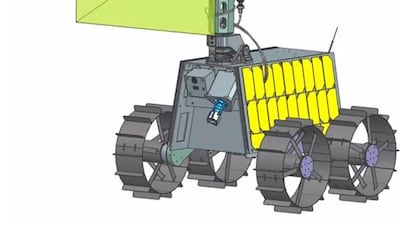
One of the rover's two high-resolution optical imagers that will take photos of the Moon. Courtesy: MBRSC



