• Commuters at Waterloo station in London. British Prime Minister Boris Johnson appealed for resolve and a “spirit of togetherness” through the winter as he unveiled new restrictions. AP Photo
    Commuters at Waterloo station in London. British Prime Minister Boris Johnson appealed for resolve and a “spirit of togetherness” through the winter as he unveiled new restrictions. AP Photo
  • People board a bus outside Waterloo station in London. AP Photo
    People board a bus outside Waterloo station in London. AP Photo
  • People wearing protective face masks make their way through Waterloo station during the morning rush hour on Wednesday morning. Reuters
    People wearing protective face masks make their way through Waterloo station during the morning rush hour on Wednesday morning. Reuters
  • Children of keyworkers at Sheringham Primary School, Norfolk created this huge rainbow for the NHS on their playground. Some of the children's parents are nurses who have been working on the Covid ward at the Norfolk & Norwich University Hospital
    Children of keyworkers at Sheringham Primary School, Norfolk created this huge rainbow for the NHS on their playground. Some of the children's parents are nurses who have been working on the Covid ward at the Norfolk & Norwich University Hospital
  • NHS workers react at the Royal London Hospital during the last day of the Clap for our Carers campaign in support of the NHS, following the outbreak of the coronavirus disease. Reuters
    NHS workers react at the Royal London Hospital during the last day of the Clap for our Carers campaign in support of the NHS, following the outbreak of the coronavirus disease. Reuters
  • Employees make NHS uniforms at a factory in Dukinfield, Britain. The coronavirus pandemic has made the need to address the rapidly ageing workforce more urgent. Reuters
    Employees make NHS uniforms at a factory in Dukinfield, Britain. The coronavirus pandemic has made the need to address the rapidly ageing workforce more urgent. Reuters
  • NHS workers wearing personal protective equipment as UK releases latest coronavirus data. Oli SCARFF / AFP
    NHS workers wearing personal protective equipment as UK releases latest coronavirus data. Oli SCARFF / AFP
  • A woman wearing a protective face mask walks past a closed theatre, as the spread of the coronavirus disease (COVID-19) continues in London. Reuters
    A woman wearing a protective face mask walks past a closed theatre, as the spread of the coronavirus disease (COVID-19) continues in London. Reuters
  • Britain's Health Secretary Matt Hancock launches review into how coronavirus affects ethnic minorities. AFP
    Britain's Health Secretary Matt Hancock launches review into how coronavirus affects ethnic minorities. AFP
  • Captain Sir Tom Moore beat his original target of raising £1,000. Reuters
    Captain Sir Tom Moore beat his original target of raising £1,000. Reuters
  • A pedestrian passes the HSBC Holdings Plc headquarters office building, centre, in the Canary Wharf business, financial and shopping district of London, UK Bloomberg
    A pedestrian passes the HSBC Holdings Plc headquarters office building, centre, in the Canary Wharf business, financial and shopping district of London, UK Bloomberg
  • British Airways will retire its Boeing 747 fleet immediately due to a drop in demand from the coronavirus pandemic. Courtesy British Airways
    British Airways will retire its Boeing 747 fleet immediately due to a drop in demand from the coronavirus pandemic. Courtesy British Airways
  • The UK Chancellor of the Exchequer Rishi Sunak's 'Eat Out to Help Out' scheme has been successful. EPA
    The UK Chancellor of the Exchequer Rishi Sunak's 'Eat Out to Help Out' scheme has been successful. EPA
  • A man wearing a facemask walks across London Bridge. The OECD area economy contracted a record 9.8% in the second quarter of 2020. AFP
    A man wearing a facemask walks across London Bridge. The OECD area economy contracted a record 9.8% in the second quarter of 2020. AFP
  • Stay-at-home orders wiped out 20 per cent of the British economy in the first half of 2020. AFP
    Stay-at-home orders wiped out 20 per cent of the British economy in the first half of 2020. AFP
  • A social distancing sign in Oxford Street, London, usually one of the country's busiest shopping streets. Reuters
    A social distancing sign in Oxford Street, London, usually one of the country's busiest shopping streets. Reuters
  • Commuters walk over London bridge during the morning rush hour, as the spread of the coronavirus disease (COVID-19) continues, in London. Reuters
    Commuters walk over London bridge during the morning rush hour, as the spread of the coronavirus disease (COVID-19) continues, in London. Reuters
  • Empty shelves from a Sainsbury's supermarket in London, UK, as shoppers in the British capital stockpile goods in advance of strict lockdown measures to fight coronavirus. Emma Sky for The National
    Empty shelves from a Sainsbury's supermarket in London, UK, as shoppers in the British capital stockpile goods in advance of strict lockdown measures to fight coronavirus. Emma Sky for The National
  • The UK is still under a virtual lockdown. Reuters
    The UK is still under a virtual lockdown. Reuters
  • Deserted streets in Cambridge amid the UK's coronavirus lockdown. Reuters
    Deserted streets in Cambridge amid the UK's coronavirus lockdown. Reuters
  • Minsters have condemned UK Prime Minister Boris Johnson's decision to abolish the Department for International Development on Tuesday. AFP
    Minsters have condemned UK Prime Minister Boris Johnson's decision to abolish the Department for International Development on Tuesday. AFP
  • People queue at a walk in Covid-19 testing centre in Bolton, England. Fears about rising infection rates among younger people across the UK has forced the government into tighter lockdown restrictions. Getty
    People queue at a walk in Covid-19 testing centre in Bolton, England. Fears about rising infection rates among younger people across the UK has forced the government into tighter lockdown restrictions. Getty
  • Cars queue for Covid-19 drive-in testing centre in Bolton, England. Fears about rising infection rates among younger people across the UK has forced the government into tighter lockdown restrictions. Getty
    Cars queue for Covid-19 drive-in testing centre in Bolton, England. Fears about rising infection rates among younger people across the UK has forced the government into tighter lockdown restrictions. Getty
  • A person is detained during a demonstration in Trafalgar Square against the lockdown imposed by the government, following the outbreak of the coronavirus disease (COVID-19), in London,. Reuters
    A person is detained during a demonstration in Trafalgar Square against the lockdown imposed by the government, following the outbreak of the coronavirus disease (COVID-19), in London,. Reuters

How will England’s coronavirus lockdown affect UAE residents planning to visit?


Gillian Duncan
  • English
  • Arabic

England is entering a second strict lockdown on Thursday in an effort to curb soaring Covid-19 cases across the country.

Under the rules, non-essential shops and venues, pubs and restaurants will close for a month until December 2.

During the period, the public will only be allowed to leave home to work, if they cannot do so from home, shop for essentials, attend medical appointments and care for those who are vulnerable.

All non-essential travel should be avoided – including holidays in the UK and abroad.

So where does that leave people who are due to visit the England from the UAE?

And what about the rest of the UK?

The National explains.

Why were restrictions imposed in England when Prime Minister Boris Johnson did not want another lockdown?

The prime minister did not want to impose another lockdown but models predicted several thousand deaths a day if nothing was done to rein in infections, which were spreading faster than even reasonable worst-case scenarios.

That meant, for the first time, the National Health Service would “not be there for the public,” he said.

Speaking at the briefing on Saturday to announce the impending lockdown, the country’s chief scientific adviser, Sir Patrick Vallance, said deaths could be twice as bad or more than in the first wave.

If international travel is banned, what does it mean for people from the UAE flying into England?

The restrictions do not affect inbound international travel, and normal rules apply.

That means anyone visiting the UK from the UAE must quarantine for 14 days on arrival.

But it could still affect travel plans for people visiting the UK.

Some operators may cancel flights to, from and inside the UK during the lockdown period. This is what Johan Lundgren, the chief executive of easyJet, has said.

“Following the government’s sudden announcement today, easyJet will operate its planned schedule until Thursday and will be reviewing its flying programme over the lockdown period,” Mr Lundgren said.

“It is likely that much of the UK touching schedule [for example flights to, from and within the UK] will be cancelled during lockdown with our planned flying set to resume in early December.”

Etihad has confirmed it will continue flights to the UK.

What can you do once you get to England?

Once people reach England, if they can, there are strict rules about what they will be able to do during the lockdown.

People are not allowed to meet in their homes, except for childcare or to care for vulnerable people.

Meeting outdoors is also banned unless they are seeing one other person. The meeting must be in a public place.

So if people do travel to the UK, they will only be able to see others when they have completed the 14-day quarantine.

And even then they will be able to meet only one person at a time outside, unless they are visiting the UK to care for a vulnerable person.

The list of the main restrictions are:

  • After completing quarantine you are only permitted to leave home for specific reasons, such as for education, work, exercise, to attend a medical appointment or hospital, to shop for essentials and care for those who are vulnerable.
  • Households cannot mix inside, except to provide childcare or other support;
  • Households cannot mix outside, except for exercise or to visit a public place with one other person;
  • All pubs, bars and restaurants will be closed. Takeaways and deliveries will be allowed;
  • All non-essential shops will close but supermarkets can still sell non-essential goods;
  • There will be no leisure or entertainment;
  • International travel out of the UK will be banned, except for work;
  • Travel within the UK will be discouraged, except for work;
  • Outdoor exercise is unlimited, either alone or with one other person. Golf is not allowed;
  • People can sit on park benches and have picnics, as long as they are only with others in their household;
  • Services in churches, mosques, synagogues and other places of worship will be banned;
  • Funerals will be allowed, but only with close family members;
  • Playgrounds will remain open;
  • Schools, colleges and universities will remain open;
  • Medical appointments will continue;
  • Hotels and hostels will remain open for people travelling for work or visiting from abroad.

What about the rest of the UK? Is it affected?

Scotland, Northern Ireland and Wales already have their own restrictions in place.

In Scotland, a four-tier system with varying restrictions comes into effect on November 2. Level four, the highest, is close to a full lockdown.

Pubs, restaurants, hair salons, gyms and cinemas will close completely. Schools will remain open and some outdoor socialising is permitted.

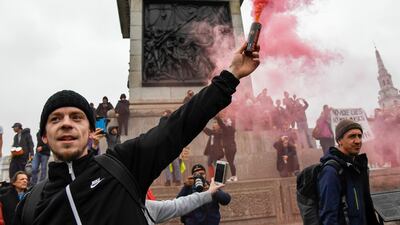
  • A protester holds a flare in Trafalgar Square during a coronavirus anti-lockdown protest, in London. AP Photo
    A protester holds a flare in Trafalgar Square during a coronavirus anti-lockdown protest, in London. AP Photo
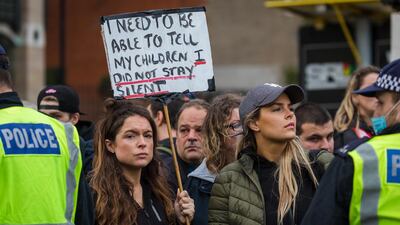
  • Protesters gather in Trafalgar Square during a coronavirus anti-lockdown protest in London. AP Photo
    Protesters gather in Trafalgar Square during a coronavirus anti-lockdown protest in London. AP Photo
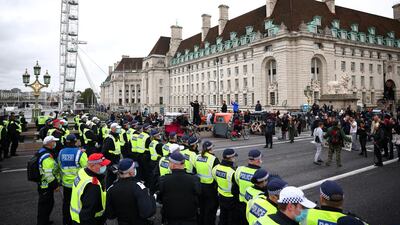
  • Police officers stand guard as anti-lockdown protesters take part in a march in London. Reuters
    Police officers stand guard as anti-lockdown protesters take part in a march in London. Reuters
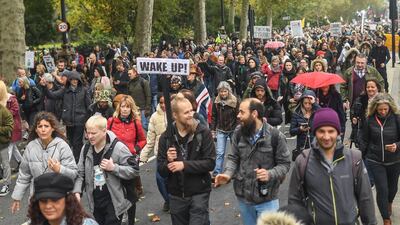
  • Anti-lockdown protesters take part in a march in London. Reuters
    Anti-lockdown protesters take part in a march in London. Reuters
  • Protesters are seen during a Unite for Freedom march in London. Getty Images
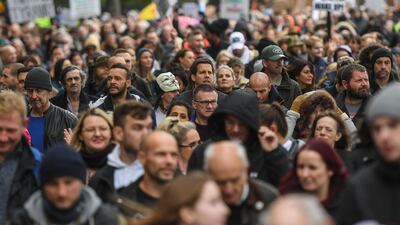
    Protesters are seen during a Unite for Freedom march in London. Getty Images
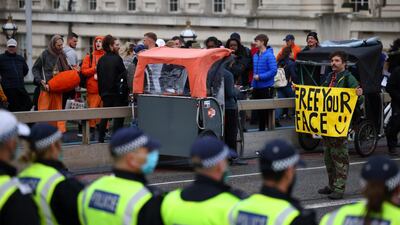
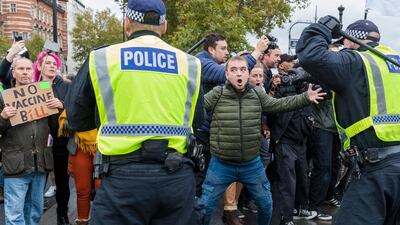
  • Anti-lockdown protesters clash with police during a demonstration against lockdown measures in Westminster, London. EPA
    Anti-lockdown protesters clash with police during a demonstration against lockdown measures in Westminster, London. EPA
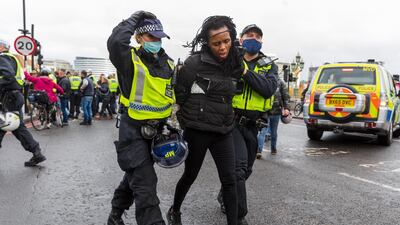
  • An anti-lockdown protester is lead away by police after being restrained during a demonstration against lockdown measures in Westminster, London. EPA
    An anti-lockdown protester is lead away by police after being restrained during a demonstration against lockdown measures in Westminster, London. EPA
  • Anti-lockdown protesters clash with police during a demonstration against lockdown measures in Westminster, London. EPA
    Anti-lockdown protesters clash with police during a demonstration against lockdown measures in Westminster, London. EPA
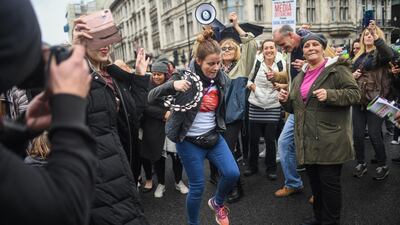
  • Protesters are seen dancing in Parliament Square during a Unite for Freedom march in London. Getty Images
    Protesters are seen dancing in Parliament Square during a Unite for Freedom march in London. Getty Images
  • Protesters are seen during a Unite for Freedom march in London. Getty Images
    Protesters are seen during a Unite for Freedom march in London. Getty Images
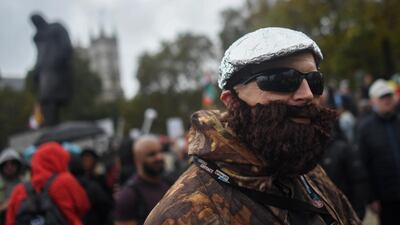
  • A protester wearing a tin foil hat is seen in Parliament Square during a Unite for Freedom march in London. Getty Images
    A protester wearing a tin foil hat is seen in Parliament Square during a Unite for Freedom march in London. Getty Images
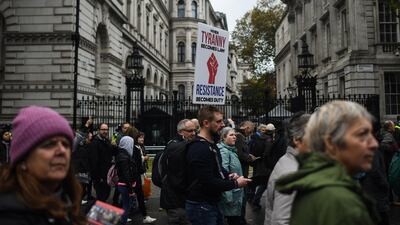
  • Protesters march past Downing Street during a Unite for Freedom march in London. Getty Images
    Protesters march past Downing Street during a Unite for Freedom march in London. Getty Images
  • Anti-lockdown protesters clash with police during a demonstration against lockdown measures in Westminster, London. EPA
    Anti-lockdown protesters clash with police during a demonstration against lockdown measures in Westminster, London. EPA
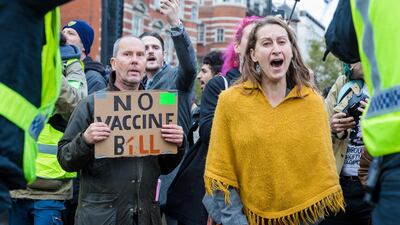
  • A protester holds a sign reading 'Defend Freedom' during a Unite for Freedom march outside New Scotland Yard in London. Getty Images
    A protester holds a sign reading 'Defend Freedom' during a Unite for Freedom march outside New Scotland Yard in London. Getty Images

Level 3 is a step down and so on, all the way down to level zero, which is close to normality. More information can be found on the restrictions here.

Northern Ireland is currently under a four-week “circuit breaker” of tighter restrictions which began on October 16.

It includes the closure of all bars and restaurants, except for takeaways, and a ban on members of different households mixing indoors. More information on the restrictions can be found here.

Wales has imposed a two-week so-called sharp, short “firebreak” to help the country regain control of the virus.

People have been asked to stay at home, except for limited purposes. More information on the restrictions can be found here.

What about people who plan to go home for Christmas? Will this affect them?

Mr Johnson hopes that by imposing a tough lockdown now the restrictions can be lifted in time for Christmas.

The measure is currently due to last from November 5 until December 2.

The prime minister said Christmas is going to be different this year, “perhaps very different”.

“But it’s my sincere hope that by taking tough action now we can allow families across the country to be together,” he said.

Star%20Wars%3A%20Ahsoka%20
%3Cp%3E%3Cstrong%3EDirector%3A%3C%2Fstrong%3E%20Various%20%3Cbr%3E%3Cstrong%3EStarring%3A%3C%2Fstrong%3E%20Rosario%20Dawson%2C%20Natasha%20Liu%20Bordizzo%2C%20Lars%20Mikkelsen%20%3Cbr%3E%3Cstrong%3ERating%3A%3C%2Fstrong%3E%204%2F5%0D%3Cbr%3E%3C%2Fp%3E%0A
PROFILE OF INVYGO

Started: 2018

Founders: Eslam Hussein and Pulkit Ganjoo

Based: Dubai

Sector: Transport

Size: 9 employees

Investment: $1,275,000

Investors: Class 5 Global, Equitrust, Gulf Islamic Investments, Kairos K50 and William Zeqiri