

When the long-anticipated Michelin Guide to Dubai was unveiled in March, it was seen as the Middle East’s grand entrance on the world gourmet stage. However, as is the case wherever there is a Michelin Guide, it did not take long for criticism to rear its head.
There was, first, disappointment that only 11 restaurants were awarded stars, with just two doubling up and none hitting the treble. It also grated with local food experts that most of the 11 are outposts of established European chefs, including the two-star awardees, Niko Romito and Yannick Alleno, rather than original restaurants forging a reputation from scratch. However, this is the way with Michelin stars in the 21st century – emotions always run high.
A generation ago, the guides were still at heart what they were when the first one was printed in 1900. As the enduring mascot Bibendum suggests, the guide aimed to sell more tyres by encouraging people to get in their cars and literally burn rubber to get to far-flung gourmet hotspots – the original destination dining experience.
-
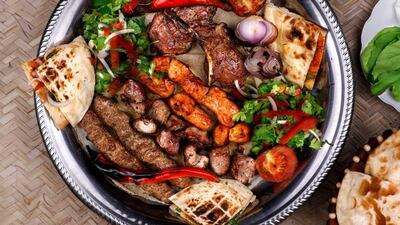
A mixed grill from Al Khayma in Al Fahidi Historical Neighbourhood. The Emirati food restaurant made it into the Michelin Guide's Bib Gourmand list for Dubai. Photo: Al Khayma / Instagram -
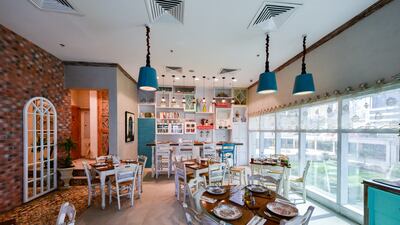
Bait Maryam also won the Welcome and Service Award from Michelin. Photo: Bait Maryam -
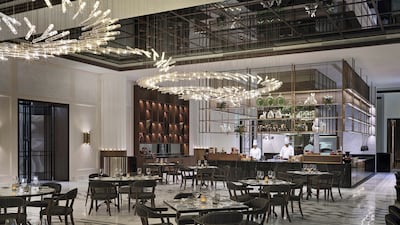
The interiors of Brasserie Boulud feature decor inspired by art deco design, with a mirrored ceiling, dramatic chandeliers and neutral tones. Photo: Brasserie Boulud -
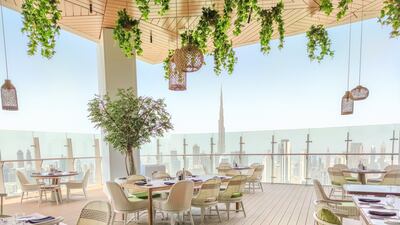
Fi'lia is located on the 70th floor of SLS Dubai, with skyline views of Dubai. Photo: Fi'lia -
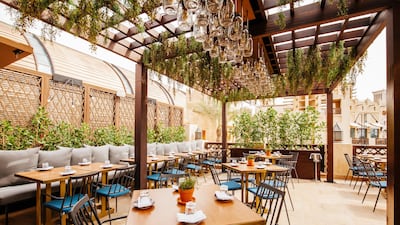
Folly has a fabulous terrace and indoor seating at its Madinat Jumeirah location. Photo: folly -
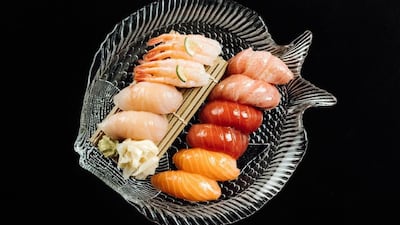
Japanese restaurant Goldfish is famous for sushi and yakitori. Photo: Instagram -
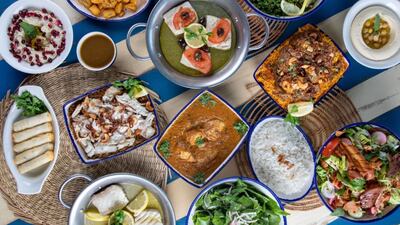
Lebanese seafood restaurant Ibn Al Bahr made the Bib Gourmand list. Photo: Instagram -
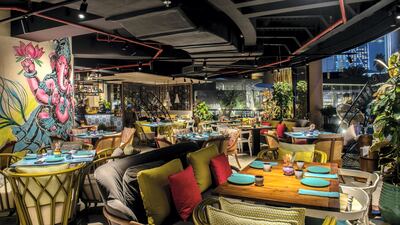
Colourful interiors are the centrepiece at Indya by Vineet. Photo: Indya by Vineet -
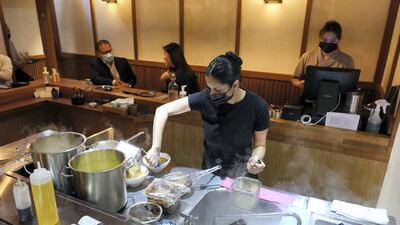
Neha Mishra, owner and founder-chef of Kinoya, prepares food at the restaurant. Photo: Pawan Singh / The National -
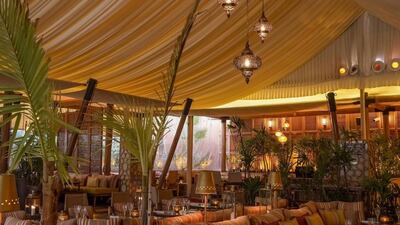
Middle Eastern restaurant Ninive is in Emirates Towers. Photo: Ninive -
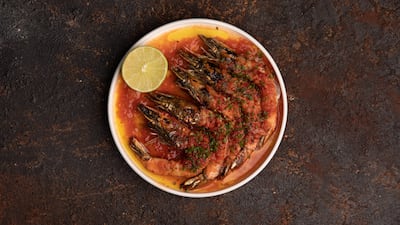
Orfali Bros in wasl 51 is where this red umami prawns dish is available. Photo: Orfali Bros -

Eighteen-hour ramen from Reif Japanese Kushiyaki. Photo: Reif Japanese Kushiyaki -
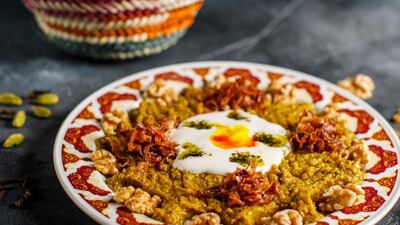
Shabestan is an authentic Iranian restaurant. Photo: Shabestan -
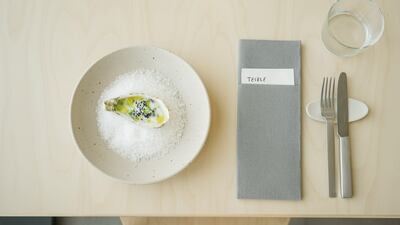
Teible, at Jameel Arts Centre, focuses on fresh, local, seasonal and creatively combined ingredients. Photo: Teible


Among middle-class British families of the 1980s, it was the iconic red book your mother had on her lap in the front passenger seat on driving holidays in France. Between breaking up fights in the back, she would work out the best place to stop for lunch. Which is where the helpful symbols came in – everything from whether you would be dining with a view and if there was a chateau to visit nearby, to the “couverts” – between one and five crossed knives and forks, giving her a chance to match a restaurant’s formality to the children’s behaviour! And then there were what looked like six-petalled flowers – actually overfed stars – which ranked the food quality. In order, they literally mean “worth a stop”, “worth a detour” and “worth a special journey”.
The idea of a Michelin-starred restaurant being merely “worth a stop” seems rather casual these days, when foodies make Instagram-chronicled pilgrimages, and reputations and fortunes hang on the award of one of the plump little symbols. “Michelin-starred" is a marketing necessity, not only for individual restaurants but for an entire food scene: being recognised by such a venerable institution will help build the reputation of Dubai as a gourmet destination.
Ironically, it is the many decades of low-key judgement, along with the Byzantine and secretive ways of the anonymous inspectors, that have placed such cultural weight on Michelin stars. Weight, or perhaps excess baggage... Because, since the turn of the millennium, the release of a Michelin Guide is almost always accompanied by a controversy.
Often, this is a simple case of a disgruntled chef gaining publicity after missing out on a star. (TV chef Gino D’Acampo called the system “absolutely rubbish”, except more strongly, after a snub, adding that the French had no right to judge Italian food, an often-repeated jibe.)
The 2004 eat-and-tell book L'Inspecteur Se Met à Table, by former inspector Pascal Remy accused the Michelin Guides of exaggerating the thoroughness of the process, claiming they did not have enough inspectors to visit each restaurant every 18 months, as claimed. He added that certain French chefs – specifically Paul Bocuse and Alain Ducasse – were essentially tenured: their three-star restaurants would never lose that status, come what may.

Further accusations from other sources gradually began to surface – often contradictory... A common one is that the guides unduly favour traditional French cooking, over other cuisines. But the first Tokyo guide, in 2007, raised eyebrows for its generous helping of stars (more than Paris received – and mainly to Japanese cuisine). Did this reflect the city’s period in the sun as a gourmet capital, or was Michelin locked in a battle with market-leading Bridgestone tyres at the time? The awarding of stars across Asian guides has frequently been called erratic.
Several chefs have rejected their stars, often because they feel customers misunderstand what they are awarded for and complain that the restaurant doesn’t have white table cloths and silver service.
In addition, Michelin itself is not immune to creating publicity-seeking controversies. In 2020, it finally dropped a Paul Bocuse restaurant to two-star – after the Lyon legend had died. The previous year, London sushi restaurant Araki was stripped of all three stars when founder Mitsuhiro Araki moved on, despite handing over to his apprentice of many years.

It would be easy to dismiss all of these controversies as a fuss over nothing and make a joke about overemotional chefs. But the pressures around the Michelin star system can have serious consequences. In 2006, Bernard Loiseau committed suicide after receiving word that his third star was in danger. A decade later, Swiss chef Benoit Violier took his own life under the pressures of trying to maintain three-star standards.
Michelin-starred cooking is big business. Dubai is not alone in having most of its starred restaurants based in hotels (Ducasse’s restaurants are often located in the likes of the Dorchester or Plaza Athenee). The status of Michelin stars confers on a hotel is worth the investment – remember, it’s not the chef who is starred but the restaurant. In some regions, the World’s 50 Best Restaurants carries more kudos, but that list’s focus on Europe and curious obsession with Latin America means, for now, Dubai has Michelin stars.
Arguably, more helpfully for diners, Dubai has 14 Bibs Gourmands. A Bib denotes “good quality, good value” restaurants... that is, those bubbling under. Often, these are the most interesting restaurants in the guides – representing original, often local food, without the raised expectations.
As for Dubai’s lack of three-star restaurants... not to worry: it’s a journey. It took the UK 71 years to achieve its first three-star restaurant and, when it finally arrived in 1982, it was inevitably a French establishment in London: Albert Roux’s Le Gavroche. And Michelin has learnt from its Tokyo star splurge. With its eye firmly on publicity, it would not be surprising if the first Dubai three-star served Arabic cuisine.

