
June isn’t a very popular month in the UAE.
The last of the refreshing breezes of spring have ebbed and temperatures have begun creeping past the 40°C mark. Save for beachside afternoons or the errant zephyrs that circle you as you walk in the shade, being outside doesn’t seem that appealing any more.
This timidity over braving the outdoors is commonplace today, but there was a time in the UAE when summer was one of the most consequential times of the year, as it determined how many would fare for the rest of the year.
Pearl divers preferred the window of time from June to September that became known as Ghous Al Kabir, or the Big Dive, because waters were warmer, meaning they could gain access to lower depths in their search for pearls.
The divers’ departure would be marked with a seaside ceremony called “hiraat”, or oyster bed. As the sailors departed from the beach, their families would wave and wish them well from the shoreline. It was usually a bittersweet moment as it meant that the men would be away from their families for months.
The captain of the crew would then officially announce the start of the pearling season.
The end of Ghous Al Kabir was marked with more fervour. A cannon was fired from the shoreline to greet the divers’ arrival. Family members took this as a cue to prepare for the festivities. Cloth flags would be hung from houses and special meals were prepared.
As they approached the shoreline, the divers would begin hearing their families singing in welcome.
-
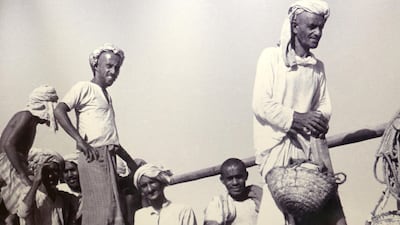
A photograph of the pearl divers on display at the Pearl Museum at Emirates NBD head office in Deira, Dubai. Pawan Singh / The National -
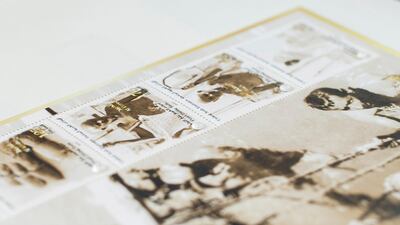
Stamps picturing pearl-diving tools, with a half piece of pearl placed at the corner of each stamp. These were issued in 2005. Reem Mohammed / The National -
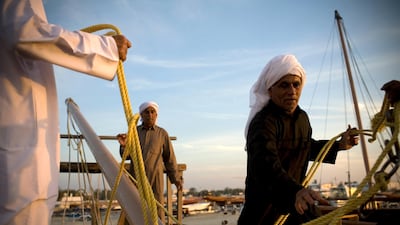
Men who once worked as crew on pearl-diving ships help out on their friend's racing dhow. Many still gather with other pearl divers in Umm Sequim 1, a fishing port near Burj Al Arab. Nicole Hill / The National -
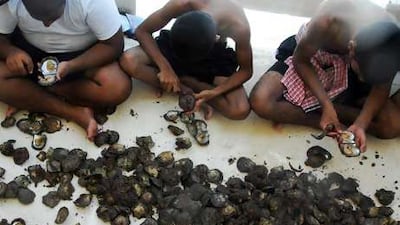
Young men hunt for pearls in the oysters they harvest while participating in the Kuwait Sea Sports Club's Pearl Diving Heritage Revival Festival in 2010. -

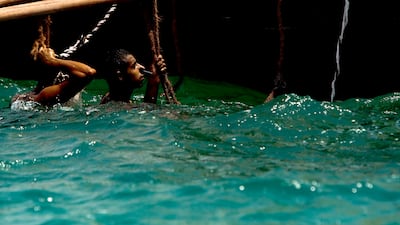
Jossem Al Ameni, 19, and Mashal Al Dhiferi, 24, dive for pearls in the Arabian Sea in 2009. Andrew Henderson / The National -
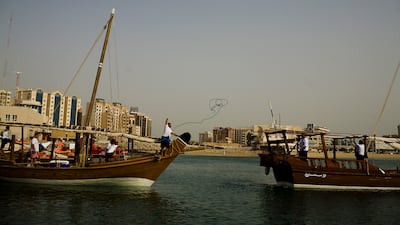
Kuwaitis sail in traditional dhows during preparations for the annual pearl diving expedition in 2009. Andrew Henderson / The National -
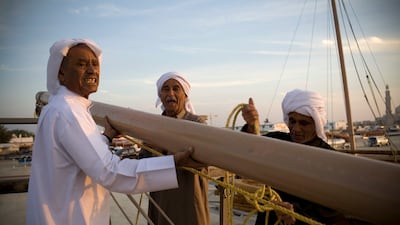
Attiq Khalfan, left, and Ahmed Majed, back right, once worked as crew on pearl-diving ships. Nicole Hill / The National -
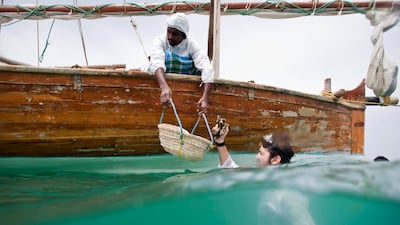
A traditional pearl-diving experience is recreated for tourists as part of an EMAG and Jumeirah-run event in Dubai in 2012. Antonie Robertson / The National -
Boats sail into the Arabian Sea off the coast of Khairan, Kuwait, the traditional site for the Al Ghous Festival, to undertake in the 23rd pearl diving expedition in 2009. Andrew Henderson / The National -
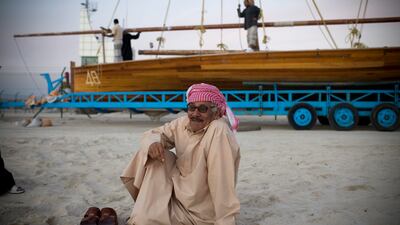
Bakeet Bin Safan, pictured in 2008, used to work on a pearl diving ship. Nicole Hill / The National -
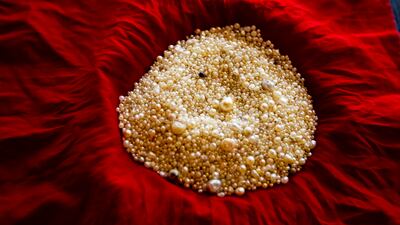
A photograph of pearl diver Faraj Al Muhairbi's souvenir pearls, collected over a lifetime of diving. Sarah Dea / The National -
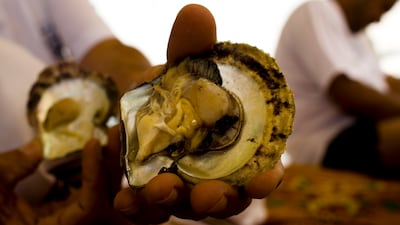
An organiser holds pearls that young sailors found in oysters on August 4, 2009 during the Al Ghous Festival in Kuwait. Andrew Henderson / The National -
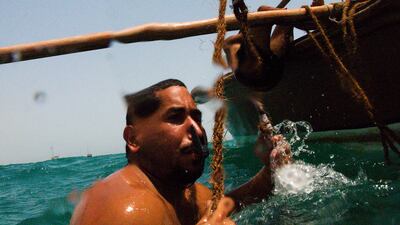
The divers would use a fettam, a clip made of turtle shell or sheep's bone, to keep their nostrils closed while underwater. Andrew Henderson / The National


A dhow could hold as many as 30 crew, usually made up of men, though children did sometimes accompany them on shorter voyages. Besides its millennia-long sense of tradition, pearl diving was one of the primary sources of income for the region up until the 1920s, after which a global industry-wide collapse occurred due to the advent of artificial pearls.
However, pearl diving has flourished in the region as a trade and tradition. Although it's much harder to meet a pearl diver today, heritage festivals across the UAE have recreated aspects of the trade and culture.
So while today it seems intuitive to groan and grumble as we scurry from one air-conditioned space to another, it’s remarkable to think that a century ago, local divers were braving the scorching weather, going out to sea for pearls and singing songs to keep their spirits afloat.
That knowledge might do little to cool you as you’re striding steadfast towards your car in an open-air parking spot at noon, but it might help in your resolve – or at least inspire a visit to the beach.

