
Amid the routine rain on mist-filled mountains of Darjeeling in India’s north-east, a driver and his stoker shovel coal to power a 19th-century “toy train” – still running 76 years after former colonial power Britain left.
Moments later, thick, black smoke billows from the engine of the narrow-gauge train packed with tourists, and off it chugs through the natural beauty of the West Bengal tea-growing region.
Darjeeling, at an altitude of 2,045m above sea level in the foothills of the Himalayas, served as a summer resort for British officials and their families from the 18th until they left in 1947.
It is known for its panoramic views, steep hills and rolling tea gardens – growing some of the finest teas in the world – and British-era churches and colonial buildings.
Adding to its popularity is the narrow-gauge Darjeeling Himalayan Railway.
Dating back to the 1880s, it is one of the oldest railways and the only fully operational public 610mm railway left in the world.
Recognised as an engineering marvel, the railway features on the Unesco World Heritage list.
The dinky trains hug cliff edges as they run on tiny zig-zag tracks and loop across a circuit of almost 90km between the hill town and the city of Siliguri.
The train reaches an altitude of more than 2,200m at Ghum – the highest railway station in the country – offering an exhilarating experience and a bird's-eye view of the sprawling tea gardens and picturesque valleys.

Every year, more than a million tourists throng to the town to see the trains, according to government records, although not all take the rail trip.
“Fast trains are everywhere in the world but this is a heritage train and 140 years old. Most of its heritage aspects have been retained, be it the tracks, the coaches, the engine and stations,” DHR director Priyanshu, who only uses one name, told The National.
“This is a nostalgia that cannot be experienced in a broad-gauge train. Those who like history and heritage come for the ride. Last year, more than 156,000 tourists boarded the toy trains.”
Engineering wonder
Establishing a railway network in the steep, mountainous region in the 19th century was no mean feat, and the DHR was recognised as an engineering wonder by the UN's cultural agency in 1999.
The British established the first commercial tea gardens in the region in 1846. With growing demands, they built DHR as a means to transport tea leaves from the hills to the plains to reduce time and ease the burden on mules.
It was also a favoured mode of transport among locals.
The work started on the railway line in 1879 and took four years.

There are six zig-zag systems to navigate the steep terrain and three loops – the most popular being the Batasia Loop.
The Batasia Loop was constructed to scale a steep gradient of 45m, that the train encounters on its downhill journey from Ghum. At this loop, the train takes a 360-degree turn and crosses the track before it enters a tunnel.
Priyanshu said that it can get difficult to maintain train upkeep, especially as spare parts are no longer available.
“We have an adequate staff, a total 500-odd staff for maintaining the tracks, coaches, engine.
"It is tough particularly for the steam engine, as the spare parts are not available. The engine is more than 100 years old. We either get second-hand parts or get them custom-made,” he said.
Joyride for tourists
Two standard trains for locals travel between Darjeeling and neighbouring districts, while another two “joyride" trains – including the steam engine – are aimed at tourists.
The regular trains have three coaches – first and second-class, and a second-class coach that also functions as a luggage van. The joyride service has three coaches for the steam engine.
-
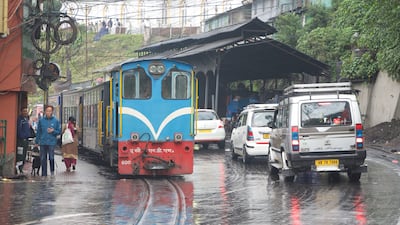
The narrow-gauge Darjeeling Himalayan Railway is the only fully operational public 610mm narrow-gauge railway in the world. All Photos: Taniya Dutta / The National -
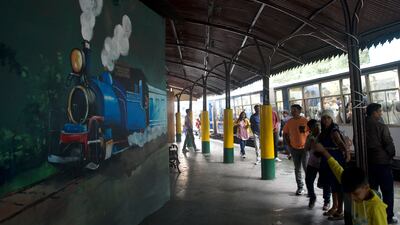
Its route includes Ghum, the highest railway station in the country, where the train reaches an altitude of more than 2,200m -
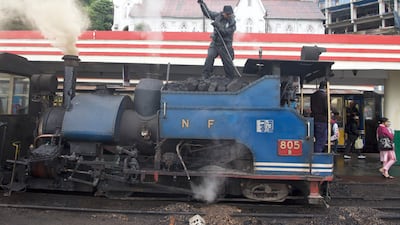
A big attraction for tourists is the West Bengal line's steam engines. The line was built in the 1880s. -
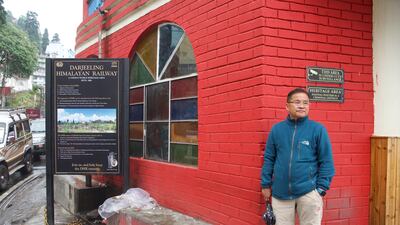
A passenger waits outside Darjeeling station. The Darjeeling Himalayan Railway was built to transport tea -
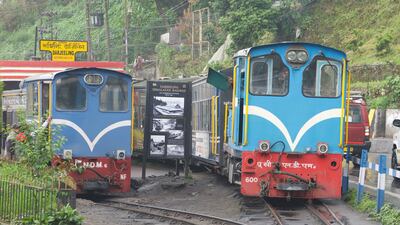
Four trains operate on the line, two for locals and two 'joyride' services for tourists -
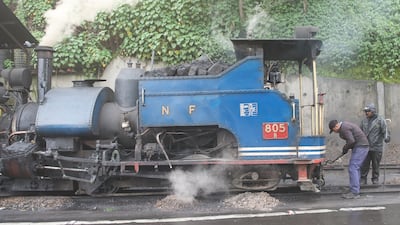
Railway workers prepare a steam engine for its journey along the 90km circuit -
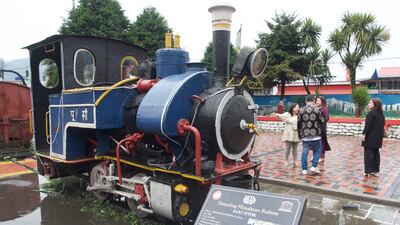
A German made engine from 1881 at the heritage museum in Ghum -
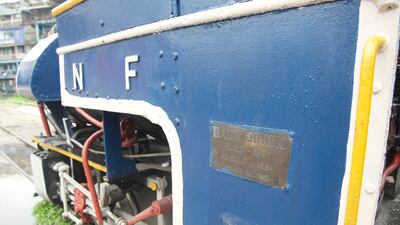
A close-up of the vintage steam engine -
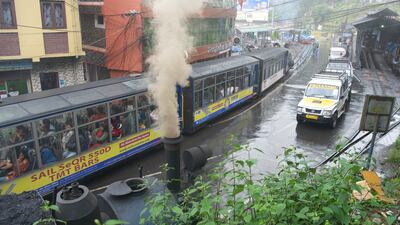
A steam engine alongside modern cars in Darjeeling -
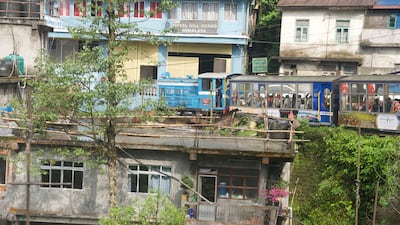
The 'toy trains' – so-called because of their dinky size – pass through settlements and hug cliff edges on the journey between Darjeeling and the city of Siliguri -
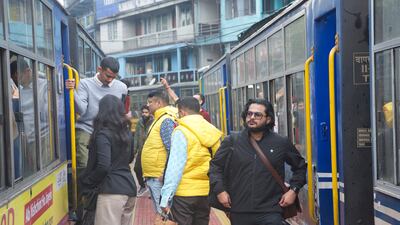
Passengers at Ghum station. Every year, more than a million tourists visit the area and 150,000 take the rail 'joyride' -
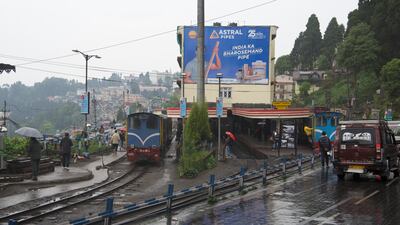
Darjeeling Himalayan Railway lines running next to a road -
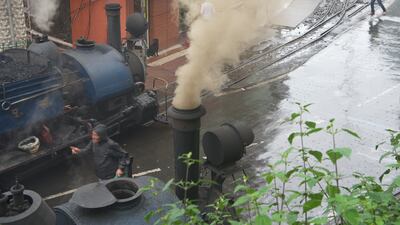
The Darjeeling Himalayan Railway features on the Unesco World Heritage list. -

A station along the Darjeeling Himalayan Railway line -
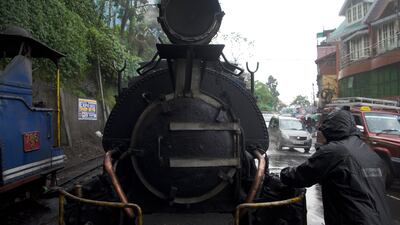
A railway worker carrying out maintenance on the steam engine. Finding spares parts for the century-old engine is a problem say officials -
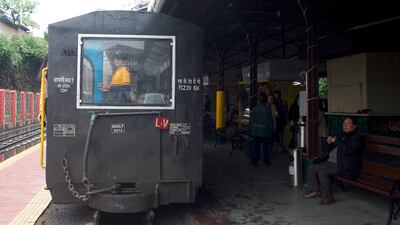
A passenger enjoying the joyride -
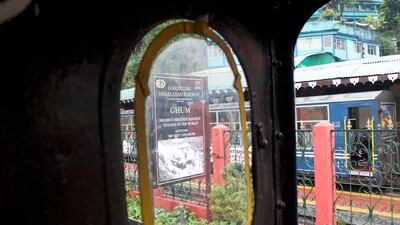
A view of Ghum station from the train -
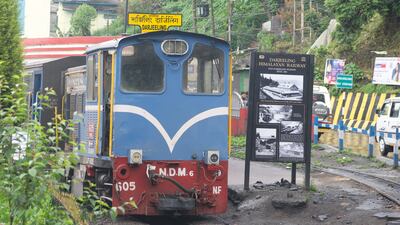
Despite travelling at a leisurely pace, the trains are popular with locals and tourists alike -
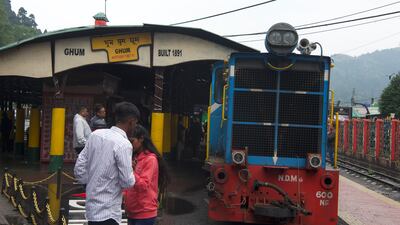
Ghum station on the Darjeeling Himalayan Railway line. Many tourists say the service provides a link to India's heritage


The trains run daily and, despite travelling at a snail’s pace, are almost always packed with enthusiastic passengers.
“It is my first experience in a steam train and I am hoping to enjoy the ride. I have always seen the train in films,” Abhijeet Singh, a tourist from Indore in central India, told The National.
“The steam engine trains are from the British era and I wanted to experience this journey with my child. The train also gives the opportunity to experience the natural beauty of Darjeeling,” he said.

