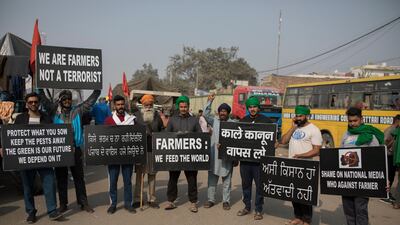
Canadian Prime Minister Justin Trudeau on Tuesday created a diplomatic row with India after lending support to tens of thousands of farmers protesting against new legislation that liberalises the farm sector, attracting a sharp rebuke from New Delhi.
Mr Trudeau expressed concern over how the Indian government was handling the crisis.
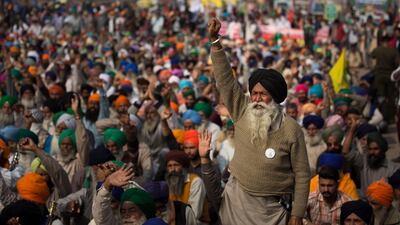
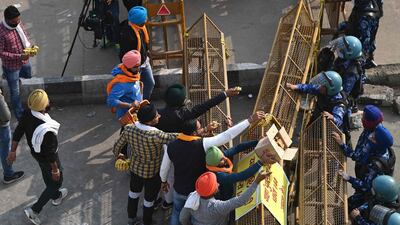
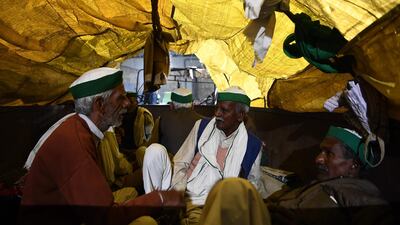
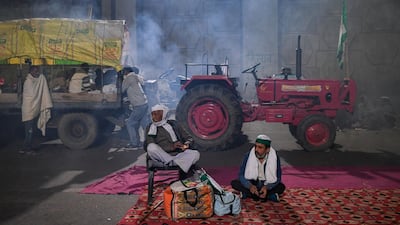
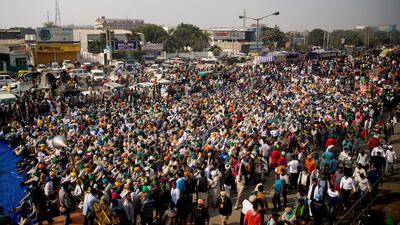
Farmers, mainly from the Sikh-majority region of Punjab, clashed with police and occupied main roads leading to the capital, blocking access to the city.
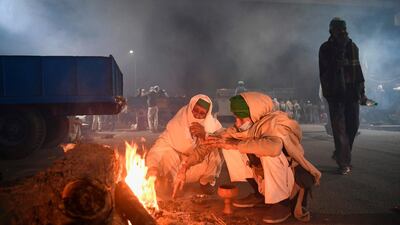
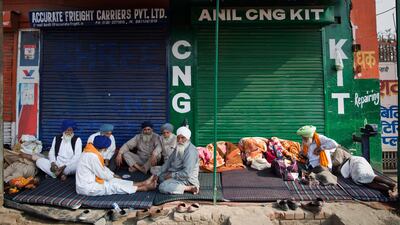
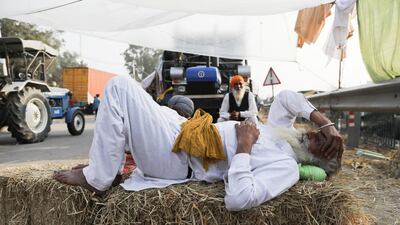
Tens of thousands of farmers from the northern Punjab and Haryana states occupied roads at the border with Delhi for a fifth day after they were prevented from proceeding to a protest.
The laws allow farmers to sell their harvests to private companies.
Farmers' unions demanded the legislation is repealed over claims it benefits businesses and ends a decades-old policy of the government deciding the minimum prices for produce.
The legislation was passed by the government in September and farmers marched to Delhi to protest against the laws last week.
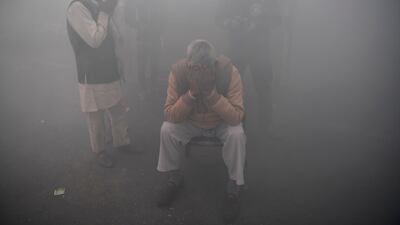
Police used tear gas, water cannons and steel barricades to thwart the marchers, leading to sporadic clashes. Protesters have been camping out near the capital since the weekend.
“The situation is concerning and we’re all very worried about family and friends,” Mr Trudeau said during a Facebook interaction to mark the birth anniversary of Guru Nanak, founder of the Sikhism.
“Let me remind you, Canada will always be there to defend the right of peaceful protest."
New Delhi issued a sharp rebuke of Mr Trudeau's comments, which it said were "ill-informed and unwarranted and internal to a democratic country".
"It is also best that diplomatic conversations are not misrepresented for political purposes," India's foreign ministry spokesman Anurag Srivastava said.
There are more than 500,000 Sikhs in Canada, the second largest Sikh community outside India, which makes them an influential immigrant group.
Three members of Mr Trudeau’s Cabinet are Sikhs, including defence minister Harjit Sajjan.
Relations between New Delhi and Ottawa have been icy since Mr Trudeau visited India in 2018. New Delhi accused Canada of pandering to groups that want to create a sovereign Sikh state in the Punjab.
The Punjab produces about 12 per cent of India's cereals and is a key contributor to the country's gross domestic product, of which 17 per cent comes for agriculture.
About 70 per cent of India's population of 1.3 billion depend on agriculture.
But farmers across India, particularly the Punjab, face difficulties because of an increase in production costs and shrinking income. They also face water crises, erratic weather patterns and debt.
More than 3,300 farmers have died by suicide in the Punjab in the past decade. Nationally more than 10,300 farmers died by suicide in 2019, according to government figures.
Farmers say the legislation will put them at a disadvantage compared with large companies.
But the government defended the laws and Prime Minister Narendra Modi said they were a "watershed moment" in the history of the farm sector.
On Tuesday, three ministers held talks with farmer leaders to try to assuage their fears. Agriculture Minister Narendra Singh Tomar said the talks would continue on Thursday.
Company%20profile
%3Cp%3E%3Cstrong%3EName%3A%3C%2Fstrong%3E%20Belong%3Cbr%3E%3Cstrong%3EBased%3A%3C%2Fstrong%3E%20Dubai%3Cbr%3E%3Cstrong%3EFounders%3A%3C%2Fstrong%3E%20Michael%20Askew%20and%20Matthew%20Gaziano%3Cbr%3E%3Cstrong%3ESector%3A%3C%2Fstrong%3E%20Technology%3Cbr%3E%3Cstrong%3ETotal%20funding%3A%3C%2Fstrong%3E%20%243.5%20million%20from%20crowd%20funding%20and%20angel%20investors%3Cstrong%3E%3Cbr%3ENumber%20of%20employees%3A%3C%2Fstrong%3E%2012%3C%2Fp%3E%0A
Ferrari 12Cilindri specs
Engine: naturally aspirated 6.5-liter V12
Power: 819hp
Torque: 678Nm at 7,250rpm
Price: From Dh1,700,000
Available: Now
500 People from Gaza enter France
115 Special programme for artists
25 Evacuation of injured and sick
Ten tax points to be aware of in 2026
1. Domestic VAT refund amendments: request your refund within five years
If a business does not apply for the refund on time, they lose their credit.
2. E-invoicing in the UAE
Businesses should continue preparing for the implementation of e-invoicing in the UAE, with 2026 a preparation and transition period ahead of phased mandatory adoption.
3. More tax audits
Tax authorities are increasingly using data already available across multiple filings to identify audit risks.
4. More beneficial VAT and excise tax penalty regime
Tax disputes are expected to become more frequent and more structured, with clearer administrative objection and appeal processes. The UAE has adopted a new penalty regime for VAT and excise disputes, which now mirrors the penalty regime for corporate tax.
5. Greater emphasis on statutory audit
There is a greater need for the accuracy of financial statements. The International Financial Reporting Standards standards need to be strictly adhered to and, as a result, the quality of the audits will need to increase.
6. Further transfer pricing enforcement
Transfer pricing enforcement, which refers to the practice of establishing prices for internal transactions between related entities, is expected to broaden in scope. The UAE will shortly open the possibility to negotiate advance pricing agreements, or essentially rulings for transfer pricing purposes.
7. Limited time periods for audits
Recent amendments also introduce a default five-year limitation period for tax audits and assessments, subject to specific statutory exceptions. While the standard audit and assessment period is five years, this may be extended to up to 15 years in cases involving fraud or tax evasion.
8. Pillar 2 implementation
Many multinational groups will begin to feel the practical effect of the Domestic Minimum Top-Up Tax (DMTT), the UAE's implementation of the OECD’s global minimum tax under Pillar 2. While the rules apply for financial years starting on or after January 1, 2025, it is 2026 that marks the transition to an operational phase.
9. Reduced compliance obligations for imported goods and services
Businesses that apply the reverse-charge mechanism for VAT purposes in the UAE may benefit from reduced compliance obligations.
10. Substance and CbC reporting focus
Tax authorities are expected to continue strengthening the enforcement of economic substance and Country-by-Country (CbC) reporting frameworks. In the UAE, these regimes are increasingly being used as risk-assessment tools, providing tax authorities with a comprehensive view of multinational groups’ global footprints and enabling them to assess whether profits are aligned with real economic activity.
Contributed by Thomas Vanhee and Hend Rashwan, Aurifer
Sole survivors
- Cecelia Crocker was on board Northwest Airlines Flight 255 in 1987 when it crashed in Detroit, killing 154 people, including her parents and brother. The plane had hit a light pole on take off
- George Lamson Jr, from Minnesota, was on a Galaxy Airlines flight that crashed in Reno in 1985, killing 68 people. His entire seat was launched out of the plane
- Bahia Bakari, then 12, survived when a Yemenia Airways flight crashed near the Comoros in 2009, killing 152. She was found clinging to wreckage after floating in the ocean for 13 hours.
- Jim Polehinke was the co-pilot and sole survivor of a 2006 Comair flight that crashed in Lexington, Kentucky, killing 49.
The specS: 2018 Toyota Camry
Price: base / as tested: Dh91,000 / Dh114,000
Engine: 3.5-litre V6
Gearbox: Eight-speed automatic
Power: 298hp @ 6,600rpm
Torque: 356Nm @ 4,700rpm
Fuel economy, combined: 7.0L / 100km
2025 Fifa Club World Cup groups
Group A: Palmeiras, Porto, Al Ahly, Inter Miami.
Group B: Paris Saint-Germain, Atletico Madrid, Botafogo, Seattle.
Group C: Bayern Munich, Auckland City, Boca Juniors, Benfica.
Group D: Flamengo, ES Tunis, Chelsea, (Leon banned).
Group E: River Plate, Urawa, Monterrey, Inter Milan.
Group F: Fluminense, Borussia Dortmund, Ulsan, Mamelodi Sundowns.
Group G: Manchester City, Wydad, Al Ain, Juventus.
Group H: Real Madrid, Al Hilal, Pachuca, Salzburg.
Ruwais timeline
1971 Abu Dhabi National Oil Company established
1980 Ruwais Housing Complex built, located 10 kilometres away from industrial plants
1982 120,000 bpd capacity Ruwais refinery complex officially inaugurated by the founder of the UAE Sheikh Zayed
1984 Second phase of Ruwais Housing Complex built. Today the 7,000-unit complex houses some 24,000 people.
1985 The refinery is expanded with the commissioning of a 27,000 b/d hydro cracker complex
2009 Plans announced to build $1.2 billion fertilizer plant in Ruwais, producing urea
2010 Adnoc awards $10bn contracts for expansion of Ruwais refinery, to double capacity from 415,000 bpd
2014 Ruwais 261-outlet shopping mall opens
2014 Production starts at newly expanded Ruwais refinery, providing jet fuel and diesel and allowing the UAE to be self-sufficient for petrol supplies
2014 Etihad Rail begins transportation of sulphur from Shah and Habshan to Ruwais for export
2017 Aldar Academies to operate Adnoc’s schools including in Ruwais from September. Eight schools operate in total within the housing complex.
2018 Adnoc announces plans to invest $3.1 billion on upgrading its Ruwais refinery
2018 NMC Healthcare selected to manage operations of Ruwais Hospital
2018 Adnoc announces new downstream strategy at event in Abu Dhabi on May 13
Source: The National
Mercer, the investment consulting arm of US services company Marsh & McLennan, expects its wealth division to at least double its assets under management (AUM) in the Middle East as wealth in the region continues to grow despite economic headwinds, a company official said.
Mercer Wealth, which globally has $160 billion in AUM, plans to boost its AUM in the region to $2-$3bn in the next 2-3 years from the present $1bn, said Yasir AbuShaban, a Dubai-based principal with Mercer Wealth.
“Within the next two to three years, we are looking at reaching $2 to $3 billion as a conservative estimate and we do see an opportunity to do so,” said Mr AbuShaban.
Mercer does not directly make investments, but allocates clients’ money they have discretion to, to professional asset managers. They also provide advice to clients.
“We have buying power. We can negotiate on their (client’s) behalf with asset managers to provide them lower fees than they otherwise would have to get on their own,” he added.
Mercer Wealth’s clients include sovereign wealth funds, family offices, and insurance companies among others.
From its office in Dubai, Mercer also looks after Africa, India and Turkey, where they also see opportunity for growth.
Wealth creation in Middle East and Africa (MEA) grew 8.5 per cent to $8.1 trillion last year from $7.5tn in 2015, higher than last year’s global average of 6 per cent and the second-highest growth in a region after Asia-Pacific which grew 9.9 per cent, according to consultancy Boston Consulting Group (BCG). In the region, where wealth grew just 1.9 per cent in 2015 compared with 2014, a pickup in oil prices has helped in wealth generation.
BCG is forecasting MEA wealth will rise to $12tn by 2021, growing at an annual average of 8 per cent.
Drivers of wealth generation in the region will be split evenly between new wealth creation and growth of performance of existing assets, according to BCG.
Another general trend in the region is clients’ looking for a comprehensive approach to investing, according to Mr AbuShaban.
“Institutional investors or some of the families are seeing a slowdown in the available capital they have to invest and in that sense they are looking at optimizing the way they manage their portfolios and making sure they are not investing haphazardly and different parts of their investment are working together,” said Mr AbuShaban.
Some clients also have a higher appetite for risk, given the low interest-rate environment that does not provide enough yield for some institutional investors. These clients are keen to invest in illiquid assets, such as private equity and infrastructure.
“What we have seen is a desire for higher returns in what has been a low-return environment specifically in various fixed income or bonds,” he said.
“In this environment, we have seen a de facto increase in the risk that clients are taking in things like illiquid investments, private equity investments, infrastructure and private debt, those kind of investments were higher illiquidity results in incrementally higher returns.”
The Abu Dhabi Investment Authority, one of the largest sovereign wealth funds, said in its 2016 report that has gradually increased its exposure in direct private equity and private credit transactions, mainly in Asian markets and especially in China and India. The authority’s private equity department focused on structured equities owing to “their defensive characteristics.”
LIVERPOOL%20TOP%20SCORERS
%3Cp%3E(Premier%20League%20only)%3Cbr%3EMohamed%20Salah%20129%3Cbr%3ERobbie%20Fowler%20128%3Cbr%3ESteven%20Gerrard%20120%3Cbr%3EMichael%20Owen%20118%3Cbr%3ESadio%20Mane%2090%3Cbr%3E%3C%2Fp%3E%0A
The%20Specs
%3Cp%3E%3Cstrong%3EEngine%3A%20%3C%2Fstrong%3E3.6-litre%20twin%20turbocharged%20V6%3Cbr%3E%3Cstrong%3ETransmission%3A%20%3C%2Fstrong%3E10-speed%20automatic%3Cbr%3E%3Cstrong%3EPower%3A%3C%2Fstrong%3E%20472hp%3Cbr%3E%3Cstrong%3ETorque%3A%3C%2Fstrong%3E%20603Nm%3Cbr%3E%3Cstrong%3EPrice%3A%20%3C%2Fstrong%3Efrom%20Dh290%2C000%20(%2478%2C9500)%3Cbr%3E%3Cstrong%3EOn%20sale%3A%3C%2Fstrong%3E%20now%3C%2Fp%3E%0A
Thank You for Banking with Us
Director: Laila Abbas
Starring: Yasmine Al Massri, Clara Khoury, Kamel El Basha, Ashraf Barhoum
Rating: 4/5