

Leaner and determined to be greener, Rolls-Royce’s jet engine empire is raring to go as the air industry prepares to put the dark days of the pandemic behind it and put the throttle back on at Britain’s Farnborough Airshow this month.
The aerospace giant has used the crisis to carry out what one top executive called the biggest restructuring in its history, saving £1.3 billion ($1.6bn) by combining assembly lines, rethinking supply chains and cutting 8,700 jobs.
But its engineers were nothing but ambitious when The National toured the Rolls-Royce plant in Derby, with eggs being laid in almost every imaginable aviation basket from electric air taxis to smart engines to power washers.
“Now we are getting the fruits of the restructuring for the growth phase we are in,” said Sebastian Resch, the head of operations for Rolls-Royce’s civil aviation division.
Although the economic earthquake of Covid-19 has not completely settled down, passenger numbers are rising again as the aviation world returns to Farnborough and there are signs of growing optimism in the industry.
Meanwhile, investors are eager to hear what the jet engine business is doing to bring down its carbon emissions, as the richer world races to clean up its act by mid-century.
“We see ourselves very much as part of the solution,” said Matheu Parr, whose team works in the young but promising field of electric aircraft.
-
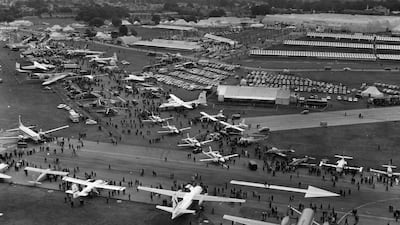
The Farnborough Airshow in Hampshire has played host to the latest and greatest from the aerospace industry since 1948. Here, 'The National' takes a look back at 74 years of aviation. All photos: Getty Images -
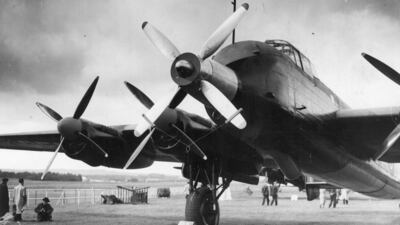
An Avro Lincoln, developed from the Lancaster bomber, on display at the 1948 Farnborough Airshow. -
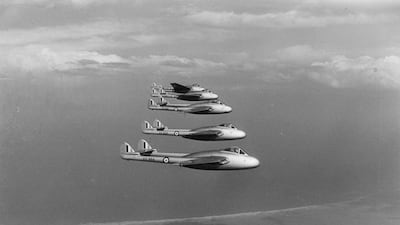
A formation of RAF de Havilland Vampire jets in flight at the Farnborough Airshow in 1950. -
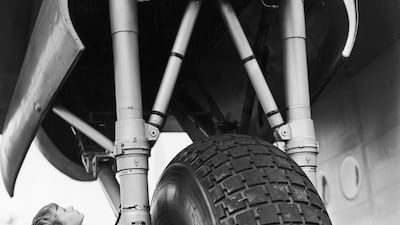
A young visitor stands by the wheel of an Avro York transport plane at Farnborough Airshow in 1950. -
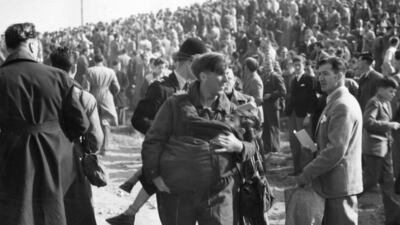
A child is carried away from the scene of a crash at the Farnborough Airshow in 1952. A prototype de Havilland DH 110 jet fighter crashed during a display, killing 27 people. -
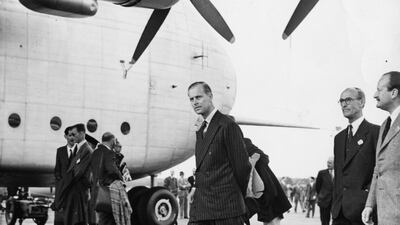
Prince Philip, Duke of Edinburgh, inspects aircraft at the Farnborough Airshow in 1952. -
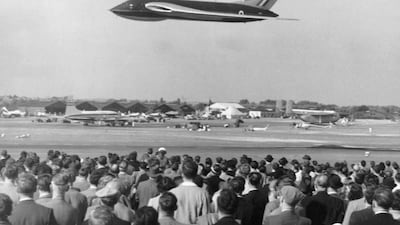
The Handley Page Victor, a four-jet crescent-wing bomber that became part of the UK's V Bomber nuclear force along with the Vulcan and the Valiant, makes an appearance at the Farnborough Airshow in 1953. -
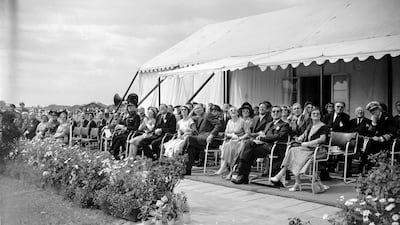
Farnborough Airshow crowds and dignitaries watch RAF Hawker Hunter jets perform a display in honour of the Royal Aircraft Establishment's jubilee in 1955. -
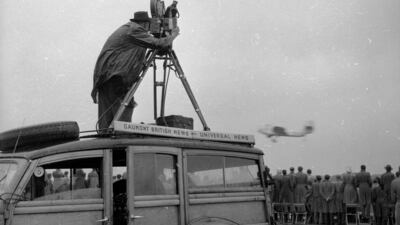
A cameraman stands on the roof of his estate car to get footage of the 1956 Farnborough Airshow. -
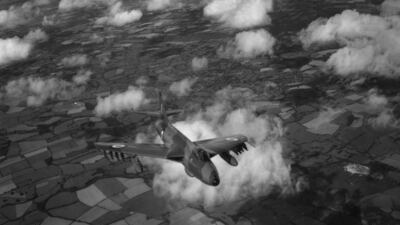
A Hawker Hunter equipped with rockets flies over the Farnborough Airshow in 1956. -
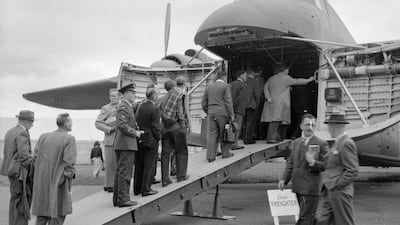
Visitors queue to have a look inside a Bristol freighter at the 1956 Farnborough Airshow. -
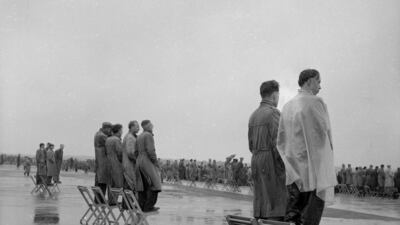
Enthusiasts stand on chairs in the rain to get a better view of the aircraft as they fly past at the Farnborough Airshow 1956. -

A formation of 16 Hawker Hunter jets of a Royal Air Force aerobatic team flying at the Farnborough Airshow in 1959. -
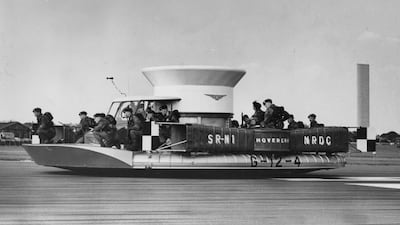
A Saunders-Roe hovercraft, with a group of Royal Marines on board, on display Farnborough Airshow in 1959. -
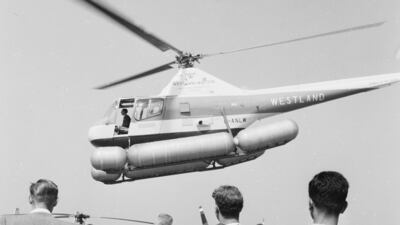
A Westland Widgeon helicopter hovers above the Farnborough Airshow crowd in 1959. -
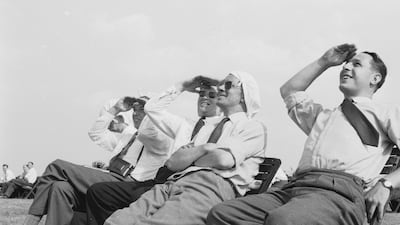
Spectators shield their eyes against the sun at Farnborough Airshow in 1959. -
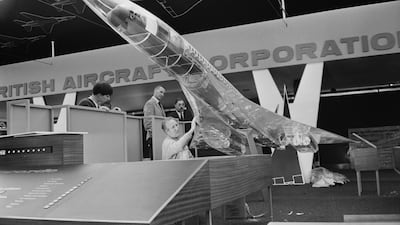
A worker cleans a transparent model of the supersonic passenger airliner Concorde at a British Aircraft Corporation exhibit at Farnborough Airshow in 1966. -
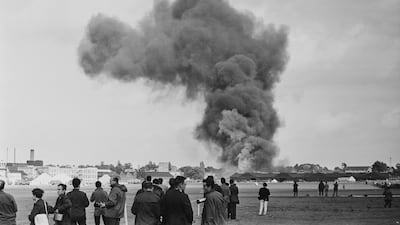
Smoke rises after a French Navy long-range maritime patrol Breguet 1150 Atlantic aircraft crashed into buildings at the Farnborough Airshow in 1968. Five crewmen were killed. -
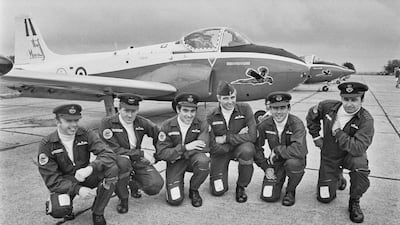
Members of the RAF's Macaws, the College of Air Warfare's Jet Provost T-4 aerobatic display team, at Farnborough Airshow in 1972. -
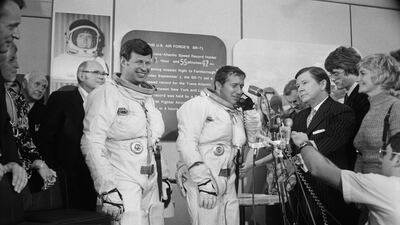
Pilots Maj James V Sullivan and Maj Noel F Widdifield of the US Air Force meet the press at the Farnborough Air Show in 1974, after setting an air speed record by flying the Lockheed SR-71 Blackbird from New York to London in less than two hours. -
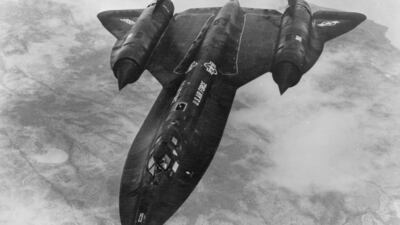
The Lockheed SR-71 Blackbird in 1974. -
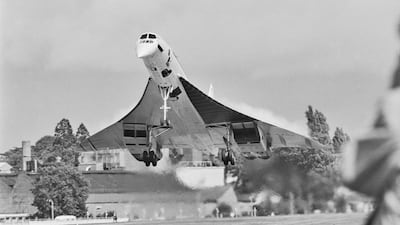
A prototype Concorde takes off from Farnborough Airshow in 1974. -
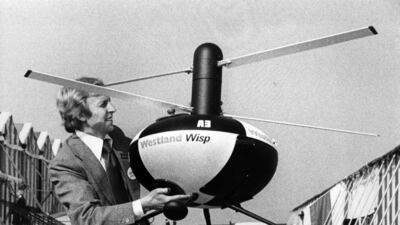
The Westland Wisp, a radio-controlled, unmanned miniature helicopter designed to take pictures in dangerous and difficult to reach places, on display at Farnborough Airshow in 1976. -
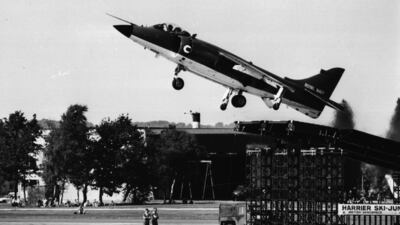
A Hawker Sea Harrier and a 'ski jump' launcher on display in at Farnborough Airshow in 1978. -
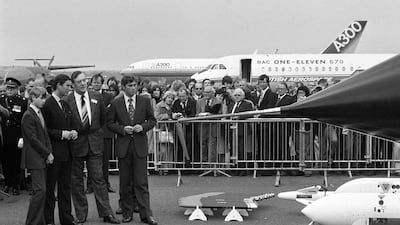
Prince Charles, with his brothers Prince Andrew and Prince Edward, inspect the Tornado multi-role combat aircraft and its payload at Farnborough Airshow in 1978. -
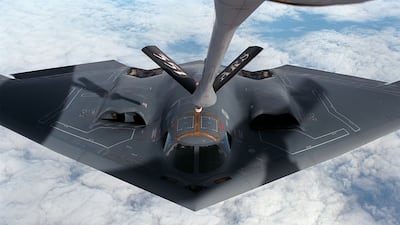
A US Air Force B-2 Spirit bomber approaches a KC-135R Stratotanker for refuelling for the flight back home after the stealth aircraft made a 21 hour non-stop round-trip flight to make a fly past at the 1996 Farnborough Airshow. -
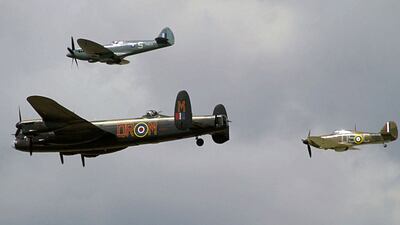
In 2000, the Battle of Britain Memorial Flight, consisting of an Avro Lancaster bomber, a PR XIX Supermarine Spitfire, and a MkIIc Hawker Hurricane, was at the Farnborough Airshow. -

The new Airbus A380 double decker airliner comes in to land over a double decker busses in the 2006 Farnborough Airshow. -
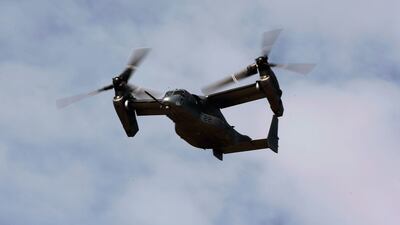
The tilt-rotor Bell/Boeing V-22 Osprey manoeuvres at the Farnborough Airshow in 2006. -
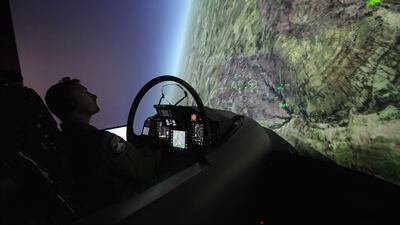
An member of the Italian Air Force crew demonstrates the capabilities of the Typhoon Eurofighter during a flight simulation at Farnborough Airshow in 2010. -
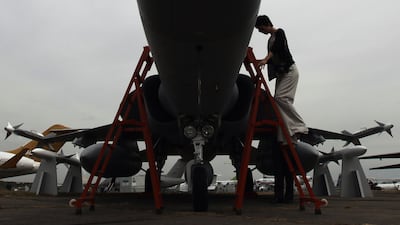
Members of the public look inside a JF-17 Thunder jet fighter developed by Pakistan and China at 2010's Farnborough Airshow. -
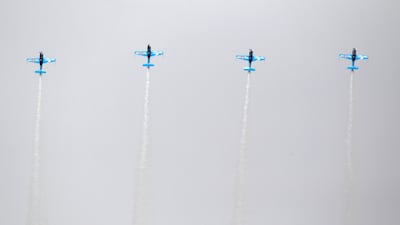
The Blades British civilian flying display team perform at Farnborough Airshow in 2010. -
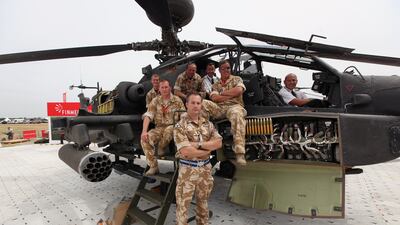
A crew from Wattisham army base in Suffolk with an Apache AH1 Helicopter at Farnborough Airshow in 2010. -
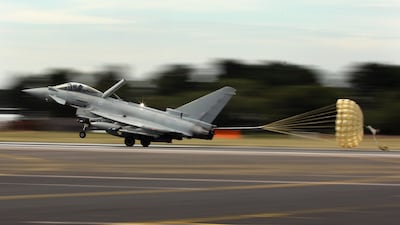
A Typhoon Eurofighter touches down at Farnborough Airshow in 2010. -
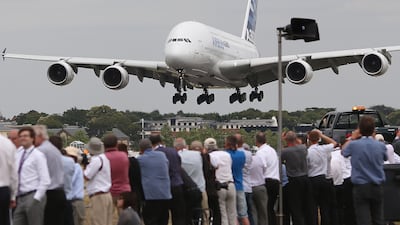
An Airbus A380 comes into land after putting on a performance for the crowds at Farnborough Airshow in 2014. -
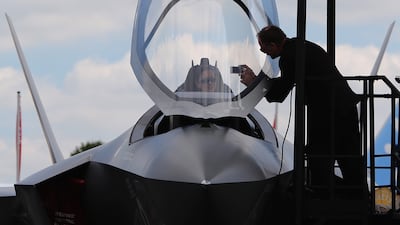
A visitor sits in a model of a Lockheed Martin F-35 Lighting stealth fighter, which was big news at Farnborough Airshow in 2014. -
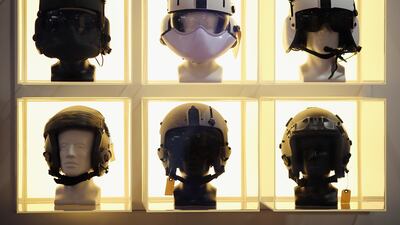
Military helmets on display at the Farnborough Airshow in 2014. -
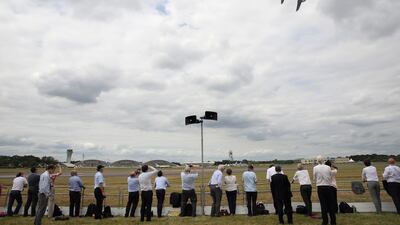
Visitors take pictures as an Airbus A380 performs for the Farnborough Airshow crowd in 2014. -
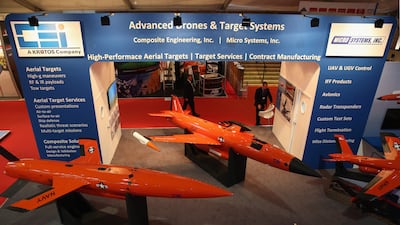
Evolving technology: high-performance remote-controlled aerial target drones used by the US Air Force on display at Farnborough Airshow in 2014. -
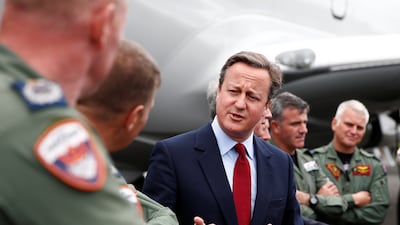
British prime minister David Cameron meets aircrew at the Farnborough Airshow in 2016. -
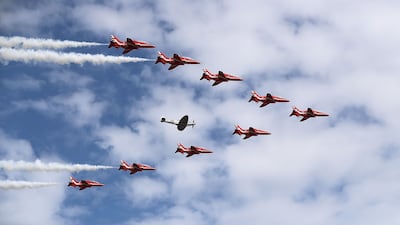
Britain's Red Arrows fly in formation around a Spitfire at the Farnborough Airshow in 2018. -
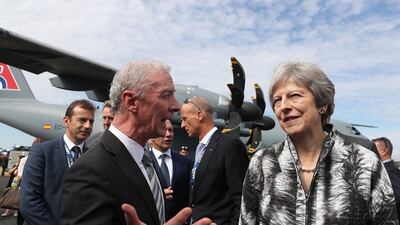
British prime minister Theresa May talks with guests as she opens the 2018 Farnborough Airshow. An Airbus A-400 Atlas looms in the background.


Collapse and comeback
The pandemic threw the air industry into its worst crisis in modern times as tourism ground to a standstill and business travellers turned to Zoom, sending demand for international flights collapsing by more than three quarters.
That was bad news for Rolls-Royce because it likes to sell engines under a subscription service in which airlines pay by the hour – so no flying hours, no revenue, and the company lost £4 billion in 2020.
The British manufacturer is the sole supplier for the Airbus A350 and has a sizeable market share on other flagship models such as the A380 and the Boeing 787.
As part of its slimming down process, it turned three assembly lines into one and moved production in Singapore back to Derby, where six or seven engines a week are prepared for passenger aircraft.
The company makes about a quarter of its materials in-house, such as ultra-strong turbine blades ready to withstand 12,000 revolutions per minute, and made in an increasingly automated process with robots doing heavy lifting.
For the parts it cannot make itself, Rolls-Royce has narrowed down its suppliers to a small group of what it regards as high-quality providers and signed long-term deals for the next decade.
About $100,000 was saved by reducing costs on repairs of Trent XWB-84 engines, said staff at Rolls-Royce, where about 1,400 people work in maintenance and try to keep engines in their money-making “on-wing” position.
Mr Resch said the company had reduced losses on new engines by 35 per cent despite the volume of sales falling, and broken even if spare engines are included in the equation.
Pent-up demand for air travel is there – the long summer holiday queues at airports are a testament to that – although continuing restrictions in China represent what civil aerospace chief Chris Cholerton calls a handbrake on recovery.
Engineers have also been learning lessons from the debacle of the Trent 1000 engine, a component of Boeing 787s that was found to have cracks and other problems and led to what Mr Cholerton called “awful disruption”.
Rolls-Royce took a “huge reputational hit” from those problems, he said, and although most of the issues have been fixed there are two that have not yet been fully signed off by regulators.
Although it is not immune to supply-chain problems and labour shortages, Rolls-Royce is a prestigious name (although luxury cars are a separate company entirely) and 70 recent job openings attracted 1,300 applicants.
Some savings were afoot before the coronavirus arrived but “a crisis like the pandemic is a very good catalyst”, said Mr Cholerton. “We’re concentrating on being a leaner, more efficient business.”

Clean fuels
Rolls-Royce has already gone public with its ambitions for sustainable aviation fuels, which are made from plant or animal matter and mixed with regular jet fuel.
The big advantage of these blends is that they can be dropped into existing jet engines without engineers needing to fundamentally rework an aircraft as they do with electrics.
That makes SAF the low-emission solution “as far as the eye can see”, said engineer Simon Burr, although longer-term options are being enthusiastically studied.
SAF is more expensive than traditional jet fuel but Rolls-Royce wants to drive up demand by testing 100 per cent sustainable blends that are not currently approved for the market and would need to be compatible with fuel lorries.
“What we are trying to do is signal that you can invest with confidence,” said Mr Burr, who said French and Asian cooking oils had been tried in testing and that sustainable variants did not have the bad odour of jet fuel.
Rolls-Royce had planned to display one of the jewels in its collection, the all-electric, single-seater aircraft Spirit of Innovation, at the cancelled Farnborough show in 2020 but can now show it off as a world record-breaking item.
The plane is “the fastest electric anything on the planet”, said Mr Parr from the electrics department, having flown at a pace of 555 kilometres per hour to set the record for a 5km distance.
With a battery pack powerful enough to charge your phone every day for 20 years, the “flying battery with a pilot attached”, as some engineers jokingly called it, was intended to start generating a supply chain for electric plane parts.
More romantically, it was a nod to the spirit of 1920s and 1930s air racing in which Rolls-Royce was a major player, and a way of inspiring young people to get into aviation.
Nobody thinks that long-haul jumbo jets will be making all-electric journeys any time soon but engineers intend for the Spirit of Innovation to be the precursor for a fleet of electric air taxis and medical shuttles.
Is that not a helicopter? No, says Mr Parr – the Rolls-Royce version is safer, quieter, cheaper and more manoeuvrable, as well as offering a zero-emission option that could be charged in 20 to 30 minutes on the tarmac.
Insiders see opportunities in shuttling across Norwegian fjords – helpfully, the Nordic country has abundant hydroelectric power – or in hopping across remote Scottish islands for the short journeys typical of small planes.
Rolls-Royce will have more to say at Farnborough on its longer-term sustainability plans, but a separate division of the company is looking at miniature nuclear reactors, and its own operations are meant to reach net zero by 2030.
“We are involved in all the disruptive technology which will play a role in the future of aviation,” Mr Cholerton said.

