
Last spring, more than 1,000 people packed into the Cambridge Central Mosque every evening to enjoy iftar in the extraordinary new structure. This year, the vast prayer hall and landscaped courtyards lie empty and its leader Timothy Winter, a Sunni Muslim scholar who also goes by his Islamic name Shaykh Abdal Hakim Murad, has had to find new ways to connect with the congregation.
“Religion is flexible enough to cope with this rather drastic curtailing of Muslim public worship; and the shift of the community to the digital sphere has been an education in itself,” says Mr Winter, who was listed among the world's most influential Muslims in 2010.
-
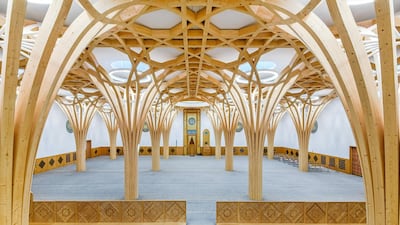
Cambridge Central Mosque was built to serve diverse Muslim communities in the British university city. Photos by Amelia Hallsworth -
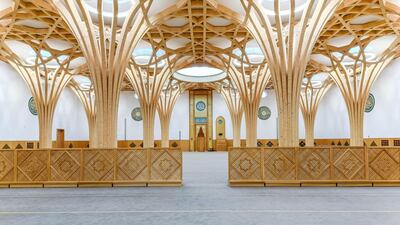
The mosque also attracts visitors who come to see its arresting eco-design. -
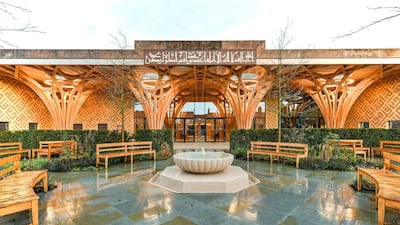
The mosque's prayer hall as well as its landscaped gardens are empty of visitors this year because of the coronavirus outbreak. -
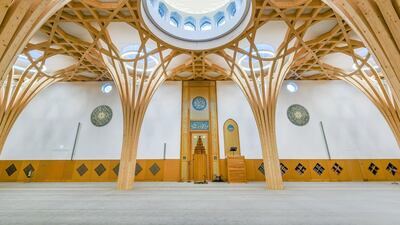
The vaulted ceilings of the Cambridge Central Mosque are modelled on medieval gothic styles. -
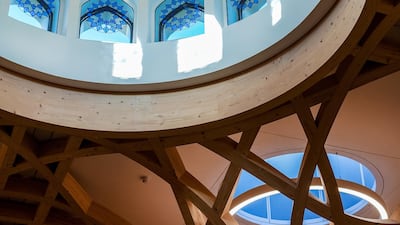
The mosque ceiling is propped up by sustainable timber ‘trees’. -
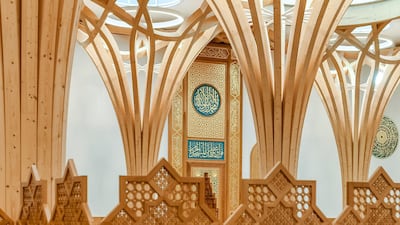
The ceiling supports are arranged in a geometric design that mirrors the 'breath of the divine' in Islamic art. -
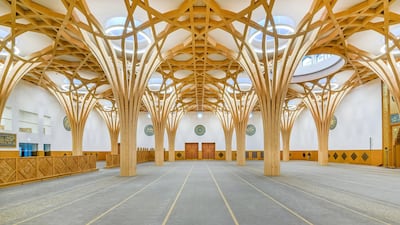
During Eid Al Fitr last year, it took three sittings to accommodate worshippers eager to mark the occasion in the new mosque.


Since the start of the first holy month under lockdown, the mosque's website has been extremely busy with talks and communal prayers as well as a 24-hour "Ramadan TV" service that draws viewers from around the world. “I was looking forward to quietness and contemplation; it hasn’t entirely worked out that way since there are so many online activities I need to take part in every day,” he adds.
But while the celebrated theologian still manages to find some tranquil moments, many of the most cherished Ramadan traditions have been out of reach due to strict social distancing rules to limit the spread of Covid-19. “The festive atmosphere at the daily breaking of the fast at our new mosque is sorely missed,” Mr Winter says. “Muslims tend to be sociable people, and many are missing the collective dimensions of Ramadan.”
-
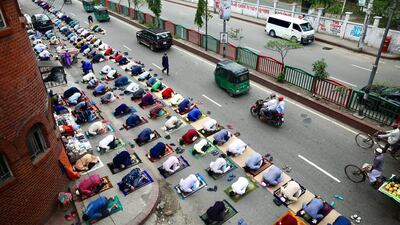
Muslims attend Friday prayers on the street in Dhaka, Bangladesh. Reuters -

Mosque staff offer Friday prayers, while practicing social distancing in Kuala Lumpur. AFP -

Muslim men observe social distancing at the Pattani Central Mosque in Pattani, Thailand. AFP -

A Muslim man, wearing a face mask, holds a prayer mat at the Pattani Central Mosque in Pattani. AFP -
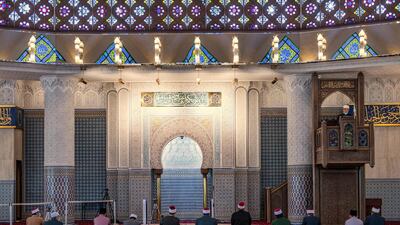
Mosque staff listen to a Friday sermon in Kuala Lumpur. AFP -

A man wearing a face mask prays as Muslims return for Friday's Ramadan prayers, in Bangkok, Thailand. Reuters -

Iranians pray as they place the Quran on their heads inside a mosque in Tehran, Iran. EPA -
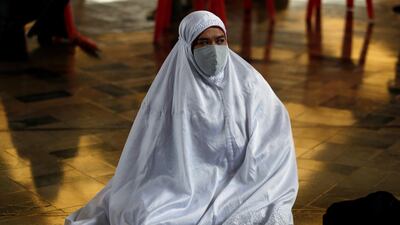
A woman at Ramadan prayers in Bangkok, Thailand. Reuters -

Inside a mosqu in Bangkok, Thailand. Reuters -
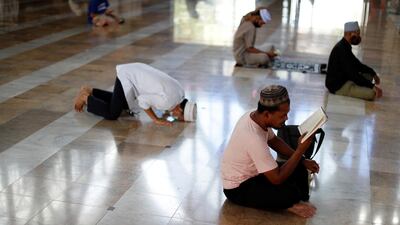
The Thai government eased isolation measures in Bangkok. Reuters -

Volunteers clothed in personal protection equipment prepare meals throughout the day for iftar in Ankara, Turkey. AFP -

A food truck provides free Halal meals in front of the Taqwa mosque in the Bedford-Stuyvesant neighbourhood of Brooklyn, New York City. AFP -
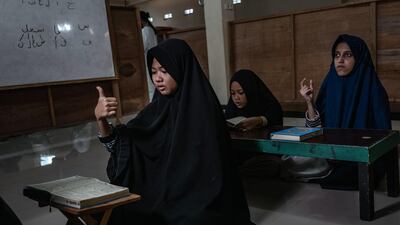
Indonesian deaf students read the Quran in Yogyakarta, Indonesia. Getty Images -
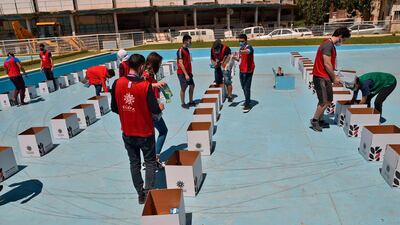
Algerian Food Bank volunteersprepare packages of food in Algiers. AFP


The closure of mosques in many countries worldwide has been painful for Muslims accustomed to sharing their prayers with the community. “Congregational worship is a beautiful and dignified part of human life, which has satisfied countless souls throughout recorded time and before; to be without that pleasure is a serious deprivation,” Mr Winter says.
Built just outside the centre of town, Cambridge Central Mosque was created to serve diverse Muslim communities in the university city, which is situated in Britain's south. Its arresting eco-design also attracts non-Muslims to see the vaulted ceilings – modelled on medieval gothic styles – propped up by sustainable timber ‘trees’ arranged in a geometric design that mirrors the "breath of the divine" in Islamic art.
Last Eid, it took three sittings to accommodate worshippers eager to mark the occasion in the new mosque. This year, the space will stay empty during the end-of-Ramadan holiday as people celebrate at home and tap into the community via Skype and Zoom.
It is not yet clear when people will be able to return to the mosque, or even whether places of worship will be fully open this time next year as the UK struggles to contain one of the worst outbreaks of the novel coronavirus worldwide.
The isolation has affected people differently, Mr Winter says. “Muslims are mainly living in family situations but in Cambridge there are students from around the world who have been unable to return home and are feeling quite isolated. Locating them and giving them a sense of community has often been a challenge.”
But there have been many looking to join the faith during this difficult time with a noticeable increase in the number of conversions since the crisis began.
Staff have been busy adapting to a world of digital conversions as well as online weddings, Mr Winter says. “We have learned a good deal about how to engage with people and identify their needs online; and this experience will strengthen our outreach whatever the future may hold.”

