

Iran has accelerated its nuclear research and construction programme at the underground site of Natanz.
A report by the Institute for Science and International Security, a think tank, follows a sharp deterioration in relations between Iran and the UN nuclear watchdog monitoring Tehran’s nuclear programme.
Iran’s Parliament passed legislation in November mandating the accelerated enrichment of uranium to 20 per cent purity.
Analysts fear these plans, which were underway last week, could shorten Iran’s “breakout” time required to develop a nuclear weapon.
The institute analysed high-resolution satellite photographs, commercially available from imagery provider Maxar, which have been annotated by the Institute to highlight the extent of construction. Work at the site has increased since October.
It said changes on the ground in recent months are notable: storage for explosives is visible, identified by distinctive earth barriers built around small buildings, designed to absorb the force of a blast – accidental or otherwise.
In July, a building at the site was destroyed in an explosion, which Iran suspects was sabotage. Israel has been conducting a long campaign within Iran, damaging nuclear centres and assassinating nuclear scientists.
-
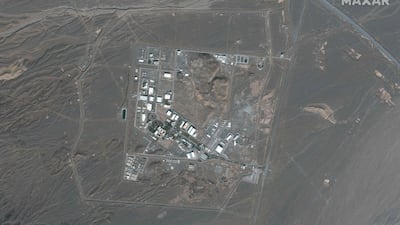
An overview of Iran's Natanz nuclear facility, south of the capital Tehran. Maxar Technologies / AFP -
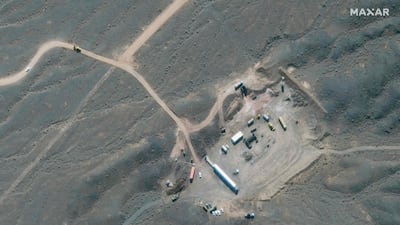
An overview of Iran's Natanz nuclear facility, south of the capital Tehran. Maxar Technologies / AFP -
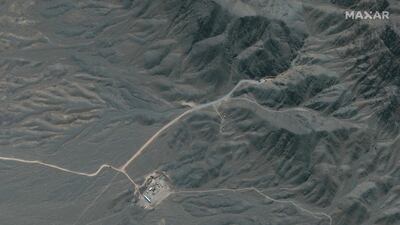
An overview of Iran's Natanz nuclear facility, south of the capital Tehran. Maxar Technologies / AFP -
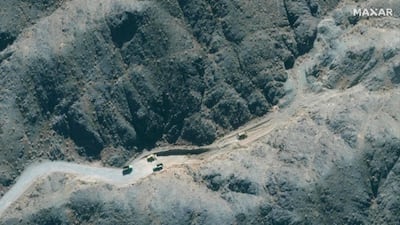
An overview of Iran's Natanz nuclear facility, south of the capital Tehran. Maxar Technologies / AFP


The report asserts that Iran is excavating rock, blasting and clearing deep passages into the mountains. The completion of this work will mean Iran’s expanded uranium enrichment facilities will be difficult, if not impossible, to strike from the air.
High-voltage pylons can also be seen, as can lorries and machinery, indicating accelerated work since October, when the institute last published analysis of the site.
“Since our October 30, 2020, report on the construction of a new centrifuge assembly facility in the mountains near the Natanz enrichment plant, construction has progressed and tunnel entrance locations can now be identified with certainty,” the institute said.
“Most importantly, newly available high-resolution satellite imagery confirms that construction is progressing rapidly at the largest mountain in the area, the most likely future location for the new underground assembly facility.”
Conflict risk
Israeli Prime Minister Benjamin Netanyahu has long said Iran’s nuclear activities could cross a “red line”, implying a
point at which Israel could seek military action.
In November 2012, Mr Netanyahu told Israeli TV he was prepared to order a unilateral attack on Iranian facilities.
“I am, of course, ready to press the button if necessary,” he said.
Mr Netanyahu singled out the Natanz site in an address to US Congress in March 2015.
“Iran was also caught – caught twice, not once – operating secret nuclear facilities in Natanz and Qom, facilities that inspectors didn’t even know existed,” he said.
The recent commercially available satellite images at least show how difficult it has become for Iran to hide proscribed nuclear activities.
But Mr Netanyahu and the outgoing administration of President Donald Trump are pushing to hinder any revised form of the “nuclear agreement” under the forthcoming administration of president-elect Joe Biden.
The US has recently stepped up sanctions against the Iranian regime. The extent of trade restrictions will now make it hard to enforce any new agreement, at least in the near term.
President-elect Joe Biden wants to revisit the nuclear deal, negotiated under the presidency of Barack Obama and in place between 2015 and 2018.
The EU has maintained the agreement is far from lost, despite Iran’s accelerated uranium enrichment plan.
Gallery: Iran's nuclear programme
-

Iranian President Hassan Rouhani, right, and the head of Atomic Energy Organization of Iran Ali Akbar Salehi inspect the nuclear technology on the occasion of Iran National Nuclear Technology Day in Tehran in 2019. EPA -
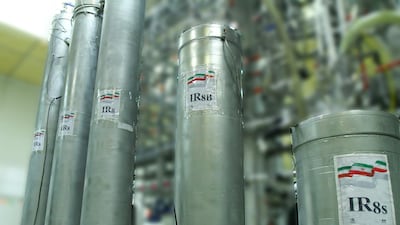
IR-8 centrifuges at Natanz nuclear power plant, some 300 kilometres south of capital Tehran. AFP -
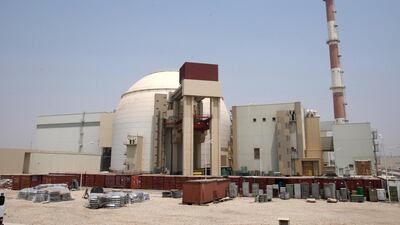
The Iranian nuclear power plant in Bushehr in 2010. EPA -

Salehi speaks with media while visiting Natanz enrichment facility, in central Iran in 2019. Atomic Energy Organization of Iran via AP -
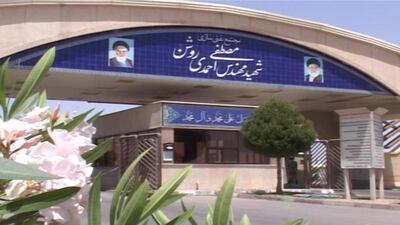
The gate of Natanz nuclear power plant in Natanz , Isfahan province, in 2019. EPA -
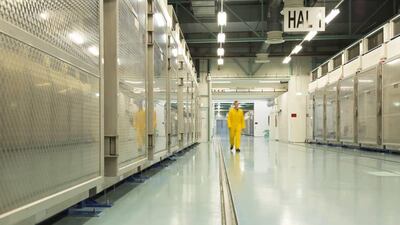
Inside of the Iran's Fordow nuclear facility, in Fordow, Qom province in 2019. EPA -
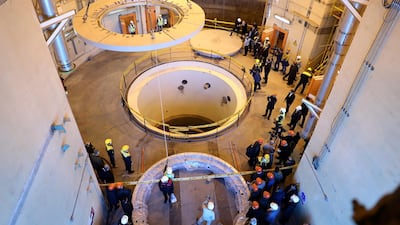
Technicians work at the Arak heavy water reactor's secondary circuit, as officials and media visit the site, near Arak, Iran in 2019. Atomic Energy Organization of Iran via AP -
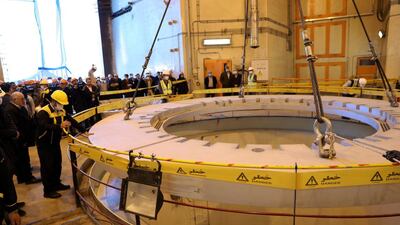
Members of the media and officials tour the water nuclear reactor at Arak in 2019. WANA via Reuters -
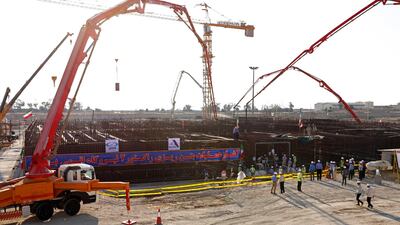
Concrete is poured for the base of the second nuclear power reactor at Bushehr plant in 2019. Atomic Energy Organization of Iran via AP



