
A huge blast in Beirut has left 300,000 people homeless and caused damage across half of the city estimated to cost more than $3 billion, its governor said on Wednesday.
"I think there are between 250,000 and 300,000 people who are now without homes," Marwan Aboud told AFP, adding that the estimated cost of the damage from Tuesday's explosion was between $3 billion and $5 billion.
Engineers and technical teams have yet to conduct an official assessment, he said, adding that damage from the blast in the port area seems to have extended over half of the city.
The blast was the most powerful ever to rip through Beirut, a city still scarred by civil war three decades ago and reeling from an economic meltdown and a surge in coronavirus infections.
-
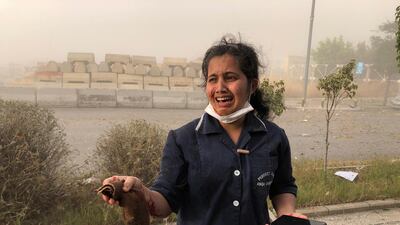
A migrant worker reacts in shock following an explosion at the Beirut port. EPA -
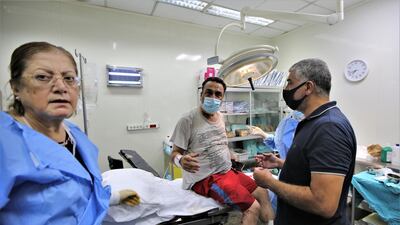
A man injured in the Beirut Port explosion receives treatment at Najjar Hospital in Al Hamra area in Beirut. EPA -

People injured in the Beirut Port explosion receive first aid at Najjar Hospital in Al Hamra area in Beirut. EPA -
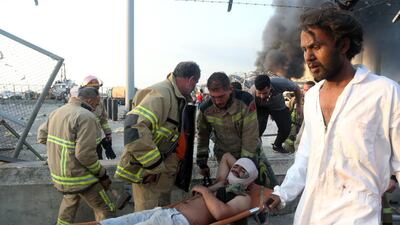
An injured man is rescued from the scene of an explosion at the Beirut port. EPA -
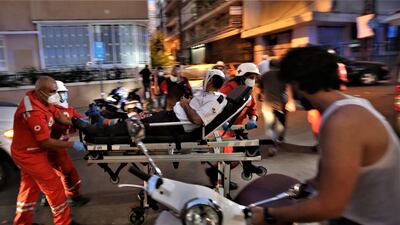
Medics shift an injured person from Najjar Hospital to another hospital in Al Hamra area in Beirut after port explosion. EPA -
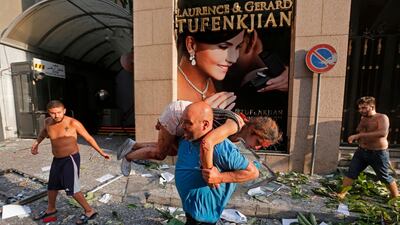
A man carries an injured girl while walking through debris in the Achrafiyeh district in Lebanon's capital Beirut. AFP -
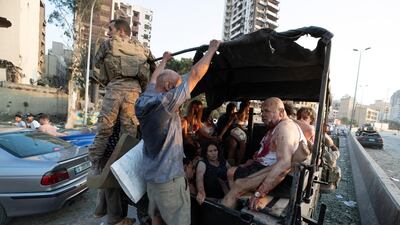
Injured people are rescued after a massive explosion in Beirut. AP Photo -
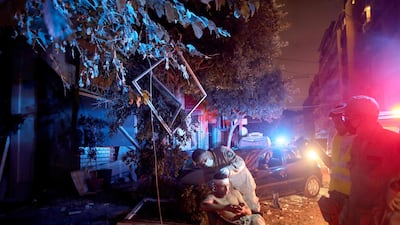
A rescue worker tends to an injured man following an explosion at the port of Beirut. AFP -

An injured man sits outside American University of Beirut medical centre following an explosion in Beirut. Reuters -
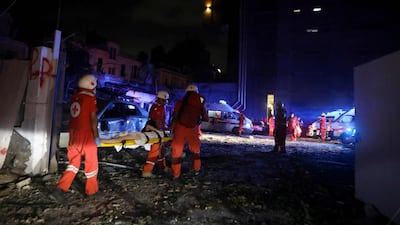
Lebanese Red Cross officers carry an injured woman following an explosion at the port of Beirut. AFP -
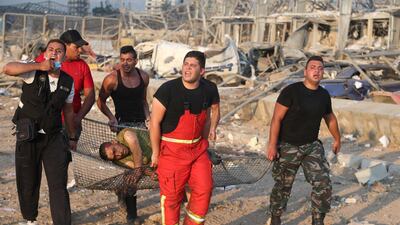
An injured man is taken from the scene of explosion at the Beirut port. EPA -
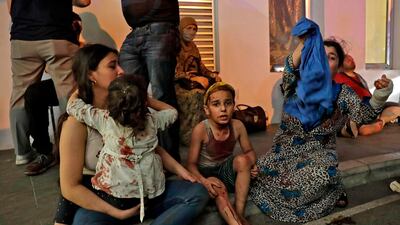
Wounded people wait to receive help outside a hospital following the explosion in Beirut. AFP -
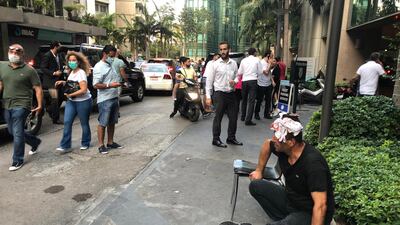
An injured man sits in shock on the pavement following an explosion at the Beirut port. EPA -
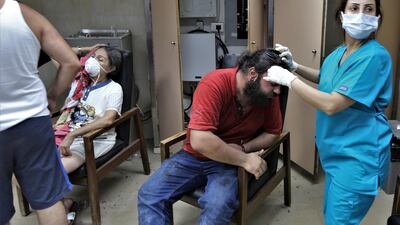
People injured in the Beirut port explosion receive first aid at Najjar Hospital in Al Hamra area in Beirut. EPA -

A man tries to walk in the mud near the scene of explosion at the Beirut port. EPA


It sent a mushroom cloud into the sky and rattled windows on the Mediterranean island of Cyprus, about 100 miles (160 kilometres) away.
President Michel Aoun said 2,750 tonnes of ammonium nitrate, used in fertilisers and bombs, had been stored for six years at the port without safety measures. He called it "unacceptable".
The head of Lebanon's Red Cross, George Kettani, said at least 100 people had been killed. "We are still sweeping the area. There could still be victims. I hope not," he said.
The intensity of the blast threw victims into the sea and rescue teams were trying to recover bodies. Many of those killed were port and custom employees and people working in the area or driving through during the Tuesday afternoon rush hour.
The Red Cross was coordinating with the Health Ministry to set up morgues because hospitals were overwhelmed, Mr Kettani said.
Facades of central Beirut buildings were ripped off, furniture was sucked into streets and roads were strewn with glass and debris. Cars near the port were flipped over.
Offers of international support poured in. Gulf Arab states, who in the past were major financial supporters of Lebanon but recently stepped back because of what they say is Iranian meddling, sent planes with medical equipment and other supplies. Iran offered food and a field hospital, ISNA news agency said.
The United States, Britain, France and other Western nations, which have been demanding political change in Lebanon, also offered help. The Netherlands said it was sending doctors, nurses and specialised search and rescue teams.

