

Sudan has arrested dozens of people who had enough explosives to “destroy” the capital Khartoum, the country’s attorney general said on Wednesday.
Taj Al Hebr did not say when the arrests were made or whether the 41 arrested belonged to any terrorist groups.
Mr Al Hebr said the explosives included ammonium nitrate, the chemical that caused the massive explosion that ripped through the Lebanese capital of Beirut on August 4.
That blast killed nearly 200 people, wounded more than 6,500 and devastated several districts in the city.
Beirut blast in pictures
-
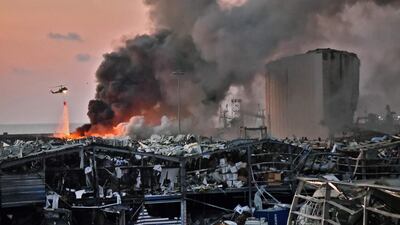
A helicopter puts out a fire at the scene of the explosion at the port of Lebanon's capital Beirut on August 4, 2020. AFP -
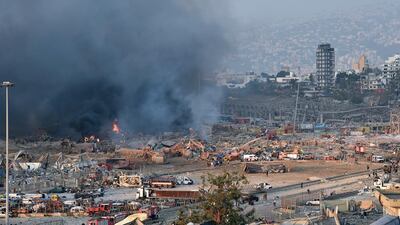
Smoke billows from an area of a large explosion that rocked the harbour area of Beirut, Lebanon. EPA -

The aftermath of blast in Beirut. Sunniva Rose / The National -
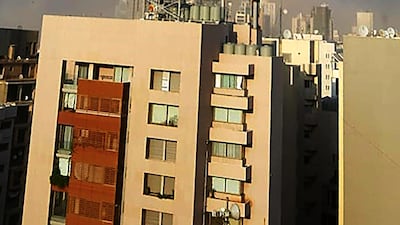
The scene of the explosion that rocked Beirut. AFP -
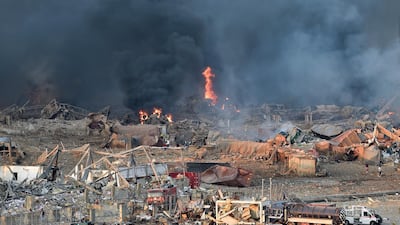
The harbour area with smoke billowing from an area of the explosion, Beirut, Lebanon. EPA -
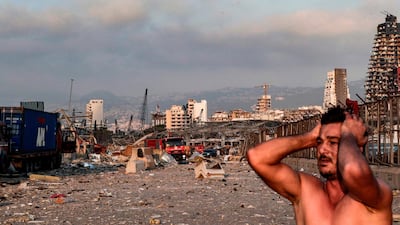
A man reacts at the scene of an explosion at the port in Lebanon's capital Beirut. AFP -
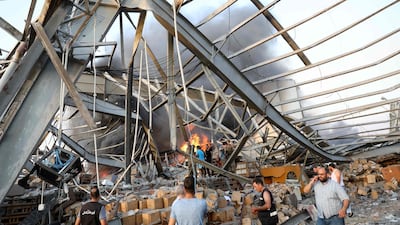
The scene of the explosion at the port in Beirut. AFP -
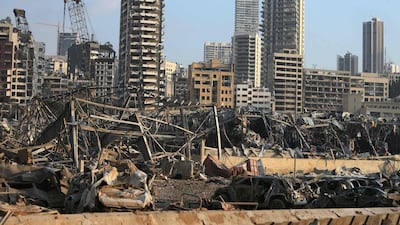
The scene of the explosion at the port in Beirut. AFP -

The scene of the explosion in Beirut. AFP -
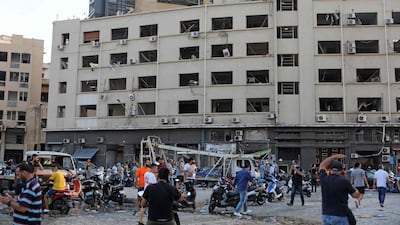
People gather near the scene of the explosion in Beirut. AFP -
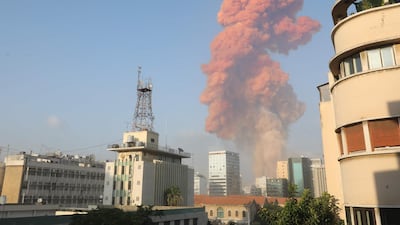
The scene of the blast in Beirut. AFP -
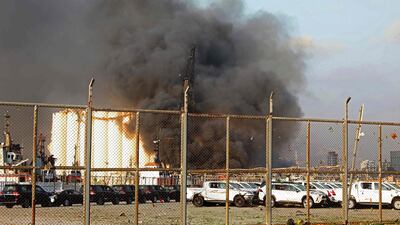
The scene of the explosion in Beirut. AFP -
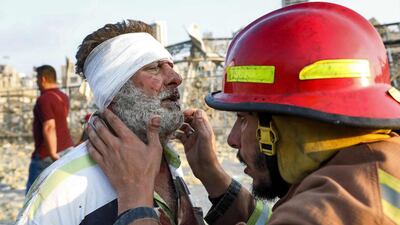
A wounded man is checked by a fireman near the scene of the explosion in Beirut. AFP -
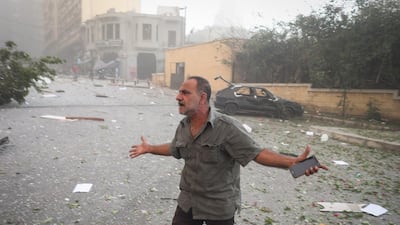
A resident stands in the street by a destroyed car, following the explosion near by at the port of Beirut. Bloomberg -
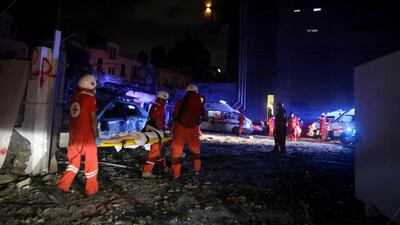
Lebanese Red Cross officers carry an injured woman following an explosion at the port of Beirut on August 4, 2020. AFP -
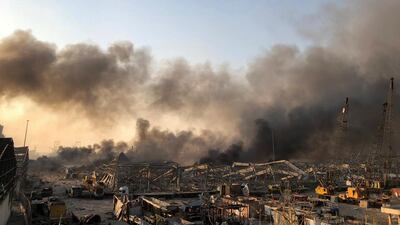
Smoke rises after the explosion was heard in Beirut. Reuters -
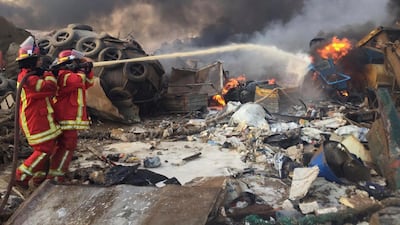
Firefighters spray water at a blaze after the explosion in Beirut. Reuters -
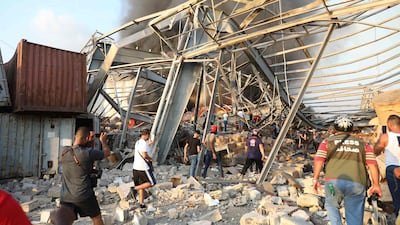
People walk at scene of the explosion in Beirut. AFP -

The blast at Beirut port. Twitter/ @borzou -

Army personnel around entrance to port. -

The aftermath of the blast in Beirut. Sunniva Rose / The National -

The aftermath of the blast in Beirut. Sunniva Rose / The National -
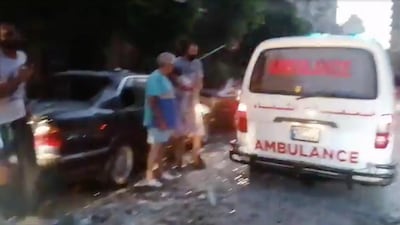
The aftermath of the blast in Beirut. Sunniva Rose / The National -
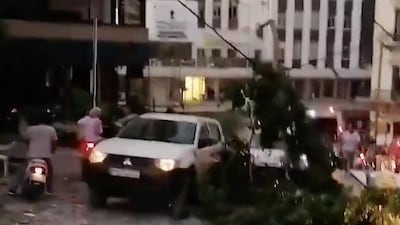
The aftermath of blast in Beirut. Sunniva Rose / The National -
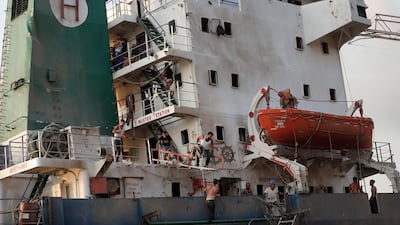
Sailors leave their damaged ship near the explosion in Beirut. AP Photo -
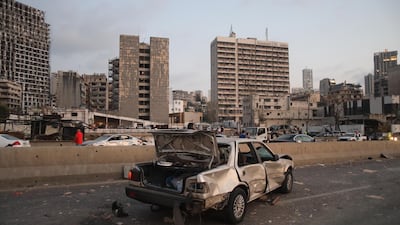
A vehicle stands damaged on a road following a large explosion at the port area of Beirut. Bloomberg -
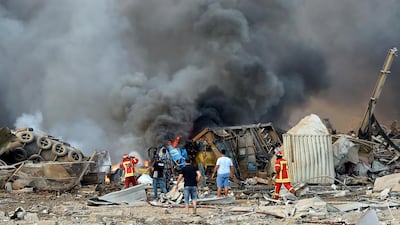
Firefighters try to extinguish flames after a large explosion rocked the harbour area of Beirut. EPA -
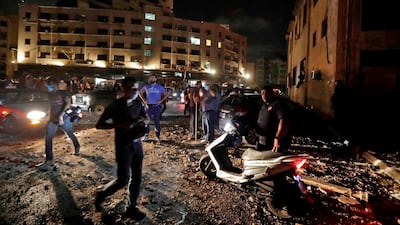
People and journalists gather at the scene of an explosion at the port of Lebanon's capital Beirut. AFP -

An injured man sits outside American University of Beirut medical centre on August 5, 2020. Reuters -
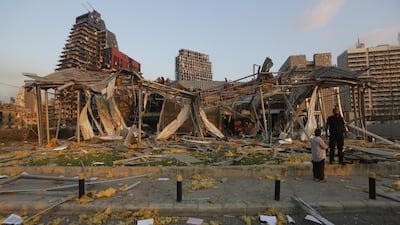
Men stand before wrecked buildings near the port. Getty Images -
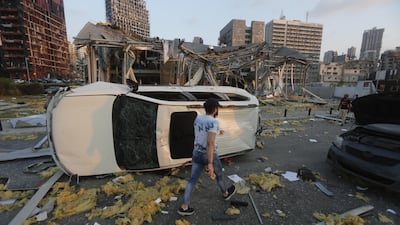
A man walks by an overturned car and destroyed buildings. Getty Images -
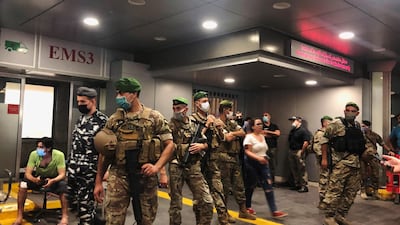
Lebanese soldiers stand outside American University of Beirut medical centre. Reuters -
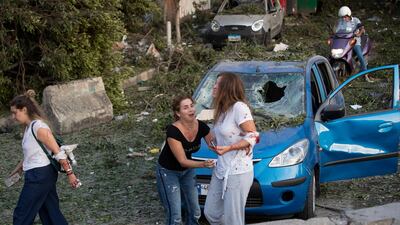
Injured people stand after the explosion. AP Photo -
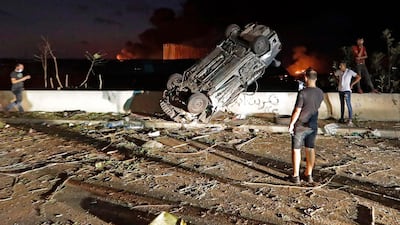
People gather by cars destroyed following an explosion at the port of Lebanon's capital Beirut. AFP -
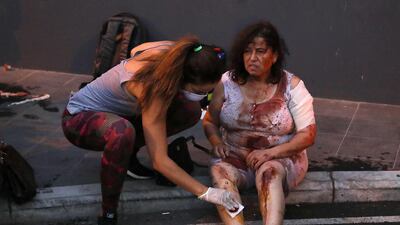
Wounded people wait to receive treatment outside a hospital following an explosion near the Beirut port. AFP


Jamal Jumaa, spokesman of the paramilitary Rapid Support Forces, said the arrests were made after an intelligence-gathering operation on terrorist groups began last month.
“This is a threat to Sudanese national security,” Mr Jumaa told Agence France-Presse.
"We fear now that some Sudanese people will resort to carrying out sabotage and bombings.”
Suspicion immediately fell on religious hardliners loyal to the regime of ousted leader Omar Al Bashir.
In March, Prime Minister Abdalla Hamdok survived an assassination attempt in which his convoy hit an explosive device before gunmen opened fire.
Sudan’s transitional government this month announced its intention to enshrine the separation of religion and state in the country’s next constitution.
The issue is a key demand of rebel groups fighting the government in the south and west of the country.
Since the removal of Al Bashir in April 2019, Sudan has moved to dismantle the legacy of the autocrat’s 29-year rule.
It lifted a ban on the sale of alcohol to non-Muslims, ended capital punishment for apostasy and discontinued the public dress code for women.
Al Bashir has been convicted of corruption and sentenced in December to two years in a detention facility.
He is also facing charges linked to the shooting and killing of protesters during street demonstrations against his rule in late 2018 and early 2019.
Al Bashir has been indicted by the International Criminal Court for genocide and crimes against humanity during the 2000s.
In that time, government forces suppressed a rebellion by ethnic Africans demanding an end to discrimination and a larger share of national resources.
Analysts have repeatedly warned in the past that hardcore Al Bashir loyalists could stage terrorist attacks to avenge his removal and to try to stop the ethnically and religiously diverse nation from embracing secularism.
Sudan under Al Bashir was a haven for militants in the 1990s, including the late leader of Al Qaeda, Osama bin Laden.
His government was also linked to high-profile terrorist attacks, including those on the US embassies in Kenya and Tanzania in 1998, and the bombing of the USS Cole in Aden, Yemen, in 2000.
The transitional administration is in talks with the US to settle compensation claims related to the attacks and allow Sudan to be removed from Washington’s list of state sponsors of terrorism.
But on Wednesday, Mr Jumaa said that if some groups in the country tried to transfer explosives to neighbouring states, it would undermine the government’s efforts.
Even being removed from the US blacklist, "we fear that we will once again be classified as a state sponsor of terrorism", he said.

