
Blasts from at least one parcel bomb in Myanmar killed five people, including an ousted lawmaker and three police officers who had joined a civil disobedience movement opposing military rule, media reported.
Since the elected government led by Nobel laureate Aung San Suu Kyi was overthrown in a coup on February 1, Myanmar has seen an increasing number of small blasts in residential areas, and sometimes targeting government offices or military facilities.
The latest blasts were in a village in the southern central part of the nation in Western Bago and occurred at about 5pm on Monday, the Myanmar Now news portal reported, citing a resident.
Domestic media also reported that a junta-appointed local administrator had been stabbed to death in the main city, Yangon.
Three blasts were triggered when at least one parcel bomb exploded at a house in the village, killing a regional lawmaker from Ms Suu Kyi's National League of Democracy party, as well as the three police officers and a resident, the report said.
Another police officer involved in the civil disobedience movement was also severely wounded after his arms were blown off by the explosion, the resident was cited as saying. The officer was receiving treatment in a hospital.
Khit Thit media also reported the blasts, citing an unnamed NLD official in the area. The report could not be independently verified and a military spokesman didn’t answer a phone call seeking comment.
-
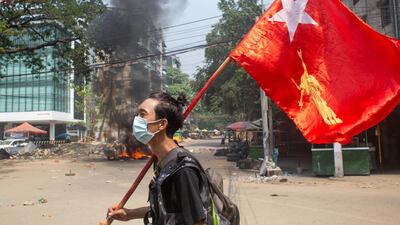
A man holds a National League for Democracy flag during a protest against the military coup in Yangon, Myanmar. Reuters -
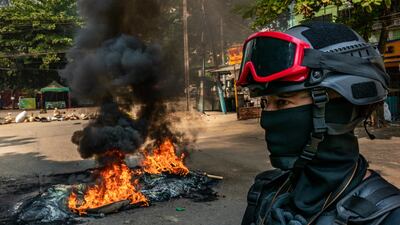
Protesters set fire to tyres on a road to slow the progress of security forces in Yangon. Getty Images -
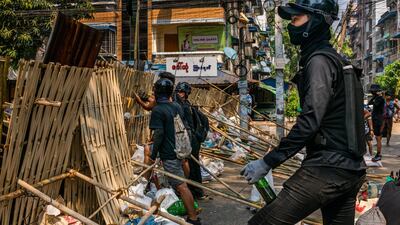
Protesters stand behind a barricade while waiting for security forces to approach in Yangon. Getty Images -
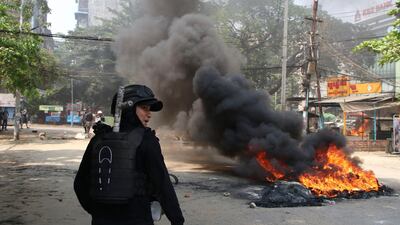
A protester stands near a fire during a demonstration in Dala township, Yangon. AP Photo -

Protesters gesture with a three-finger salute in Thaketa township Yangon. AP Photo -
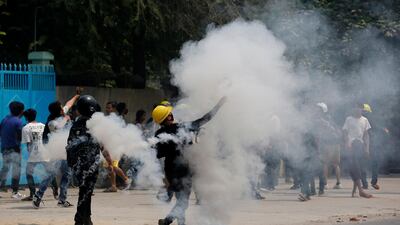
Protesters hurl back tear gas canisters towards police in Mandalay. AP Photo -
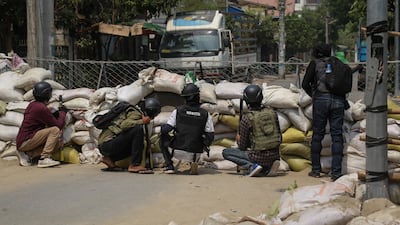
Protesters take cover during a protest against the military coup in Mandalay. EPA -
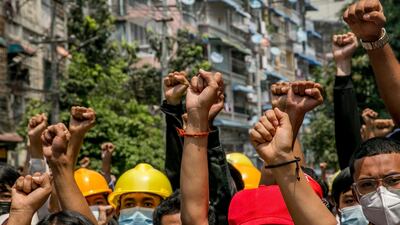
Protesters take part in a demonstration against the military coup in Yangon's Tamwe township. AFP -
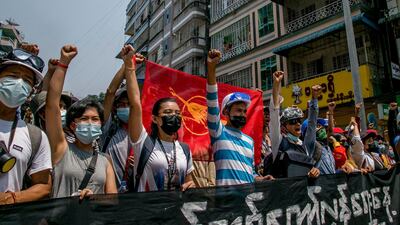
Protesters take part in a demonstration against the military coup in Yangon's Tamwe township. AFP -
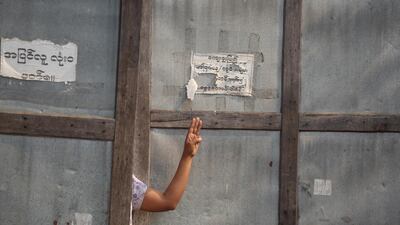
A resident flashes the three-finger salute as demonstrators march during a protest against the military coup in Mandalay. EPA -
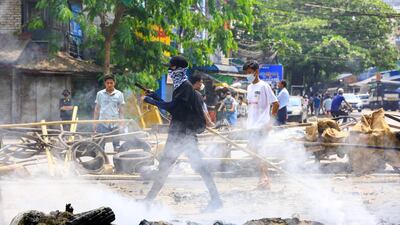
A protester walks past makeshift barricades set up to deter security forces in Yangon's Hlaing township. AFP -
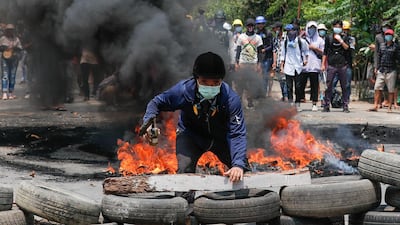
A man stands behind a barricade during a protest against the military coup in Yangon. Reuters -
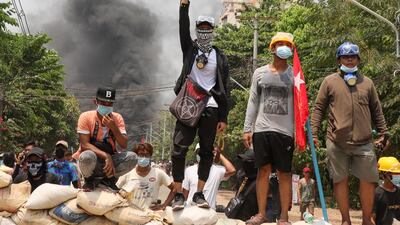
People stand on a barricade during a protest against the military coup in Yangon. Reuters -

Protesters extinguish fires during a protest in Thaketa township Yangon. AP Photo -

A man holds a makeshift gun in Yangon. Reuters -
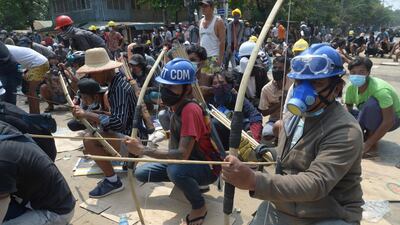
Protesters prepare makeshift bow and arrows to confront police in Thaketa township Yangon. AP Photo -

Family members cry in front of a man after he was shot dead during an anti-coup protesters crackdown in Yangon. Reuters -
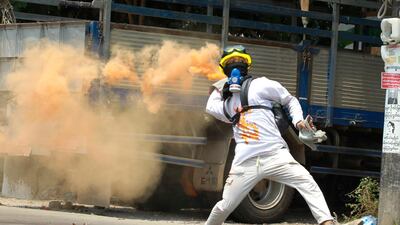
A protester throws a smoke bomb in Thaketa township Yangon. AP Photo -
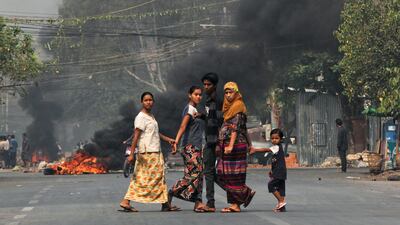
People walk on a street as barricades burn behind them in Mandalay. reuters -
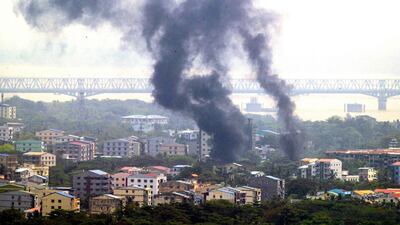
Smoke rises over Thaketa township in Yangon as security forces continue their crackdown on protests against the military coup. AFP


Violence has escalated since the coup, with hundreds reported killed by security forces, trying to quell pro-democracy protests in cities and rural towns.
Ethnic militias have also backed opposition to the junta, and the military is fighting these groups on the fringes of Myanmar.
The junta said it had to seize power because its complaints of fraud in a November election won by Ms Suu Kyi's party were not addressed by an election commission that deemed the vote fair.
Ms Suu Kyi, 75, has been detained since the coup along with many other members of her party. The AAPP says more than 3,600 people are currently in detention for opposing the military.

