Unless human beings take bold steps to reduce the immense pressure we are placing on the planet, human progress will stall, the UN said on Tuesday as it released a major new report on human development.
The Covid-19 pandemic is putting huge strain on countries around the world, but without significant action such crises will recur, according to the UN Development Programme's Human Development Report, which ranks countries through metrics such as well-being and education.
This year, amid mounting evidence that man-made climate change is ravaging the planet, UN analysts for the first time added carbon dioxide emissions and consumption rates to their calculations, shaking up the Human Development Index (HDI) scorecard.
Singapore, Luxembourg, Australia, several Arab states and many other wealthy nations, which ordinarily have high HDI scores, suffered a sharp fall in rankings this year because of overconsumption and for emitting too much carbon dioxide into the atmosphere.
More than 50 countries dropped out of the very high human development group as measured by the new index, reflecting the significant effect they have on iclimate and nature.
Luxembourg, a tiny European country of 628,000 people and a $62 billion economy, originally ranked 23rd on the index, but fell 131 places after its environmental score was added to the mix.
Australia fell 72 places, the US lost 45 and Canada 40.
Countries of relatively modest means that strive to cut greenhouse gas emissions, such as Costa Rica, Moldova and Panama, each improved their rankings by at least 30 places on this year’s index.
Poorer nations largely stayed unchanged. While these nations tend to have smaller carbon and material footprints, they also lag behind on education, health and other metrics of well-being.
Achim Steiner, the administrator of the UN Development Programme, said that achieving high rates of literacy and life expectancy was not enough to reach the top of the index nowadays.
“Many countries have achieved a great deal of progress but they also have done so at the expense of great damage to the planet,” he said.
"Singapore and Luxembourg achieved very high levels of per capita income of development. But what they are confronting right now is ... climate change, global warming, loss of biodiversity and ecosystems," Mr Steiner said.
“What is driving that way of measuring development needs to adjust.”
But he said the index was not intended to be a judgment but rather to illustrate that being rich is not the singular way in which to "determine whether you’re a successful and future-ready economy”.
Pedro Conceicao, the lead author of the report, which was released on Tuesday, said modern economies with high consumption rates that burn lots of fossil fuels fared poorly on the revised scale.
“Luxembourg and Singapore demonstrate this more sharply, in large part reflecting their exceptional circumstances, given that both are small, highly open economies with high income per capita and a structural dependence on hydrocarbons for energy,” Mr Conceicao said.
With the Covid-19 pandemic, climate change and natural destruction, warning lights for the planet and societies are “flashing red”, the report said.
The 369-page report, The Next Frontier: Human Development and the Anthropocene, marks its 30th anniversary this year amid growing concerns of environmental devastation as mankind continues to overuse the planet's resources.
UN Secretary General Antonio Guterres spoke of mounting scientific evidence that man-made greenhouse gas emissions are damaging the environment, causing record temperatures and melting ice caps.
This month, he warned of humankind’s suicidal disregard for the planet and called for global carbon neutrality within three decades, more climate-focused finance and the development of new technologies to adapt to hotter temperatures.
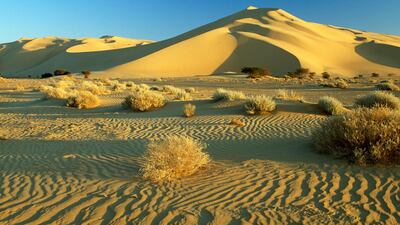
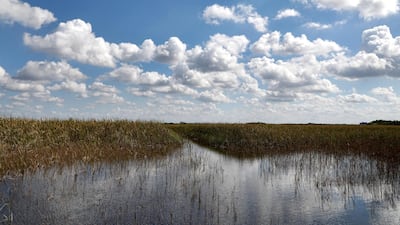
The UN says human beings have significantly altered three quarters of the Earth’s land surface, wiped out 85 per cent of its wetlands and damaged two thirds of its oceans with overfishing, pollution and acidification.
Countries agreed in Paris in 2015 to limit global warming to below 2°C, ideally 1.5°C, compared with pre-industrial times by the end of the century. Average temperatures have already risen by about 1°C.
The report noted new estimates that by 2100 the poorest nations could experience up to 100 more days of extreme weather each year as the planet warms – but that could be cut in half if the Paris Agreement on climate change is fully implemented.
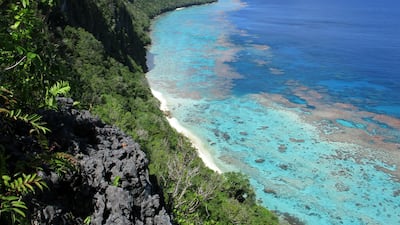
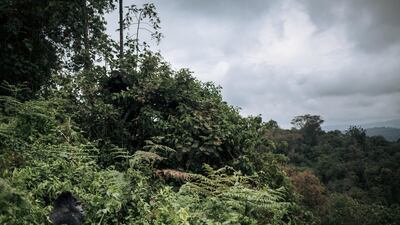
The report explored solutions that could help heal and improve the planet and its people – from ending subsidies for polluting oil, gas and coal, to restoring forests, mangroves and reefs, cutting food waste and keeping soils in good condition.
For Mr Conceicao, the study’s new figures are a wake-up call for nations to switch to clean energy sources and better protect ecosystems as they build cities and expand their economies.
"The next frontier for human development is not about choosing between people or trees; it's about recognising, today, that human progress driven by unequal, carbon-intensive growth has run its course," he said.

How to protect yourself when air quality drops
Install an air filter in your home.
Close your windows and turn on the AC.
Shower or bath after being outside.
Wear a face mask.
Stay indoors when conditions are particularly poor.
If driving, turn your engine off when stationary.
Mercer, the investment consulting arm of US services company Marsh & McLennan, expects its wealth division to at least double its assets under management (AUM) in the Middle East as wealth in the region continues to grow despite economic headwinds, a company official said.
Mercer Wealth, which globally has $160 billion in AUM, plans to boost its AUM in the region to $2-$3bn in the next 2-3 years from the present $1bn, said Yasir AbuShaban, a Dubai-based principal with Mercer Wealth.
“Within the next two to three years, we are looking at reaching $2 to $3 billion as a conservative estimate and we do see an opportunity to do so,” said Mr AbuShaban.
Mercer does not directly make investments, but allocates clients’ money they have discretion to, to professional asset managers. They also provide advice to clients.
“We have buying power. We can negotiate on their (client’s) behalf with asset managers to provide them lower fees than they otherwise would have to get on their own,” he added.
Mercer Wealth’s clients include sovereign wealth funds, family offices, and insurance companies among others.
From its office in Dubai, Mercer also looks after Africa, India and Turkey, where they also see opportunity for growth.
Wealth creation in Middle East and Africa (MEA) grew 8.5 per cent to $8.1 trillion last year from $7.5tn in 2015, higher than last year’s global average of 6 per cent and the second-highest growth in a region after Asia-Pacific which grew 9.9 per cent, according to consultancy Boston Consulting Group (BCG). In the region, where wealth grew just 1.9 per cent in 2015 compared with 2014, a pickup in oil prices has helped in wealth generation.
BCG is forecasting MEA wealth will rise to $12tn by 2021, growing at an annual average of 8 per cent.
Drivers of wealth generation in the region will be split evenly between new wealth creation and growth of performance of existing assets, according to BCG.
Another general trend in the region is clients’ looking for a comprehensive approach to investing, according to Mr AbuShaban.
“Institutional investors or some of the families are seeing a slowdown in the available capital they have to invest and in that sense they are looking at optimizing the way they manage their portfolios and making sure they are not investing haphazardly and different parts of their investment are working together,” said Mr AbuShaban.
Some clients also have a higher appetite for risk, given the low interest-rate environment that does not provide enough yield for some institutional investors. These clients are keen to invest in illiquid assets, such as private equity and infrastructure.
“What we have seen is a desire for higher returns in what has been a low-return environment specifically in various fixed income or bonds,” he said.
“In this environment, we have seen a de facto increase in the risk that clients are taking in things like illiquid investments, private equity investments, infrastructure and private debt, those kind of investments were higher illiquidity results in incrementally higher returns.”
The Abu Dhabi Investment Authority, one of the largest sovereign wealth funds, said in its 2016 report that has gradually increased its exposure in direct private equity and private credit transactions, mainly in Asian markets and especially in China and India. The authority’s private equity department focused on structured equities owing to “their defensive characteristics.”
WHY%20AAYAN%20IS%20'PERFECT%20EXAMPLE'
%3Cp%3EDavid%20White%20might%20be%20new%20to%20the%20country%2C%20but%20he%20has%20clearly%20already%20built%20up%20an%20affinity%20with%20the%20place.%3Cbr%3E%3Cbr%3EAfter%20the%20UAE%20shocked%20Pakistan%20in%20the%20semi-final%20of%20the%20Under%2019%20Asia%20Cup%20last%20month%2C%20White%20was%20hugged%20on%20the%20field%20by%20Aayan%20Khan%2C%20the%20team%E2%80%99s%20captain.%3Cbr%3E%3Cbr%3EWhite%20suggests%20that%20was%20more%20a%20sign%20of%20Aayan%E2%80%99s%20amiability%20than%20anything%20else.%20But%20he%20believes%20the%20young%20all-rounder%2C%20who%20was%20part%20of%20the%20winning%20Gulf%20Giants%20team%20last%20year%2C%20is%20just%20the%20sort%20of%20player%20the%20country%20should%20be%20seeking%20to%20produce%20via%20the%20ILT20.%3Cbr%3E%3Cbr%3E%E2%80%9CHe%20is%20a%20delightful%20young%20man%2C%E2%80%9D%20White%20said.%20%E2%80%9CHe%20played%20in%20the%20competition%20last%20year%20at%2017%2C%20and%20look%20at%20his%20development%20from%20there%20till%20now%2C%20and%20where%20he%20is%20representing%20the%20UAE.%3Cbr%3E%3Cbr%3E%E2%80%9CHe%20was%20influential%20in%20the%20U19%20team%20which%20beat%20Pakistan.%20He%20is%20the%20perfect%20example%20of%20what%20we%20are%20all%20trying%20to%20achieve%20here.%3Cbr%3E%3Cbr%3E%E2%80%9CIt%20is%20about%20the%20development%20of%20players%20who%20are%20going%20to%20represent%20the%20UAE%20and%20go%20on%20to%20help%20make%20UAE%20a%20force%20in%20world%20cricket.%E2%80%9D%C2%A0%3C%2Fp%3E%0A
AWARDS
%3Cp%3E%3Cstrong%3EBest%20Male%20black%20belt%3A%20%3C%2Fstrong%3ELucas%20Protasio%20(BRA)%3Cbr%3E%3Cstrong%3EBest%20female%20black%20belt%3A%20%3C%2Fstrong%3EJulia%20Alves%20(BRA)%3Cbr%3E%3Cstrong%3EBest%20Masters%20black%20belt%3A%3C%2Fstrong%3E%20Igor%20Silva%20(BRA)%3Cbr%3E%3Cstrong%3EBest%20Asian%20Jiu-Jitsu%20Federation%3A%3C%2Fstrong%3E%20Kazakhstan%3Cbr%3E%3Cstrong%3EBest%20Academy%20in%20UAE%3A%20%3C%2Fstrong%3ECommando%20Group%2C%20Abu%20Dhabi%3Cbr%3E%3Cstrong%3EBest%20International%20Academy%3A%3C%2Fstrong%3E%20Commando%20Group%2C%20Abu%20Dhabi%3Cbr%3E%3Cstrong%3EAfrican%20Player%20of%20the%20Year%3A%20%3C%2Fstrong%3EKatiuscia%20Yasmira%20Dias%20(GNB)%3Cbr%3E%3Cstrong%3EOceanian%20Player%20of%20the%20Year%3A%20%3C%2Fstrong%3EAnton%20Minenko%20(AUS)%3Cbr%3E%3Cstrong%3EEuropean%20Player%20of%20the%20Year%3A%3C%2Fstrong%3E%20Rose%20El%20Sharouni%20(NED)%3Cbr%3E%3Cstrong%3ENorth%20and%20Central%20American%20Player%20of%20the%20Year%3A%20%3C%2Fstrong%3EAlexa%20Yanes%20(USA)%3Cbr%3E%3Cstrong%3EAsian%20Player%20of%20the%20Year%3A%20%3C%2Fstrong%3EZayed%20Al%20Katheeri%20(UAE)%3Cbr%3E%3Cstrong%3ERookie%20of%20the%20Year%3A%3C%2Fstrong%3E%20Rui%20Neto%20(BRA)Rui%20Neto%20(BRA)%3C%2Fp%3E%0A
Fight card
- Aliu Bamidele Lasisi (Nigeria) beat Artid Vamrungauea (Thailand) POINTS
- Julaidah Abdulfatah (Saudi Arabia) beat Martin Kabrhel (Czech Rep) POINTS
- Kem Ljungquist (Denmark) beat Mourad Omar (Egypt) TKO
- Michael Lawal (UK) beat Tamas Kozma (Hungary) KO
- Zuhayr Al Qahtani (Saudi Arabia) beat Mohammed Mahmoud (UK) POINTS
- Darren Surtees (UK) beat Kane Baker (UK) KO
- Chris Eubank Jr (UK) beat JJ McDonagh (Ireland) TKO
- Callum Smith (UK) beat George Groves (UK) KO
LOVE%20AGAIN
%3Cp%3EDirector%3A%20Jim%20Strouse%3C%2Fp%3E%0A%3Cp%3EStars%3A%20Priyanka%20Chopra%20Jonas%2C%20Sam%20Heughan%2C%20Celine%20Dion%3C%2Fp%3E%0A%3Cp%3ERating%3A%202%2F5%3C%2Fp%3E%0A
Timeline
2012-2015
The company offers payments/bribes to win key contracts in the Middle East
May 2017
The UK SFO officially opens investigation into Petrofac’s use of agents, corruption, and potential bribery to secure contracts
September 2021
Petrofac pleads guilty to seven counts of failing to prevent bribery under the UK Bribery Act
October 2021
Court fines Petrofac £77 million for bribery. Former executive receives a two-year suspended sentence
December 2024
Petrofac enters into comprehensive restructuring to strengthen the financial position of the group
May 2025
The High Court of England and Wales approves the company’s restructuring plan
July 2025
The Court of Appeal issues a judgment challenging parts of the restructuring plan
August 2025
Petrofac issues a business update to execute the restructuring and confirms it will appeal the Court of Appeal decision
October 2025
Petrofac loses a major TenneT offshore wind contract worth €13 billion. Holding company files for administration in the UK. Petrofac delisted from the London Stock Exchange
November 2025
180 Petrofac employees laid off in the UAE
SPECS
%3Cp%3EEngine%3A%20Supercharged%203.5-litre%20V6%0D%3Cbr%3EPower%3A%20400hp%0D%3Cbr%3ETorque%3A%20430Nm%0D%3Cbr%3EOn%20sale%3A%20Now%0D%3Cbr%3EPrice%3A%20From%20Dh450%2C000%0D%3Cbr%3E%3C%2Fp%3E%0A
MEDIEVIL%20(1998)
%3Cp%3E%3Cstrong%3EDeveloper%3A%3C%2Fstrong%3E%20SCE%20Studio%20Cambridge%3Cbr%3E%3Cstrong%3EPublisher%3A%3C%2Fstrong%3E%20Sony%20Computer%20Entertainment%3Cbr%3E%3Cstrong%3EConsole%3A%3C%2Fstrong%3E%20PlayStation%2C%20PlayStation%204%20and%205%3Cbr%3E%3Cstrong%3ERating%3A%3C%2Fstrong%3E%203.5%2F5%3C%2Fp%3E%0A
Two-step truce
The UN-brokered ceasefire deal for Hodeidah will be implemented in two stages, with the first to be completed before the New Year begins, according to the Arab Coalition supporting the Yemeni government.
By midnight on December 31, the Houthi rebels will have to withdraw from the ports of Hodeidah, Ras Issa and Al Saqef, coalition officials told The National.
The second stage will be the complete withdrawal of all pro-government forces and rebels from Hodeidah city, to be completed by midnight on January 7.
The process is to be overseen by a Redeployment Co-ordination Committee (RCC) comprising UN monitors and representatives of the government and the rebels.
The agreement also calls the deployment of UN-supervised neutral forces in the city and the establishment of humanitarian corridors to ensure distribution of aid across the country.