After more than a decade of vicious conflict, Syria stands on the precipice of a new chapter – one that holds both risk and promise. This month’s horrific killing of predominantly Alawites along the coastal areas – the UN reported that entire families were slaughtered – is a heartbreaking reminder of how fragile their peace is.
But it also shows us how much work needs to be done for real transformation, and how much support Syria needs.
First, the historical context of this shattered country must be understood. As a nation and as a people, Syria has experienced a collective trauma over four decades. From the very beginning, the Assad dynasty, with its Alawite roots, relied on sectarian divisions to consolidate power.
The regime was one of the world’s most savage. It exploited religious and ethnic tension to its own advantage, but also to keep a terrifying grip on the nation. Daily life for those who were not part of the privileged Assad world were punished. Crimes were carried out with impunity: enforced disappearance, torture and rape.
Syria's civil war, which began in 2011 as a hopeful demand for reform, spiralled into a cataclysmic, multi-faceted conflict with deep regional and international entanglements. Half a million people were killed, 14 million displaced. Countries do not recover from those kinds of losses easily.
Returning from my first trip to Syria since 2015 this month, I found a country crippled by economic sanctions, soaring prices and a vast collective memory of pain.
Survivors of the Assad government’s chemical attacks gave me testimonies of losing everything – entire families, but also having to lie and spin a narrative fed by the government that the rebels, not the government’s bombs, had killed their loved ones. Men emerging from prison described to me years of torture, isolation and fear. Most I spoke to were sent to hell for decades of their lives simply for belonging to the wrong prayer group at a mosque.
The Assad government’s attempts to stamp out opponents in the 1980s and 1990s ended up in the mass slaughter of civilians in Hama. The number of dead are still not known. Hotels were built over mass graves to cover up the crimes. That kind of legacy of a regime is not easily erased.
Every post-conflict story is different. Countries emerge from the shrouds of war in unique ways. But there are parallels between what is happening in Syria and the fall of Saddam Hussein in Iraq in 2003. In the aftermath of Saddam’s fall, there was an uprising that unfortunately led to kidnappings, car bombs and sectarian violence. Syria must avoid this kind of deadly spiral at all costs. It must do this now.
Syrian civil society can play a huge role in the transformation: throughout the war, they worked tirelessly to document not just the Assad government’s crimes but also to bolster the population
With the formation of a new government in Damascus, the country now faces an unprecedented opportunity for real change. But the government is shaky and needs help. It needs unwavering support from the international community, the same kind of support that the world offers to Ukraine. One hopes that during Monday’s Syria donor conference in Brussels there was also a discussion on how to protect all civilians, including refugees and internally displaced people seeking to return home.
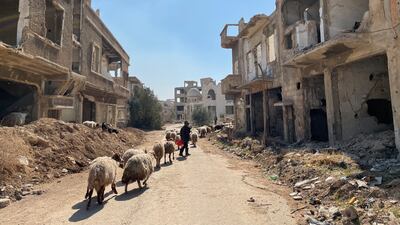
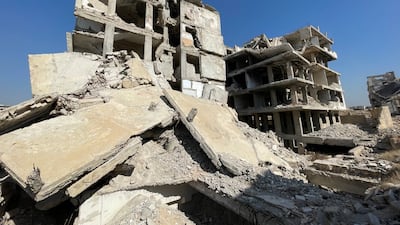
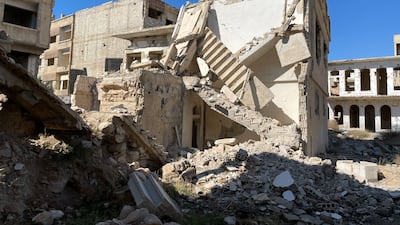
Returning is difficult as cities and towns were brutalised. In parts of Homs, I saw entire streets wiped out – the buildings hit by bombs and tanks. In 2019, a study by the UN showed that more than 13,000 buildings in Homs had been destroyed.
In suburbs such as Daraya, Douma and Tadamon, government forces punished the people for rising up against them by flattening their buildings. Throughout many parts of the country, the infrastructure is shattered. Most places have no electricity or clean water; many can’t afford solar panels or generators. The price of food is insanely expensive. Traders buy petrol from Lebanon, then sell it by the side of the road in plastic bottles at jacked-up prices.
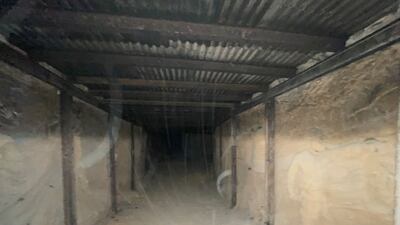
There is the important question of finding the dead. There are 150,000 people still missing. Most likely, they are in the many mass graves around Syria where bodies were casually dumped. People disappeared and were either lost in the former government’s cruel prison system or executed and buried.
Touring the suburbs of Damascus, such as Daraya, where uprisings were put down with extreme force, people are still hunting for their loved ones’ remains. Organisations such as the White Helmets – who worked throughout the war digging people out of the rubble after bombings – and the International Committee for Missing Persons – who originated in Sarajevo after the Srebrenica genocide – are already in Damascus, attempting to locate the missing.
But how to prevent sectarianism? The recent surge in Alawite killings is a heartbreaking reflection of this ongoing violence. These murders are not only an indictment of the extremism that has infected both the opposition and certain factions within the former regime, but they are also emblematic of the terrible human cost of sectarianism.
As the Alawite community struggles with its ongoing victimisation, one cannot ignore the fact that its suffering is a direct consequence of the very dynamics that the international community allowed to fester.
When then US president Barack Obama turned away from Syria in 2013 with his false “red line”, the war spiralled with new actors: ISIS and other radical groups such as Jabhat Al Nusra. We cannot make the same mistake now.
In light of these realities, it is crucial to recognise the significance of the new government. They are trying. International advisers are being brought in – many from the wide Syrian diaspora. The national dialogue, which took place in Damascus last month, was a start to draft a new constitution. Hundreds of delegates arrived in Damascus to discuss inclusion, rule of law, economic policy and human rights. But given the mixed response to the new constitution that was unveiled last week, it is still a work in progress.
Syrian civil society can play a huge role in the transformation: throughout the war, they worked tirelessly to document not just the Assad government’s crimes but also to bolster the population. These actors should be used.
For the first time in over a decade, Syria has an opportunity to emerge from the shadow of authoritarian rule, to rebuild itself from the ruins of war, and to chart a path towards stability and peace. The new government was born out of the wreckage of the civil war. But they are not just a continuation of the old regime – they are an attempt to forge a more inclusive future.
The challenges Syria faces are monumental. It is a wounded place. But this is its moment. And the international community – particularly Europe – must step in to fill the void that the US has left. They need to show a firm commitment to peace, justice and reconciliation.
What can the rest of the world do to help Syria’s transformation? Justice is imperative. We must look to the past to try to help Syria heal by ensuring that there is accountability for the vast number of the previous government’s crimes. Domestic courts can be bolstered but international justice mechanisms and tribunals can also be used.
Sanctions must be lifted, as well as diplomatic isolation. The international community can also offer economic aid, political support and assistance in security reform.
If the international community remains hesitant or – worse, punitive – it risks condemning Syria to a prolonged cycle of instability. It cannot allow the fractured political landscape to widen. It cannot risk the possibility that the people of Syria – Alawites and others – will endure the cost of international inaction.
Janine di Giovanni is also the author of two books about Syria - The Morning They Came for Us and The Vanishing

In numbers: PKK’s money network in Europe
Germany: PKK collectors typically bring in $18 million in cash a year – amount has trebled since 2010
Revolutionary tax: Investigators say about $2 million a year raised from ‘tax collection’ around Marseille
Extortion: Gunman convicted in 2023 of demanding $10,000 from Kurdish businessman in Stockholm
Drug trade: PKK income claimed by Turkish anti-drugs force in 2024 to be as high as $500 million a year
Denmark: PKK one of two terrorist groups along with Iranian separatists ASMLA to raise “two-digit million amounts”
Contributions: Hundreds of euros expected from typical Kurdish families and thousands from business owners
TV channel: Kurdish Roj TV accounts frozen and went bankrupt after Denmark fined it more than $1 million over PKK links in 2013
Terror attacks in Paris, November 13, 2015
- At 9.16pm, three suicide attackers killed one person outside the Atade de France during a foootball match between France and Germany
- At 9.25pm, three attackers opened fire on restaurants and cafes over 20 minutes, killing 39 people
- Shortly after 9.40pm, three other attackers launched a three-hour raid on the Bataclan, in which 1,500 people had gathered to watch a rock concert. In total, 90 people were killed
- Salah Abdeslam, the only survivor of the terrorists, did not directly participate in the attacks, thought to be due to a technical glitch in his suicide vest
- He fled to Belgium and was involved in attacks on Brussels in March 2016. He is serving a life sentence in France
Mercer, the investment consulting arm of US services company Marsh & McLennan, expects its wealth division to at least double its assets under management (AUM) in the Middle East as wealth in the region continues to grow despite economic headwinds, a company official said.
Mercer Wealth, which globally has $160 billion in AUM, plans to boost its AUM in the region to $2-$3bn in the next 2-3 years from the present $1bn, said Yasir AbuShaban, a Dubai-based principal with Mercer Wealth.
“Within the next two to three years, we are looking at reaching $2 to $3 billion as a conservative estimate and we do see an opportunity to do so,” said Mr AbuShaban.
Mercer does not directly make investments, but allocates clients’ money they have discretion to, to professional asset managers. They also provide advice to clients.
“We have buying power. We can negotiate on their (client’s) behalf with asset managers to provide them lower fees than they otherwise would have to get on their own,” he added.
Mercer Wealth’s clients include sovereign wealth funds, family offices, and insurance companies among others.
From its office in Dubai, Mercer also looks after Africa, India and Turkey, where they also see opportunity for growth.
Wealth creation in Middle East and Africa (MEA) grew 8.5 per cent to $8.1 trillion last year from $7.5tn in 2015, higher than last year’s global average of 6 per cent and the second-highest growth in a region after Asia-Pacific which grew 9.9 per cent, according to consultancy Boston Consulting Group (BCG). In the region, where wealth grew just 1.9 per cent in 2015 compared with 2014, a pickup in oil prices has helped in wealth generation.
BCG is forecasting MEA wealth will rise to $12tn by 2021, growing at an annual average of 8 per cent.
Drivers of wealth generation in the region will be split evenly between new wealth creation and growth of performance of existing assets, according to BCG.
Another general trend in the region is clients’ looking for a comprehensive approach to investing, according to Mr AbuShaban.
“Institutional investors or some of the families are seeing a slowdown in the available capital they have to invest and in that sense they are looking at optimizing the way they manage their portfolios and making sure they are not investing haphazardly and different parts of their investment are working together,” said Mr AbuShaban.
Some clients also have a higher appetite for risk, given the low interest-rate environment that does not provide enough yield for some institutional investors. These clients are keen to invest in illiquid assets, such as private equity and infrastructure.
“What we have seen is a desire for higher returns in what has been a low-return environment specifically in various fixed income or bonds,” he said.
“In this environment, we have seen a de facto increase in the risk that clients are taking in things like illiquid investments, private equity investments, infrastructure and private debt, those kind of investments were higher illiquidity results in incrementally higher returns.”
The Abu Dhabi Investment Authority, one of the largest sovereign wealth funds, said in its 2016 report that has gradually increased its exposure in direct private equity and private credit transactions, mainly in Asian markets and especially in China and India. The authority’s private equity department focused on structured equities owing to “their defensive characteristics.”
Lexus LX700h specs
Engine: 3.4-litre twin-turbo V6 plus supplementary electric motor
Power: 464hp at 5,200rpm
Torque: 790Nm from 2,000-3,600rpm
Transmission: 10-speed auto
Fuel consumption: 11.7L/100km
On sale: Now
Price: From Dh590,000
What is tokenisation?
Tokenisation refers to the issuance of a blockchain token, which represents a virtually tradable real, tangible asset. A tokenised asset is easily transferable, offers good liquidity, returns and is easily traded on the secondary markets.
COMPANY%20PROFILE%20
%3Cp%3EName%3A%20DarDoc%3Cbr%3EBased%3A%20Abu%20Dhabi%3Cbr%3EFounders%3A%20Samer%20Masri%2C%20Keswin%20Suresh%3Cbr%3ESector%3A%20HealthTech%3Cbr%3ETotal%20funding%3A%20%24800%2C000%3Cbr%3EInvestors%3A%20Flat6Labs%2C%20angel%20investors%20%2B%20Incubated%20by%20Hub71%2C%20Abu%20Dhabi's%20Department%20of%20Health%3Cbr%3ENumber%20of%20employees%3A%2010%3C%2Fp%3E%0A
Zayed Sustainability Prize
Dubai works towards better air quality by 2021
Dubai is on a mission to record good air quality for 90 per cent of the year – up from 86 per cent annually today – by 2021.
The municipality plans to have seven mobile air-monitoring stations by 2020 to capture more accurate data in hourly and daily trends of pollution.
These will be on the Palm Jumeirah, Al Qusais, Muhaisnah, Rashidiyah, Al Wasl, Al Quoz and Dubai Investment Park.
“It will allow real-time responding for emergency cases,” said Khaldoon Al Daraji, first environment safety officer at the municipality.
“We’re in a good position except for the cases that are out of our hands, such as sandstorms.
“Sandstorms are our main concern because the UAE is just a receiver.
“The hotspots are Iran, Saudi Arabia and southern Iraq, but we’re working hard with the region to reduce the cycle of sandstorm generation.”
Mr Al Daraji said monitoring as it stood covered 47 per cent of Dubai.
There are 12 fixed stations in the emirate, but Dubai also receives information from monitors belonging to other entities.
“There are 25 stations in total,” Mr Al Daraji said.
“We added new technology and equipment used for the first time for the detection of heavy metals.
“A hundred parameters can be detected but we want to expand it to make sure that the data captured can allow a baseline study in some areas to ensure they are well positioned.”
Our legal columnist
Name: Yousef Al Bahar
Advocate at Al Bahar & Associate Advocates and Legal Consultants, established in 1994
Education: Mr Al Bahar was born in 1979 and graduated in 2008 from the Judicial Institute. He took after his father, who was one of the first Emirati lawyers
BUNDESLIGA FIXTURES
Saturday, May 16 (kick-offs UAE time)
Borussia Dortmund v Schalke (4.30pm)
RB Leipzig v Freiburg (4.30pm)
Hoffenheim v Hertha Berlin (4.30pm)
Fortuna Dusseldorf v Paderborn (4.30pm)
Augsburg v Wolfsburg (4.30pm)
Eintracht Frankfurt v Borussia Monchengladbach (7.30pm)
Sunday, May 17
Cologne v Mainz (4.30pm),
Union Berlin v Bayern Munich (7pm)
Monday, May 18
Werder Bremen v Bayer Leverkusen (9.30pm)
Analysis
Members of Syria's Alawite minority community face threat in their heartland after one of the deadliest days in country’s recent history. Read more
'Midnights'
%3Cp%3E%3Cstrong%3EArtist%3A%3C%2Fstrong%3E%20Taylor%20Swift%26nbsp%3B%3C%2Fp%3E%0A%3Cp%3E%3Cstrong%3ELabel%3A%3C%2Fstrong%3E%20Republic%20Records%3C%2Fp%3E%0A%3Cp%3E%3Cstrong%3ERating%3A%3C%2Fstrong%3E%204%2F5%3C%2Fp%3E%0A
White hydrogen: Naturally occurring hydrogen
Chromite: Hard, metallic mineral containing iron oxide and chromium oxide
Ultramafic rocks: Dark-coloured rocks rich in magnesium or iron with very low silica content
Ophiolite: A section of the earth’s crust, which is oceanic in nature that has since been uplifted and exposed on land
Olivine: A commonly occurring magnesium iron silicate mineral that derives its name for its olive-green yellow-green colour
Ten tax points to be aware of in 2026
1. Domestic VAT refund amendments: request your refund within five years
If a business does not apply for the refund on time, they lose their credit.
2. E-invoicing in the UAE
Businesses should continue preparing for the implementation of e-invoicing in the UAE, with 2026 a preparation and transition period ahead of phased mandatory adoption.
3. More tax audits
Tax authorities are increasingly using data already available across multiple filings to identify audit risks.
4. More beneficial VAT and excise tax penalty regime
Tax disputes are expected to become more frequent and more structured, with clearer administrative objection and appeal processes. The UAE has adopted a new penalty regime for VAT and excise disputes, which now mirrors the penalty regime for corporate tax.
5. Greater emphasis on statutory audit
There is a greater need for the accuracy of financial statements. The International Financial Reporting Standards standards need to be strictly adhered to and, as a result, the quality of the audits will need to increase.
6. Further transfer pricing enforcement
Transfer pricing enforcement, which refers to the practice of establishing prices for internal transactions between related entities, is expected to broaden in scope. The UAE will shortly open the possibility to negotiate advance pricing agreements, or essentially rulings for transfer pricing purposes.
7. Limited time periods for audits
Recent amendments also introduce a default five-year limitation period for tax audits and assessments, subject to specific statutory exceptions. While the standard audit and assessment period is five years, this may be extended to up to 15 years in cases involving fraud or tax evasion.
8. Pillar 2 implementation
Many multinational groups will begin to feel the practical effect of the Domestic Minimum Top-Up Tax (DMTT), the UAE's implementation of the OECD’s global minimum tax under Pillar 2. While the rules apply for financial years starting on or after January 1, 2025, it is 2026 that marks the transition to an operational phase.
9. Reduced compliance obligations for imported goods and services
Businesses that apply the reverse-charge mechanism for VAT purposes in the UAE may benefit from reduced compliance obligations.
10. Substance and CbC reporting focus
Tax authorities are expected to continue strengthening the enforcement of economic substance and Country-by-Country (CbC) reporting frameworks. In the UAE, these regimes are increasingly being used as risk-assessment tools, providing tax authorities with a comprehensive view of multinational groups’ global footprints and enabling them to assess whether profits are aligned with real economic activity.
Contributed by Thomas Vanhee and Hend Rashwan, Aurifer
The specs: Fenyr SuperSport
Price, base: Dh5.1 million
Engine: 3.8-litre twin-turbo flat-six
Transmission: Seven-speed automatic
Power: 800hp @ 7,100pm
Torque: 980Nm @ 4,000rpm
Fuel economy, combined: 13.5L / 100km
ESSENTIALS
The flights
Emirates, Etihad and Swiss fly direct from the UAE to Zurich from Dh2,855 return, including taxes.
The chalet
Chalet N is currently open in winter only, between now and April 21. During the ski season, starting on December 11, a week’s rental costs from €210,000 (Dh898,431) per week for the whole property, which has 22 beds in total, across six suites, three double rooms and a children’s suite. The price includes all scheduled meals, a week’s ski pass, Wi-Fi, parking, transfers between Munich, Innsbruck or Zurich airports and one 50-minute massage per person. Private ski lessons cost from €360 (Dh1,541) per day. Halal food is available on request.
Profile of Udrive
Date started: March 2016
Founder: Hasib Khan
Based: Dubai
Employees: 40
Amount raised (to date): $3.25m – $750,000 seed funding in 2017 and a Seed round of $2.5m last year. Raised $1.3m from Eureeca investors in January 2021 as part of a Series A round with a $5m target.
Who is Allegra Stratton?
- Previously worked at The Guardian, BBC’s Newsnight programme and ITV News
- Took up a public relations role for Chancellor Rishi Sunak in April 2020
- In October 2020 she was hired to lead No 10’s planned daily televised press briefings
- The idea was later scrapped and she was appointed spokeswoman for Cop26
- Ms Stratton, 41, is married to James Forsyth, the political editor of The Spectator
- She has strong connections to the Conservative establishment
- Mr Sunak served as best man at her 2011 wedding to Mr Forsyth