

A new ferry service will reduce travel times between Dubai and Sharjah, while allowing customers a stress-free journey, said passengers embarking on one of its first journeys.
Travellers believe the sea route will cut notoriously high traffic levels on the roads between the two emirates.
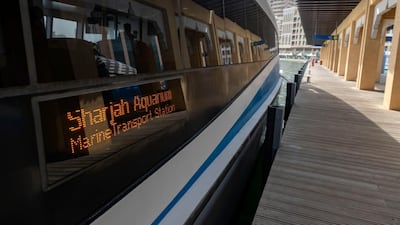
The vessels are to run 42 times daily between Al Ghubaiba on the Creek to Aquarium Marine Station in Sharjah and will have the capacity to serve 1.3 million passengers a year, Dubai’s Roads and Transport Authority said.
A journey takes 35 minutes and costs Dh15 in silver class and Dh25 for gold class. Children under the age of five and people with disabilities travel free. Each ferry has capacity for 125 passengers.
The National joined commuters yesterday morning and, while the vessel was largely empty - the new service was only announced on Saturday - those who made the trip were delighted they had.
“This is brilliant. There’s nothing worse than being stuck in traffic for ages,” said Joy Gisho, 38, who regularly travels from his home in Sharjah to Dubai.
“It’s going to make such a difference as you can park your car for free in Sharjah, get the ferry over and then you can jump on a metro or bus and come back in the evening.
“It is going to completely open up Dubai for people that travel from Sharjah.”
The Indian national, who works as an HR consultant, said the presence of the nearby Al Ghubaiba bus and metro stations would be key to making it an attractive prospect for commuters.
To get from the station at Al Ghubaiba to BurJuman, Dubai’s busiest stop on the metro line, takes roughly seven minutes.
The ferry departs every 30 minutes from 5am to 9am and from 4pm to 8.30pm from Saturday to Sunday. The service interval will be 90 minutes during off-peak times.
The new ferry was a hit with other passengers as well.
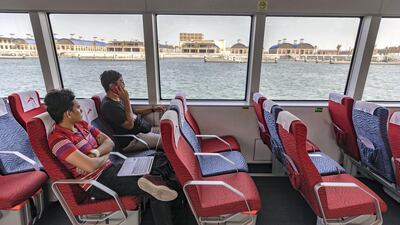
“It was really fun. It was so much better than being stuck on a bus for ages,” said student Abdusselam Sabic, 20, from Bosnia.
-
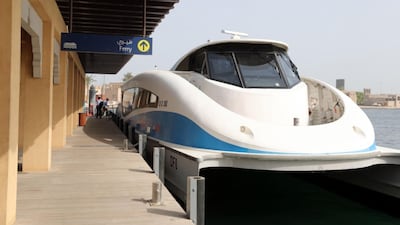
The commuter ferry from Al Ghubaiba to Sharjah on the day it launched in 2019. Services are set to be expanded across the city from 2021. Chris Whiteoak / The National -
New routes will connect Dubai Marina to the Festival City area, some two hours away, and the Creek with the new Deira Islands. Chris Whiteoak / The National -

Transport chiefs have urged drivers to leave their cars at home and give the ferry commute a try. Chris Whiteoak / The National -

New routes will connect Dubai Marina to the Festival City area, some two hours away. Chris Whiteoak / The National -
Other services will connect the Creek with the new Deira Night Market. Chris Whiteoak / The National -
Dubai & Sharjah, United Arab Emirates - July 28, 2019: New Dubai-Sharjah commuter ferry is launched. Sunday the 28th of July 2019. Chris Whiteoak / The National -

Dubai & Sharjah, United Arab Emirates - July 28, 2019: Passengers Abdusselam and Jihada Sabic at the launch of new Dubai-Sharjah commuter ferry. Sunday the 28th of July 2019. Chris Whiteoak / The National -
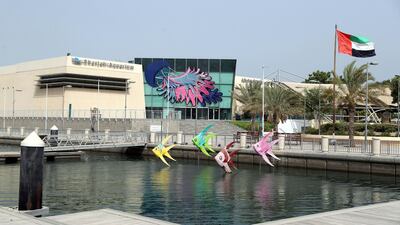
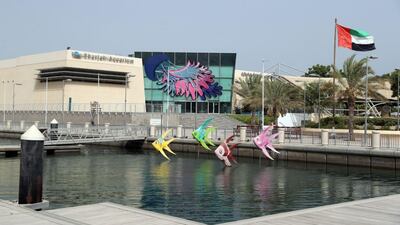
Dubai & Sharjah, United Arab Emirates - July 28, 2019: New Dubai-Sharjah commuter ferry is launched. Aquarium Marine Station in Sharjah. Sunday the 28th of July 2019. Chris Whiteoak / The National -

Dubai & Sharjah, United Arab Emirates - July 28, 2019: New Dubai-Sharjah commuter ferry is launched. Aquarium Marine Station in Sharjah. Sunday the 28th of July 2019. Chris Whiteoak / The National -

Dubai & Sharjah, United Arab Emirates - July 28, 2019: New Dubai-Sharjah commuter ferry is launched. Sunday the 28th of July 2019. Chris Whiteoak / The National -

Dubai & Sharjah, United Arab Emirates - July 28, 2019: New Dubai-Sharjah commuter ferry is launched. Sunday the 28th of July 2019. Chris Whiteoak / The National -

Dubai & Sharjah, United Arab Emirates - July 28, 2019: New Dubai-Sharjah commuter ferry is launched. Sunday the 28th of July 2019. Chris Whiteoak / The National -

Dubai & Sharjah, United Arab Emirates - July 28, 2019: New Dubai-Sharjah commuter ferry is launched. Sunday the 28th of July 2019. Chris Whiteoak / The National -

Dubai & Sharjah, United Arab Emirates - July 28, 2019: New Dubai-Sharjah commuter ferry is launched. Sunday the 28th of July 2019. Chris Whiteoak / The National -
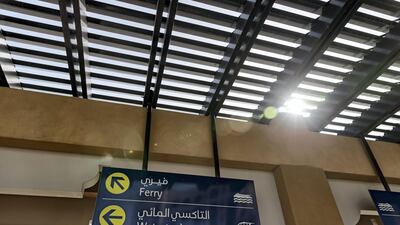
Dubai & Sharjah, United Arab Emirates - July 28, 2019: New Dubai-Sharjah commuter ferry is launched. Al Ghubaiba Water Transport Station. Sunday the 28th of July 2019. Chris Whiteoak / The National -
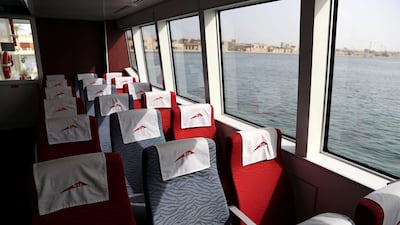
Dubai & Sharjah, United Arab Emirates - July 28, 2019: New Dubai-Sharjah commuter ferry is launched. Sunday the 28th of July 2019. Chris Whiteoak / The National -
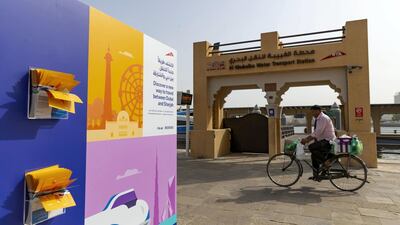
Dubai & Sharjah, United Arab Emirates - July 28, 2019: New Dubai-Sharjah commuter ferry is launched. Al Ghubaiba Water Transport Station. Sunday the 28th of July 2019. Chris Whiteoak / The National


“It is going to significantly reduce waiting times. My family lives in Sharjah and sometimes it takes more than an hour to get from there to Dubai on the bus.”
“It’s a very quick service and it’s so much more convenient than being stuck on a bus or car,” said his sister Jihada Sabic, 19, also a student.
“We would regularly have to take the car to get to Dubai from Sharjah but we would definitely consider taking the ferry each day. “It is just so much easier.”
The new route was also backed by Indian student Afra Yakhoob, 18. “It is such a good idea when it comes to reducing travelling times,” she said.
“My family lives in Sharjah and it would take me at least half an hour to drive from Dubai to see them, maybe twice that if the traffic was really heavy.”
For other passengers, the ferry represented an opportunity to have a relaxed day of bonding with family members.
Asha Krishnam, 44, was on her way from Sharjah to spend time with her daughter, Ashwati, before she started university this year in India.
“It’s a great opportunity to experience Dubai and Sharjah in a new way,” said Ashwati, 20.
Her mother, who works for an oil and gas company in Sharjah, added her voice to those predicting it would have a positive effect on road traffic.
“Why wouldn’t you take the ferry when it saves you so much time?” she said.
An RTA employee told The National that the service had not been busy yet but he expected that to change as word of mouth reports spread and gain traction.
“It has been quiet so far with not many passengers but those I have spoken to like the service,” he said.
“People have told us it would be a nice day out for a family as you can travel from Dubai on a boat that drops you directly at Sharjah Aquarium Marine. Children are going to love it.”

